This appraisal is provided for informational and educational purposes only and does not constitute a certified, licensed, or formal appraisal.
Appraisal results are generated using automated systems, including artificial intelligence, and are based solely on the information and images submitted by the user, along with publicly available data. As such, results may contain inaccuracies, omissions, or errors.
InstAppraisal does not authenticate items. No determination of authenticity, origin, materials, maker, or age should be considered verified. Many items—particularly luxury goods, watches, jewelry, coins, art, and designer products—are frequently counterfeited and may closely resemble genuine examples. Authenticity cannot be confirmed from images alone.
Any statements regarding authenticity are expressions of opinion only and should not be relied upon as fact. Independent professional authentication is strongly recommended before any purchase, sale, or valuation decision.
Appraisal values are estimates only and may vary significantly based on condition, provenance, market demand, and additional information not available at the time of review.
Appraisals must not be relied upon for insurance, legal, tax, estate, or financial purposes without independent professional verification.
InstAppraisal disclaims all liability for any losses, damages, or disputes arising from reliance on this appraisal, including transactions conducted based on the information provided.
By using this service, you acknowledge and agree that you assume all risk associated with reliance on appraisal results.
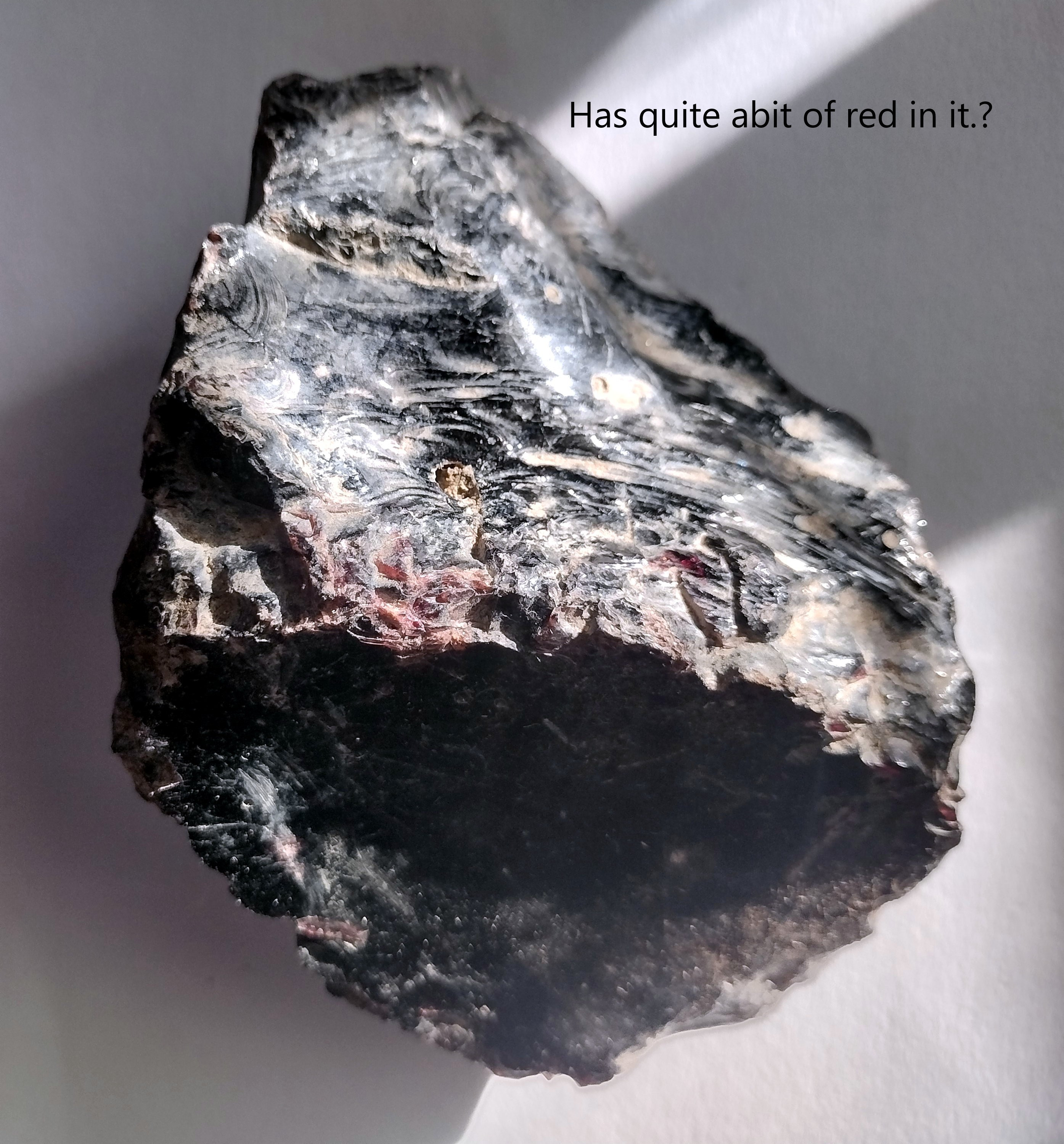
Heavy Rock with Red Areas
Description and Observations:
This rock is part of a personal collection inherited from your father, who acquired it over decades. It has a rough, natural surface with distinct red areas and a metallic sheen visible in the additional photographs. The rock measures approximately 4 inches long and 2 inches tall, weighing 1 lb 5 oz
Possible Composition:
The visible red tones could suggest iron oxide or hematite content, while the metallic sheen and dark coloration might indicate minerals such as magnetite or a form of metamorphic rock. The swirling patterns could also suggest volcanic origins, such as obsidian or a related glassy material.
Historical Context:
The rock could have originated from several geographic locations:
Your father’s work in construction and excavation might explain its discovery in Ohio, but without exact provenance, this remains speculative.
Potential Value:
Recommendations:
Summary:
Without professional identification, this rock holds modest decorative and scientific value. However, if it contains valuable minerals or is deemed a rare geological specimen, its value could rise significantly. A professional appraisal by a geologist or gemologist is highly recommended to verify its composition and potential worth.