This appraisal is provided for informational and educational purposes only and does not constitute a certified, licensed, or formal appraisal.
Appraisal results are generated using automated systems, including artificial intelligence, and are based solely on the information and images submitted by the user, along with publicly available data. As such, results may contain inaccuracies, omissions, or errors.
InstAppraisal does not authenticate items. No determination of authenticity, origin, materials, maker, or age should be considered verified. Many items—particularly luxury goods, watches, jewelry, coins, art, and designer products—are frequently counterfeited and may closely resemble genuine examples. Authenticity cannot be confirmed from images alone.
Any statements regarding authenticity are expressions of opinion only and should not be relied upon as fact. Independent professional authentication is strongly recommended before any purchase, sale, or valuation decision.
Appraisal values are estimates only and may vary significantly based on condition, provenance, market demand, and additional information not available at the time of review.
Appraisals must not be relied upon for insurance, legal, tax, estate, or financial purposes without independent professional verification.
InstAppraisal disclaims all liability for any losses, damages, or disputes arising from reliance on this appraisal, including transactions conducted based on the information provided.
By using this service, you acknowledge and agree that you assume all risk associated with reliance on appraisal results.

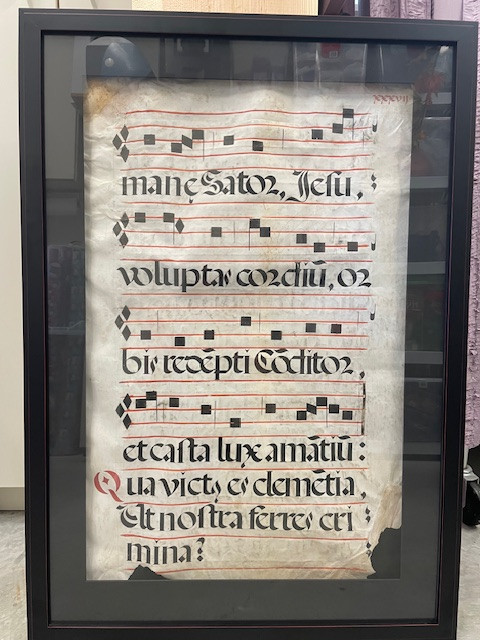
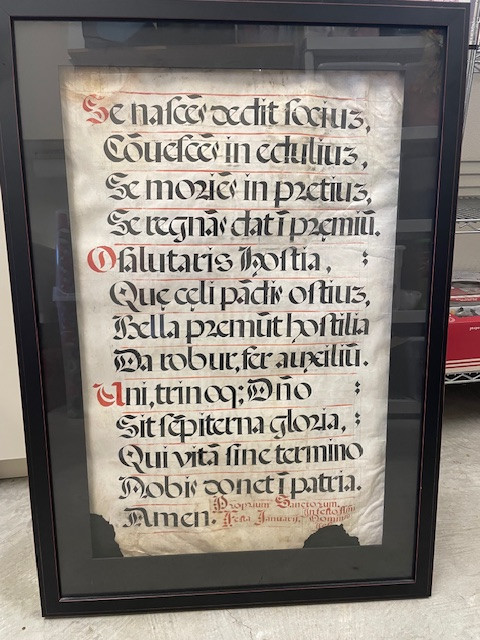
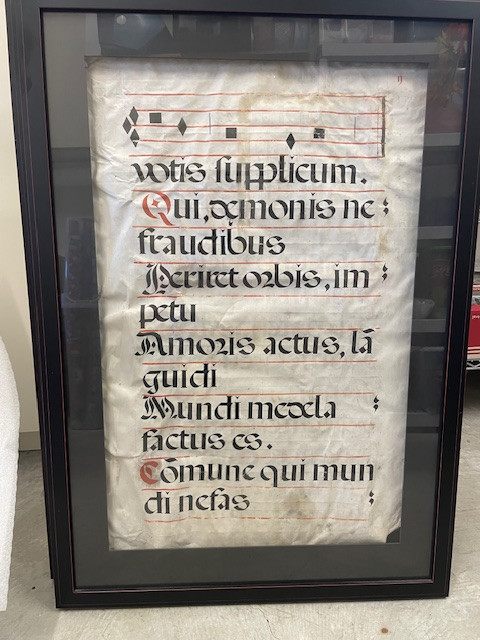
14th-Century Monk Choral Pages (Spanish Origin)
14th-Century Monk Choral Pages (Spanish Origin)
Description:
You own three framed pages from a 14th-century Spanish Gregorian chant manuscript, likely used in a monastic or ecclesiastical setting for daily liturgical purposes. These pages are written on vellum (calf or cowhide parchment) in Spanish Round Gothic script, a style typical of Iberian manuscripts of the period. The musical notation features square neumes on four-line red staves, consistent with medieval plainsong notation used in antiphonals or graduals
Features:
Historical Context & Authentication:
This type of manuscript would have been part of a large-format choral book meant to be read by several monks standing around a lectern. The minimal illumination and size suggest utilitarian use rather than ceremonial. The paleography, musical notation, and layout are consistent with known examples from 14th-century Iberian monastic communities.
Authentication based solely on photos supports the date and geographic origin as plausible. However, to fully authenticate and verify valuation (especially for sale or donation), a certified manuscript appraiser or Latin paleographer should inspect it in person—preferably one affiliated with a rare books auction house, university archive, or museum.
Estimated Value (2025 Market):
Note: Value may be higher if provenance (e.g., monastery or manuscript title) can be documented.
Recommendations: