
Photos Submitted for Appraisal
🔍 Click to enlarge and inspect marks, signatures, and condition detailsTap to zoom and inspect details
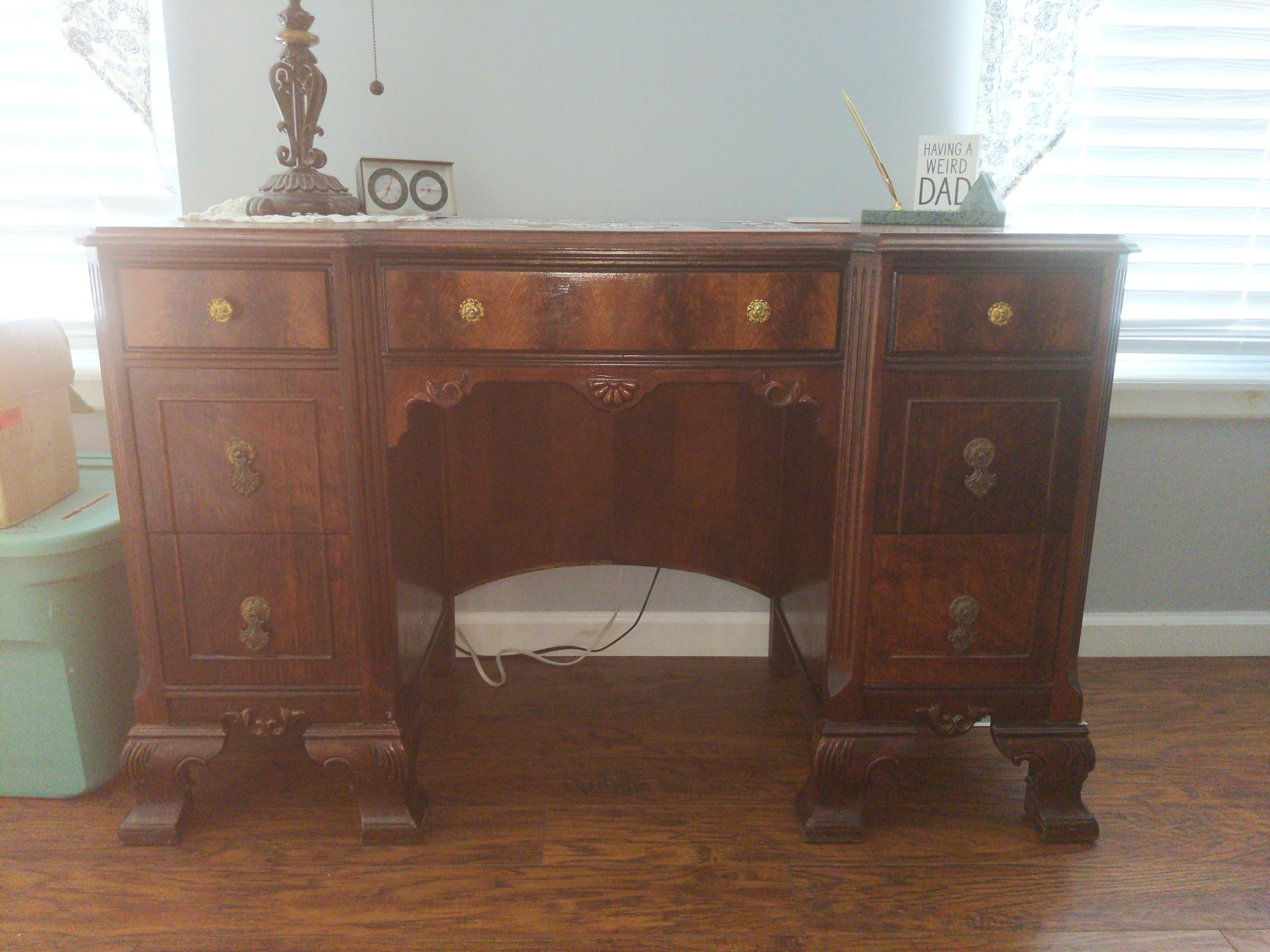
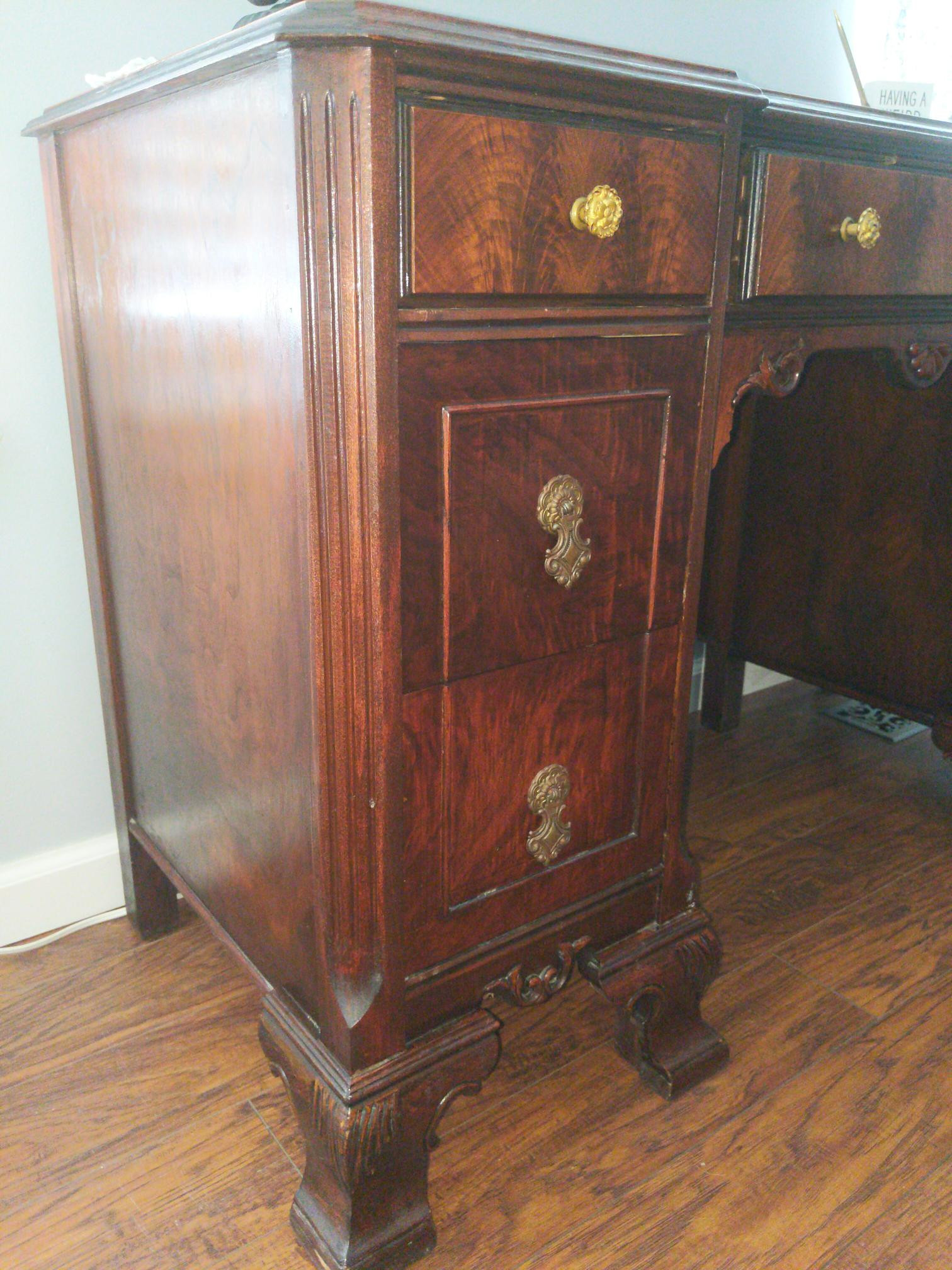
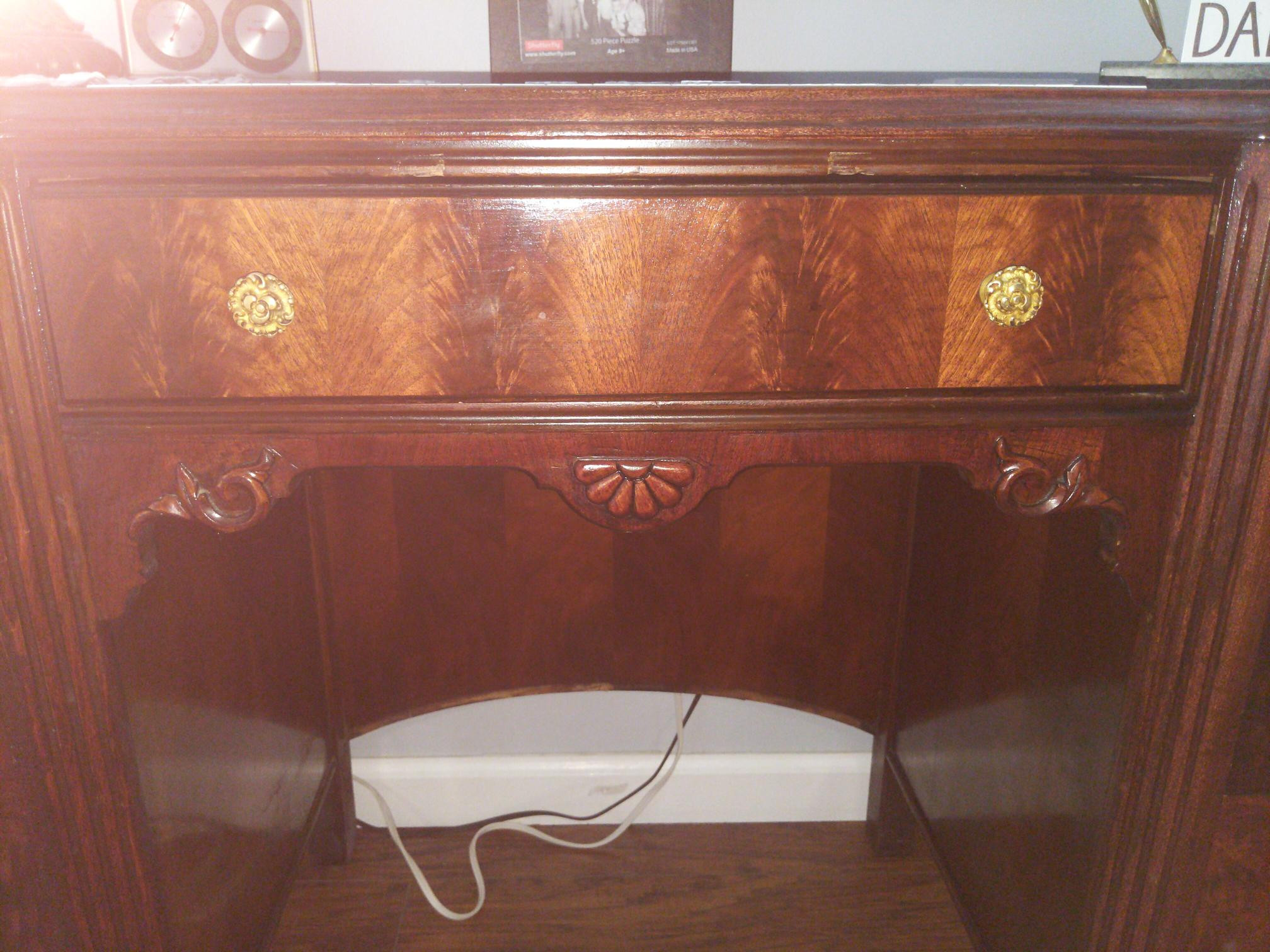
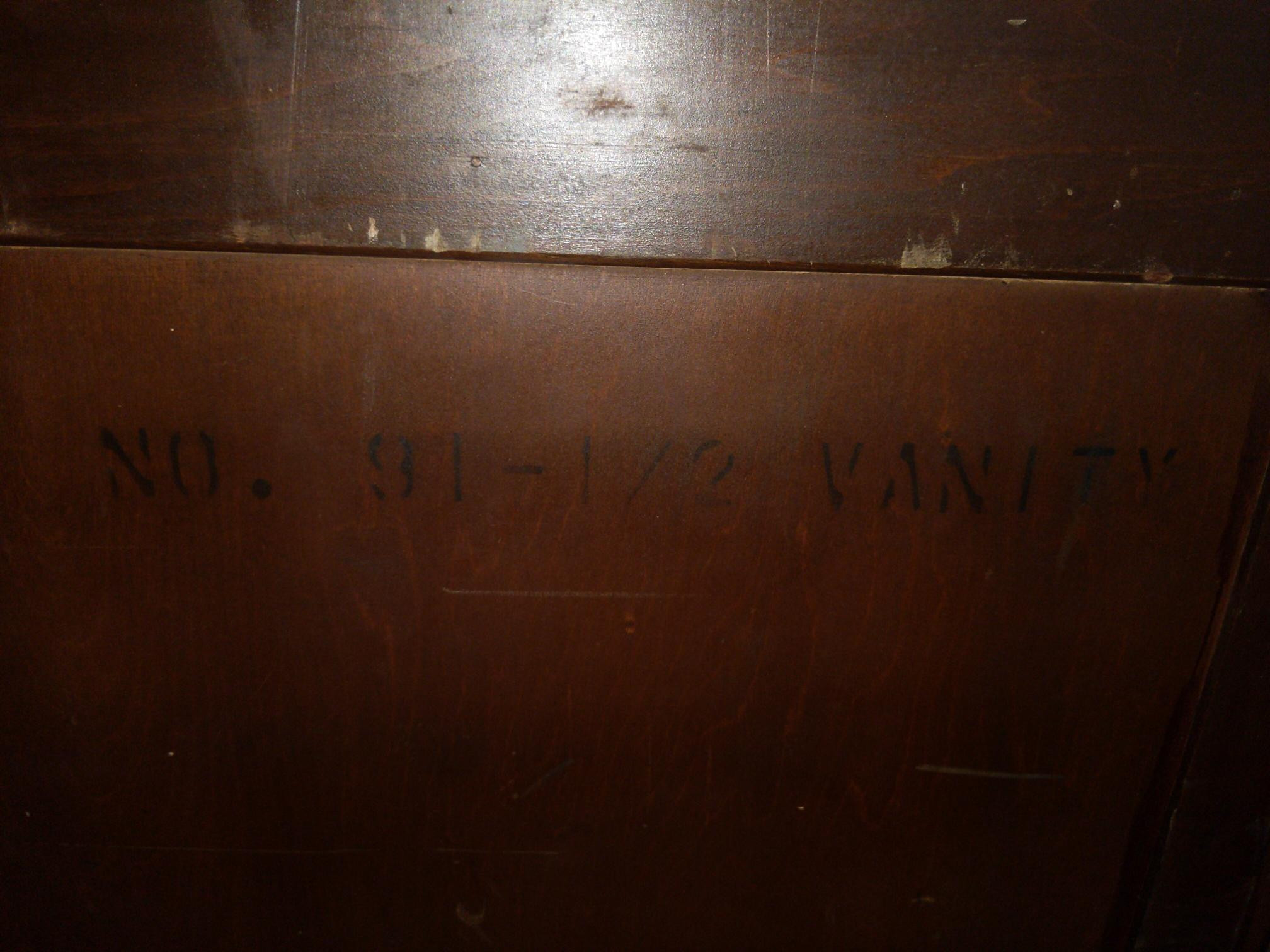
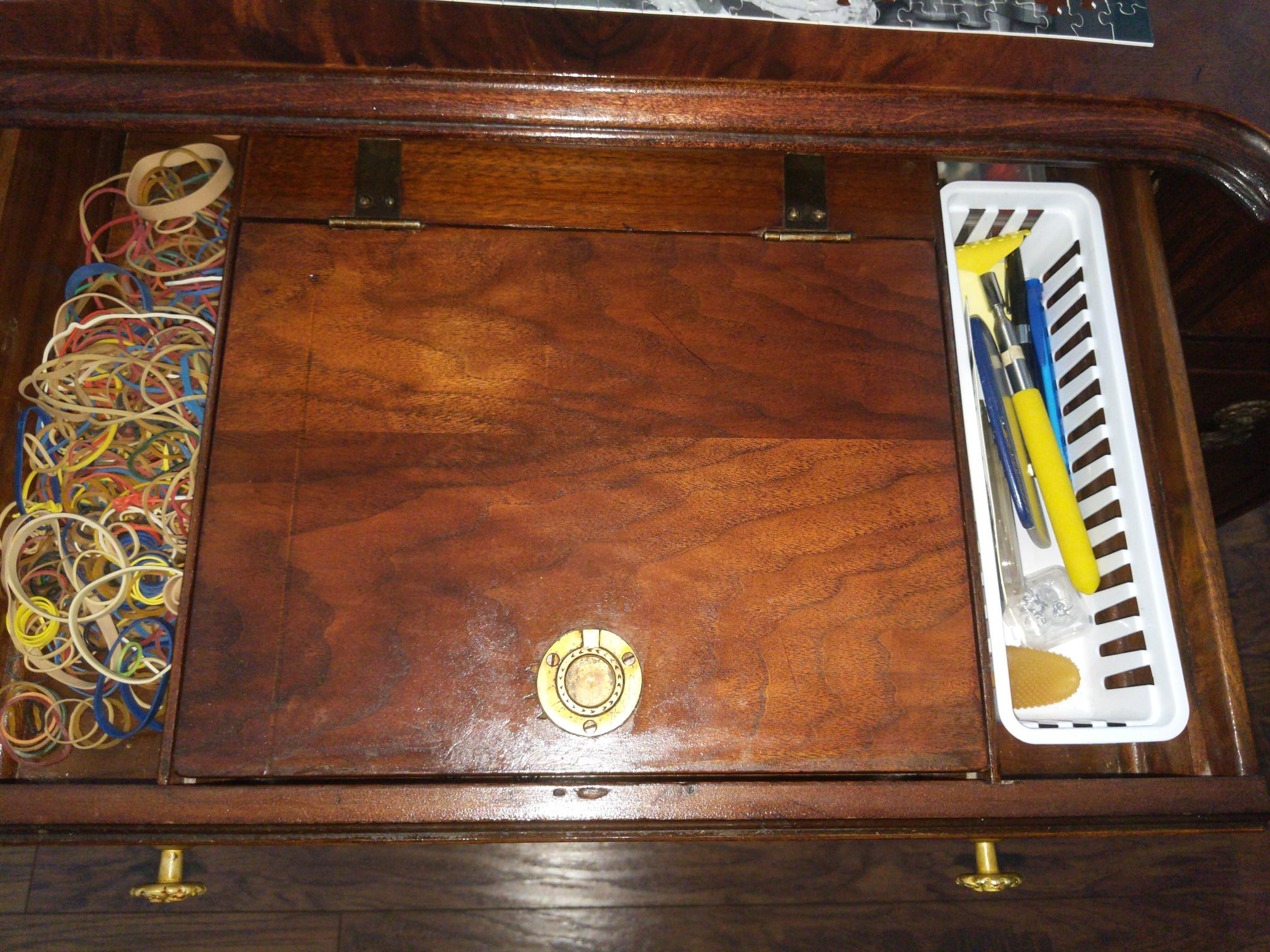
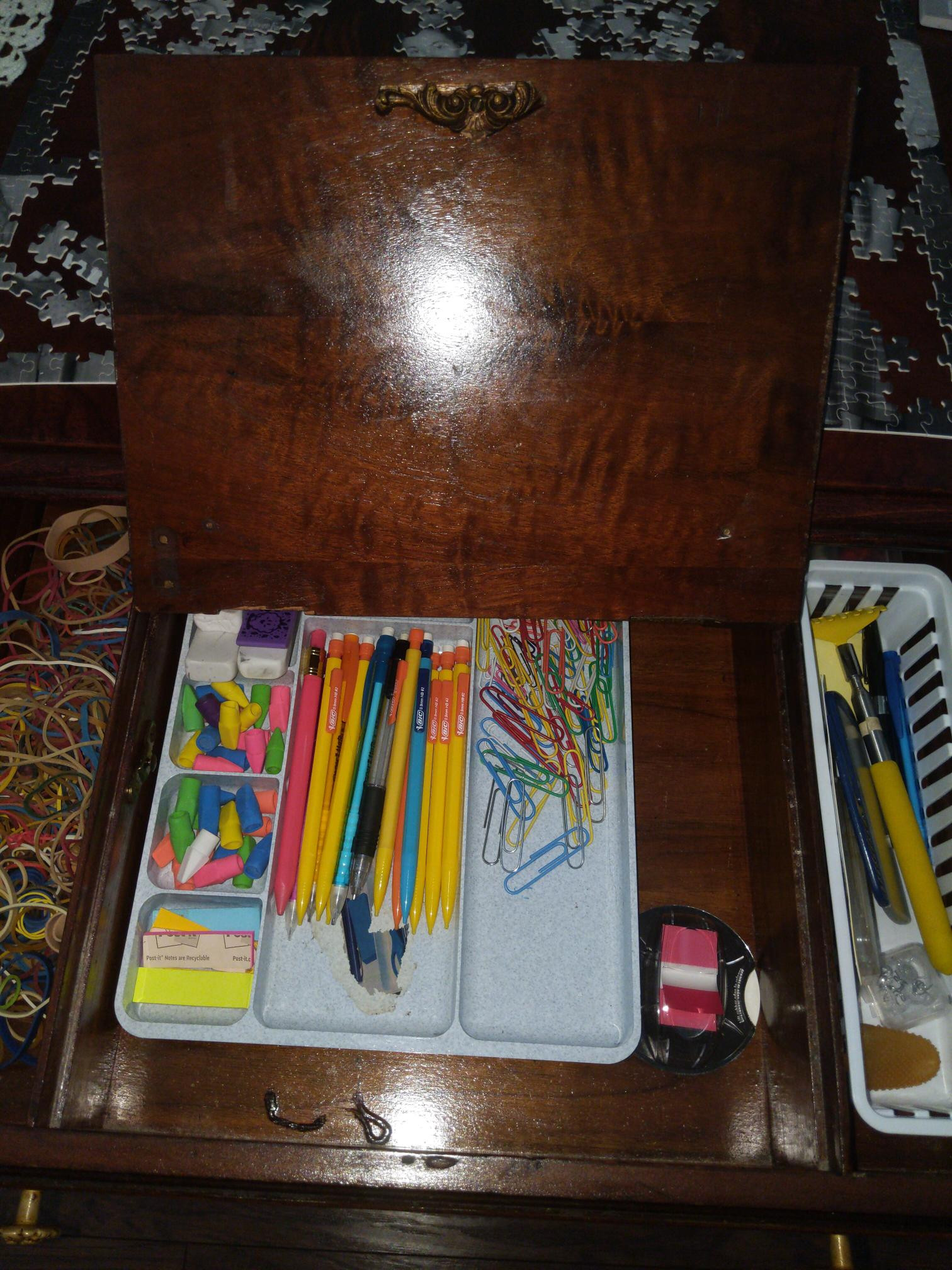
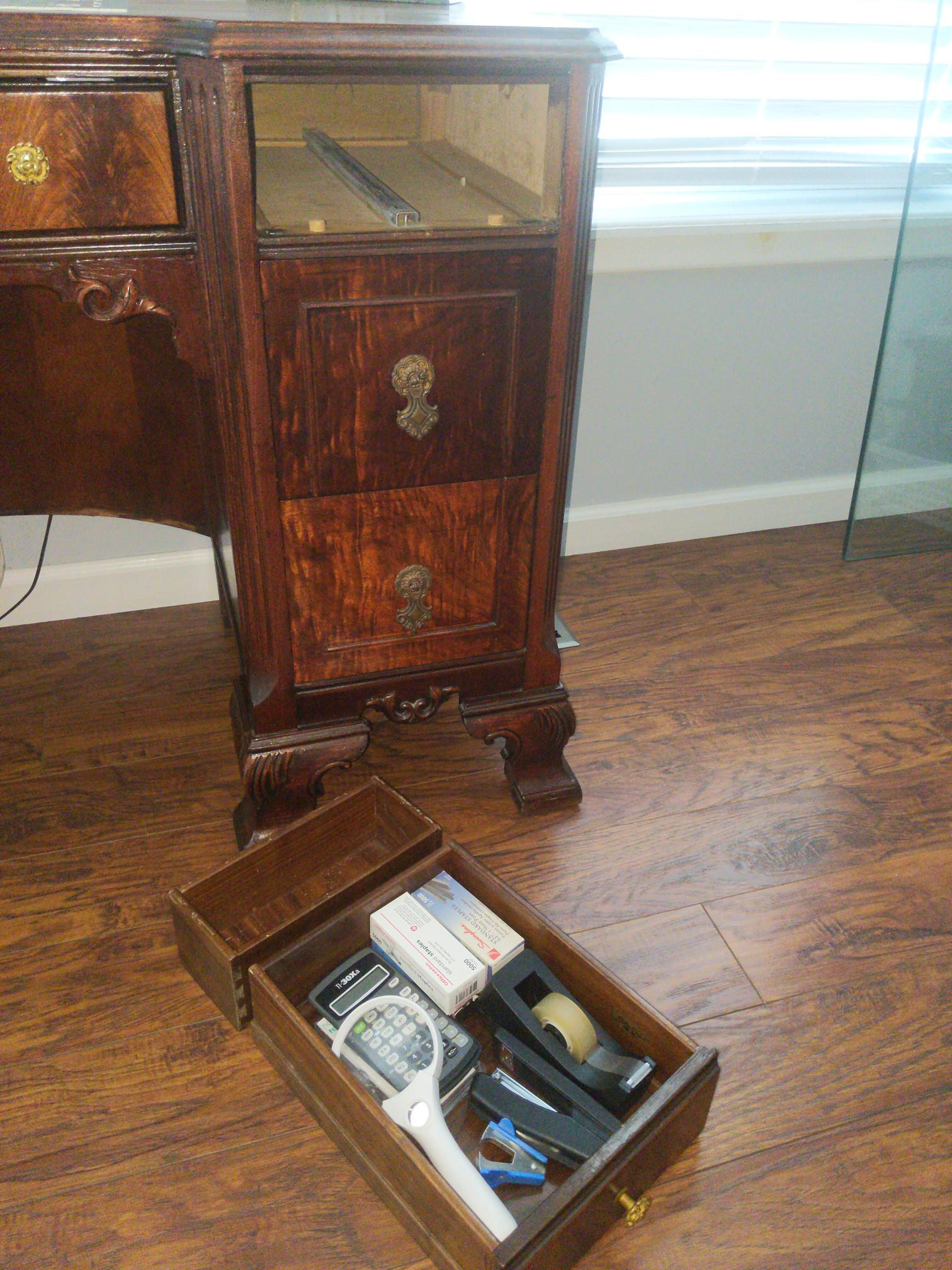
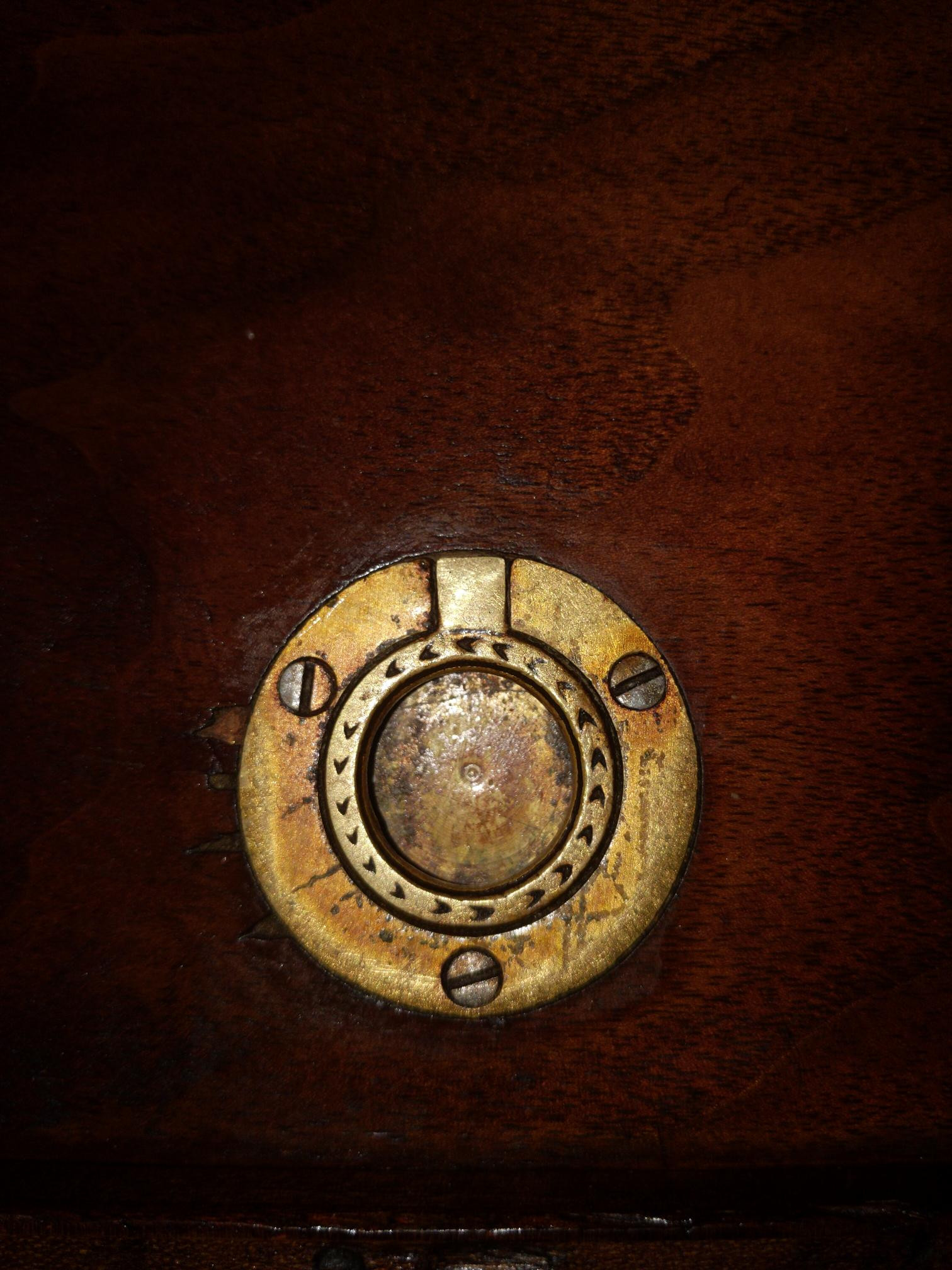
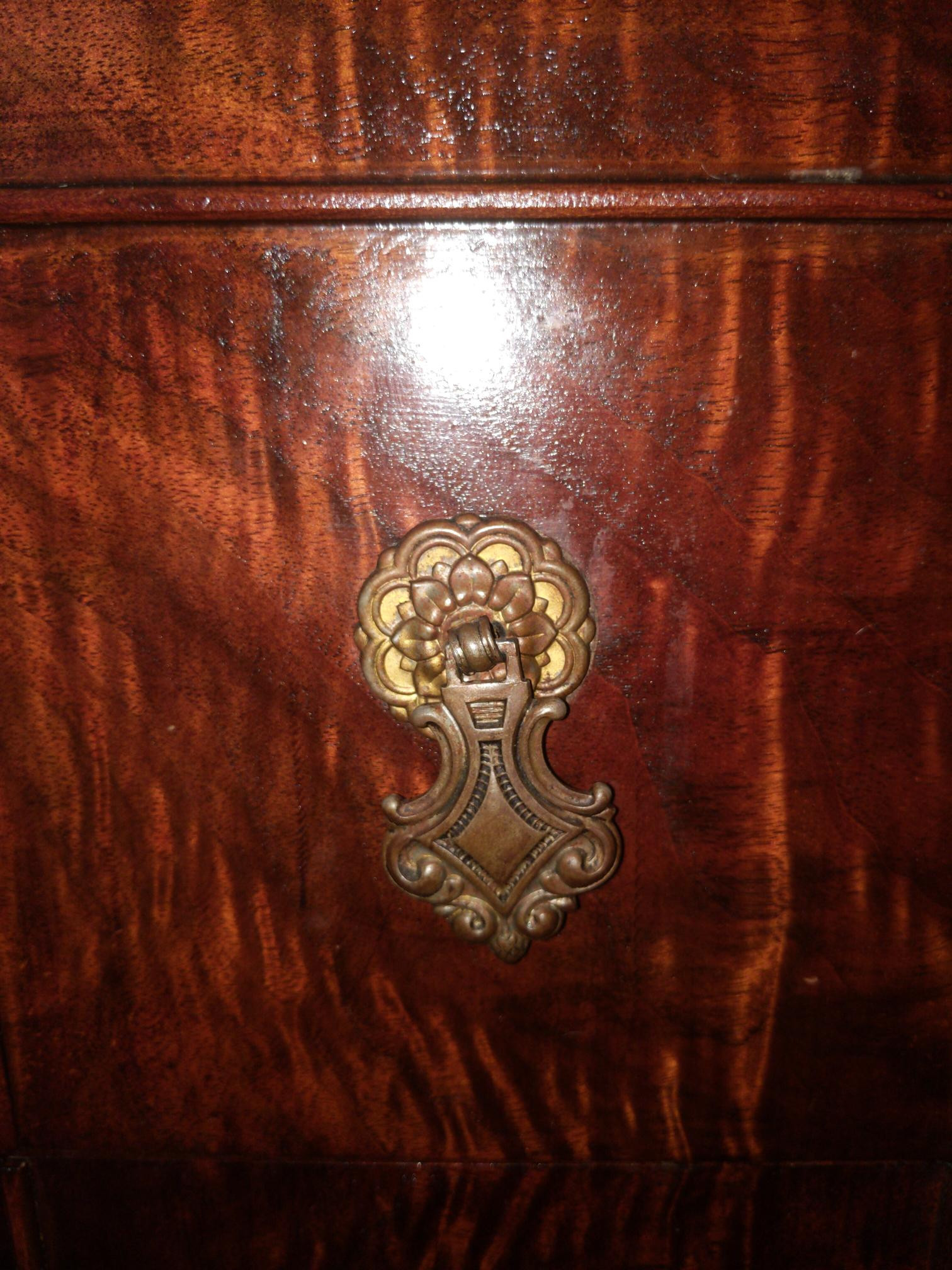
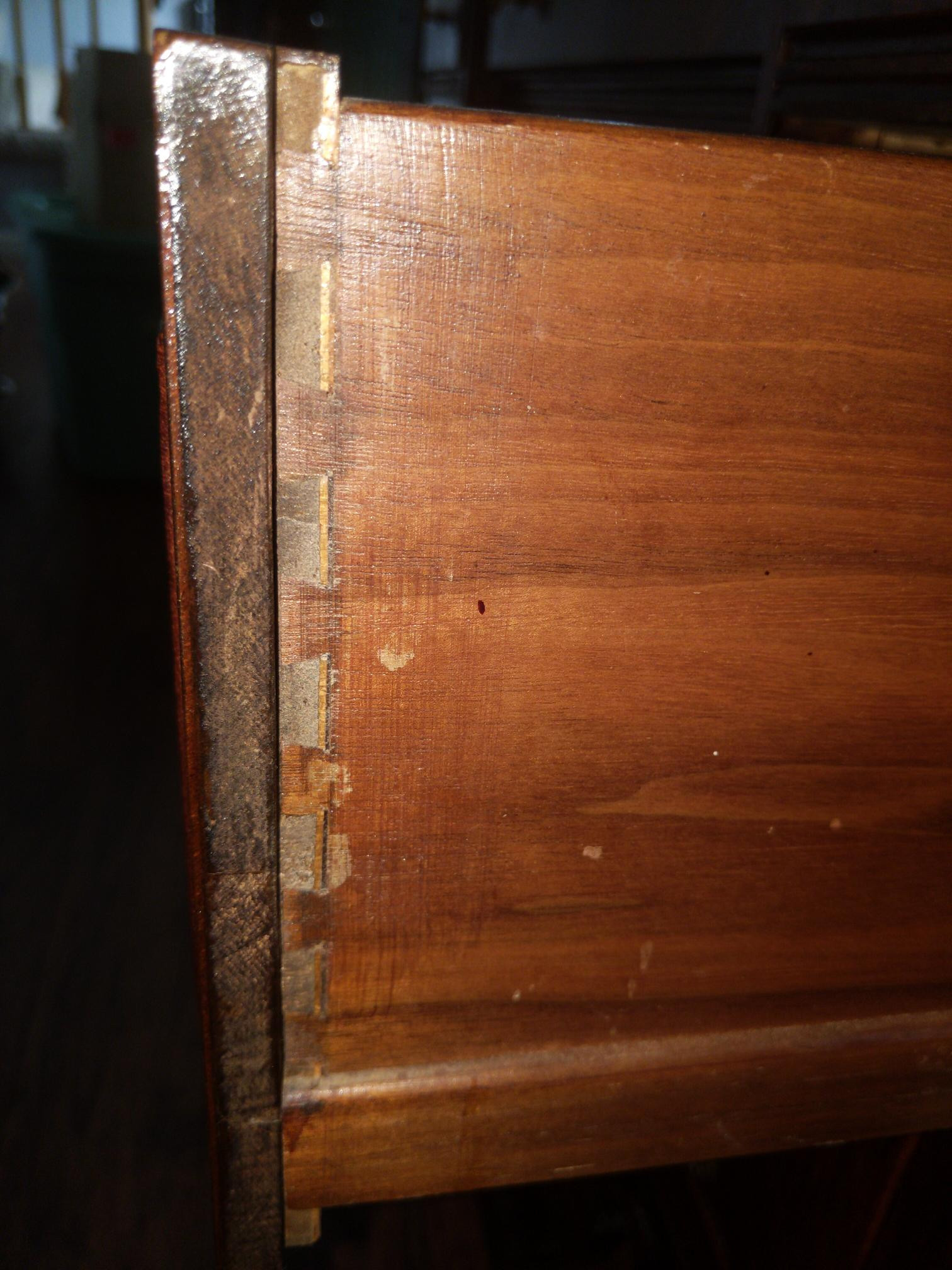
Our family recently inherited this beautiful vanity/desk from my mother-in-law. It belonged to her parents and we know it was in the family as far back as the 1970s. We are wondering if it could be an antique and if so, we would like to know more about it's history and value. As you can see from the pictures, it is in good condition. The back side has some stenciled markings, but nothing indicating a manufacturer. We do see some holes where a mirror was perhaps once attached. The middle drawer has an interesting interior box with a hinged lid and a round recessed pull tab to open it. The upper right side drawer pulls out to reveal a second smaller hidden drawer behind it. The carvings appear to be hand-carved, but the dove-tailed joints are probably machine made. There are hardly any screws in the entire piece. We do see a few staples holding the back on. The entire desk is solid wood and very heavy, with a beautiful shimmery grain.
Upgrade for PDF reports, more daily appraisals, and ad-free experience.
Collector Discussion
Do you recognize this piece? Collectors often identify maker marks, share comparable sales, or suggest additional research steps.
Vintage Solid Wood Vanity/Desk (Marked "No. 91-1/2 Vanity")
Overview
This beautiful piece is a vintage solid wood vanity or writing desk, likely produced between the 1930s and 1950s. Its style, craftsmanship, and features suggest it was manufactured during the late Depression-era into the early postwar period, when ornate, hand-finished furniture was still mass-produced in American workshops.
Key Identifying Features
Material
Function
Estimated Date
Current Condition
Estimated Market Value (2025)
Market Type
Estimated Value
Local estate sale
$150 – $300
Online vintage platform (e.g., Chairish, Etsy, eBay)
$300 – $600+ (with good photos and delivery options)
Fully restored retail antique store
$700 – $950
Note: Value increases significantly if the original mirror is found and intact, or if the wood is confirmed as crotch/flame mahogany.
Authentication & Recommendations
Conclusion
You own a well-crafted, vintage solid wood vanity/desk from the 1930s–1950s. Its charming style, unique compartments, and quality materials make it both functional and collectible. It is not a museum-grade antique, but it is highly desirable among lovers of vintage and traditional furniture
If you’re ever considering professional resale, a furniture appraiser or auction house specializing in mid-century traditional revival styles would be ideal for authentication and higher valuation.
Thank you so much! This is…
Thank you so much! This is exactly the kind of information I was hoping to find out about it.
In reply to Vintage Solid Wood Vanity/Desk (Marked "No. 91-1/2 Vanity") by Charley