
Click any image to enlarge
AI Appraisal
Description
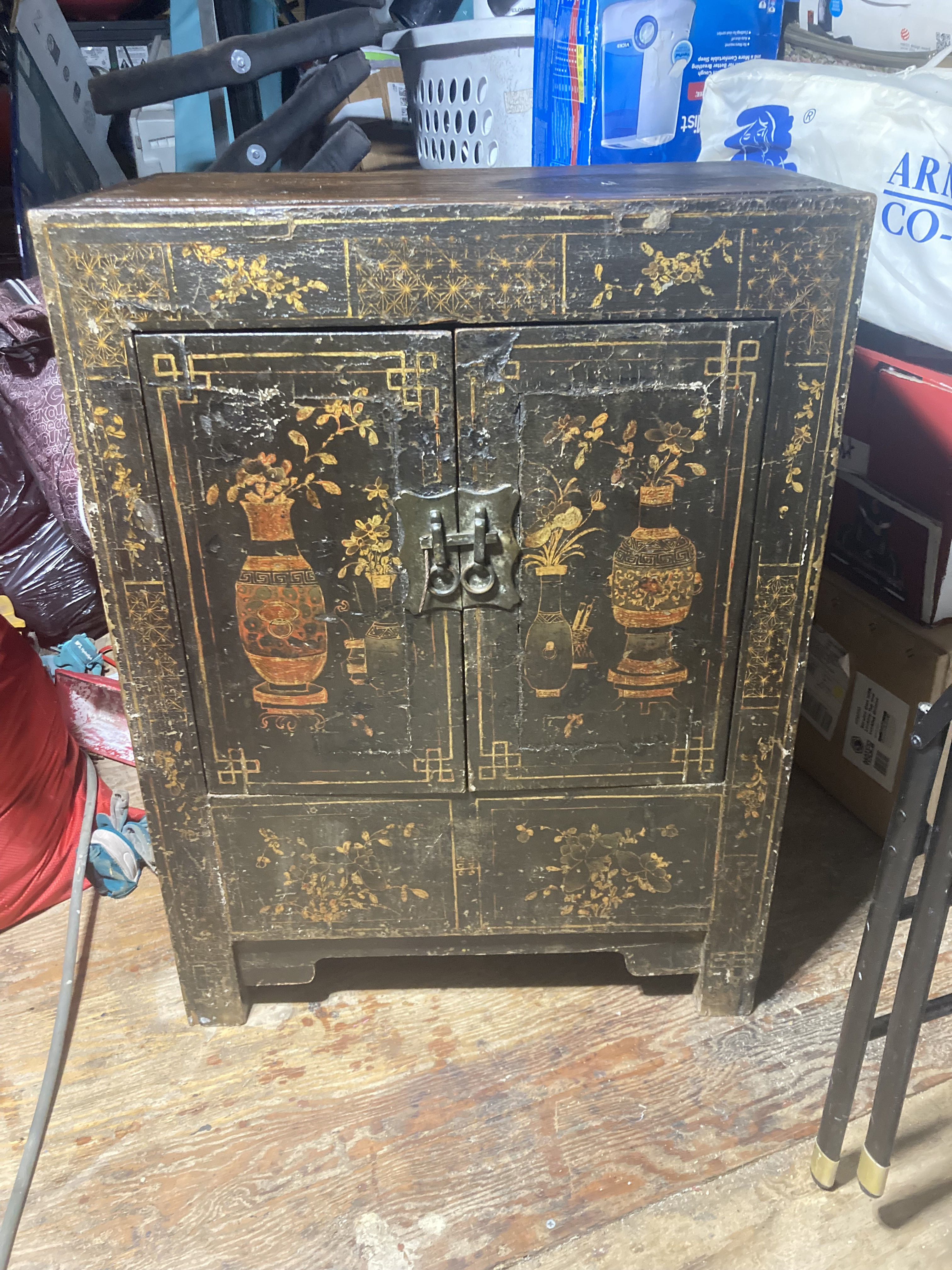
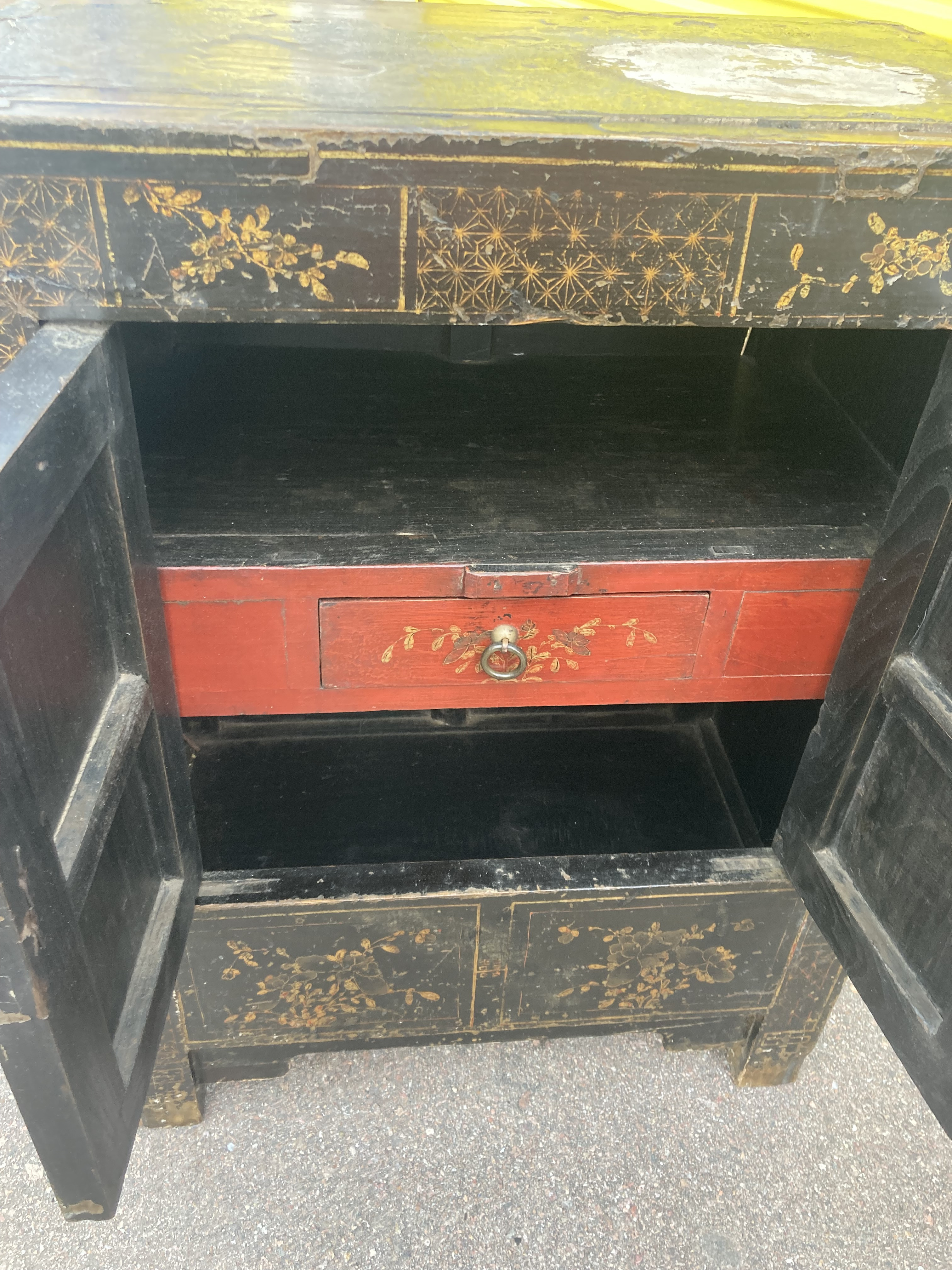
Not sure what kind of cabinet
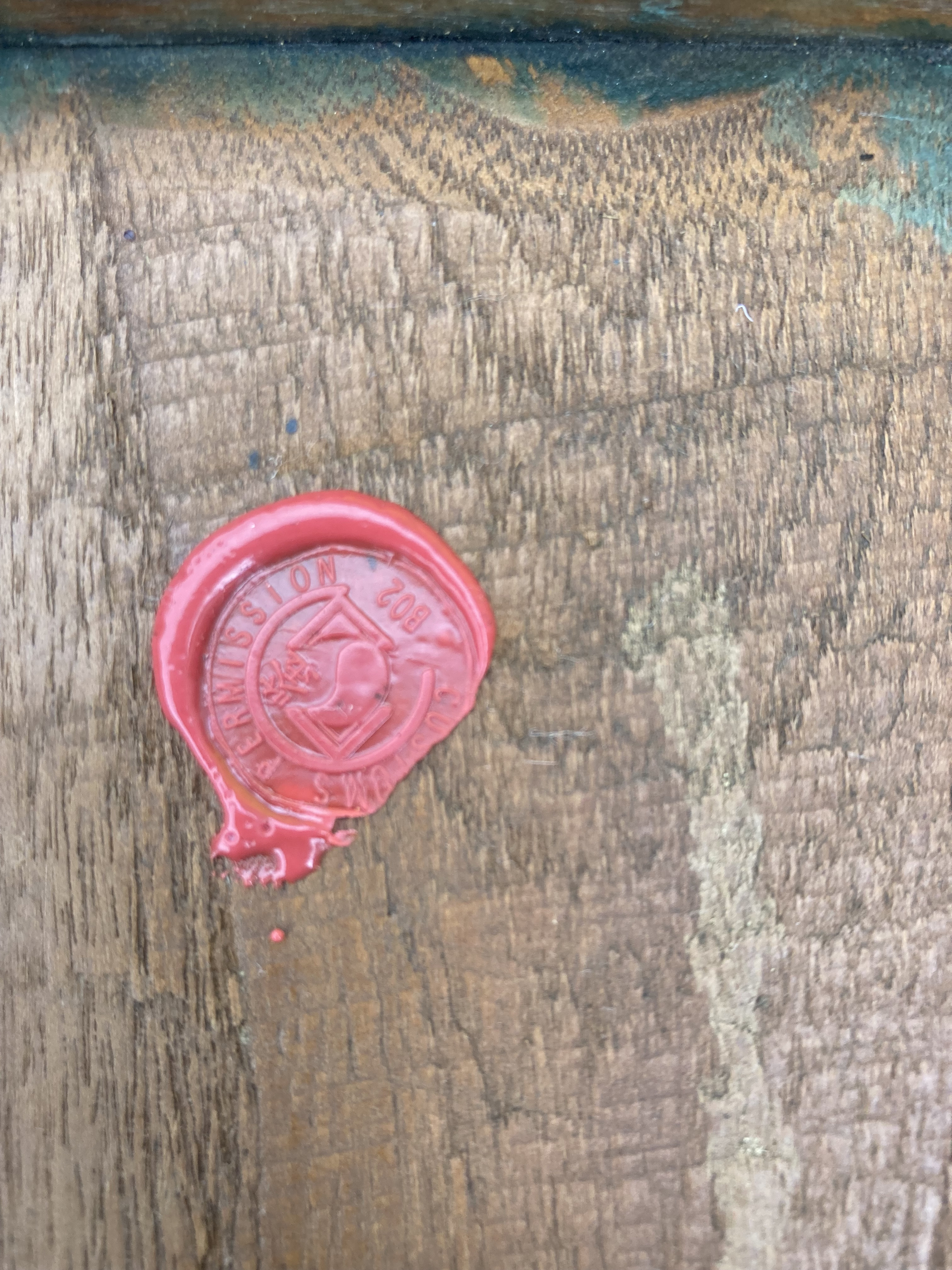
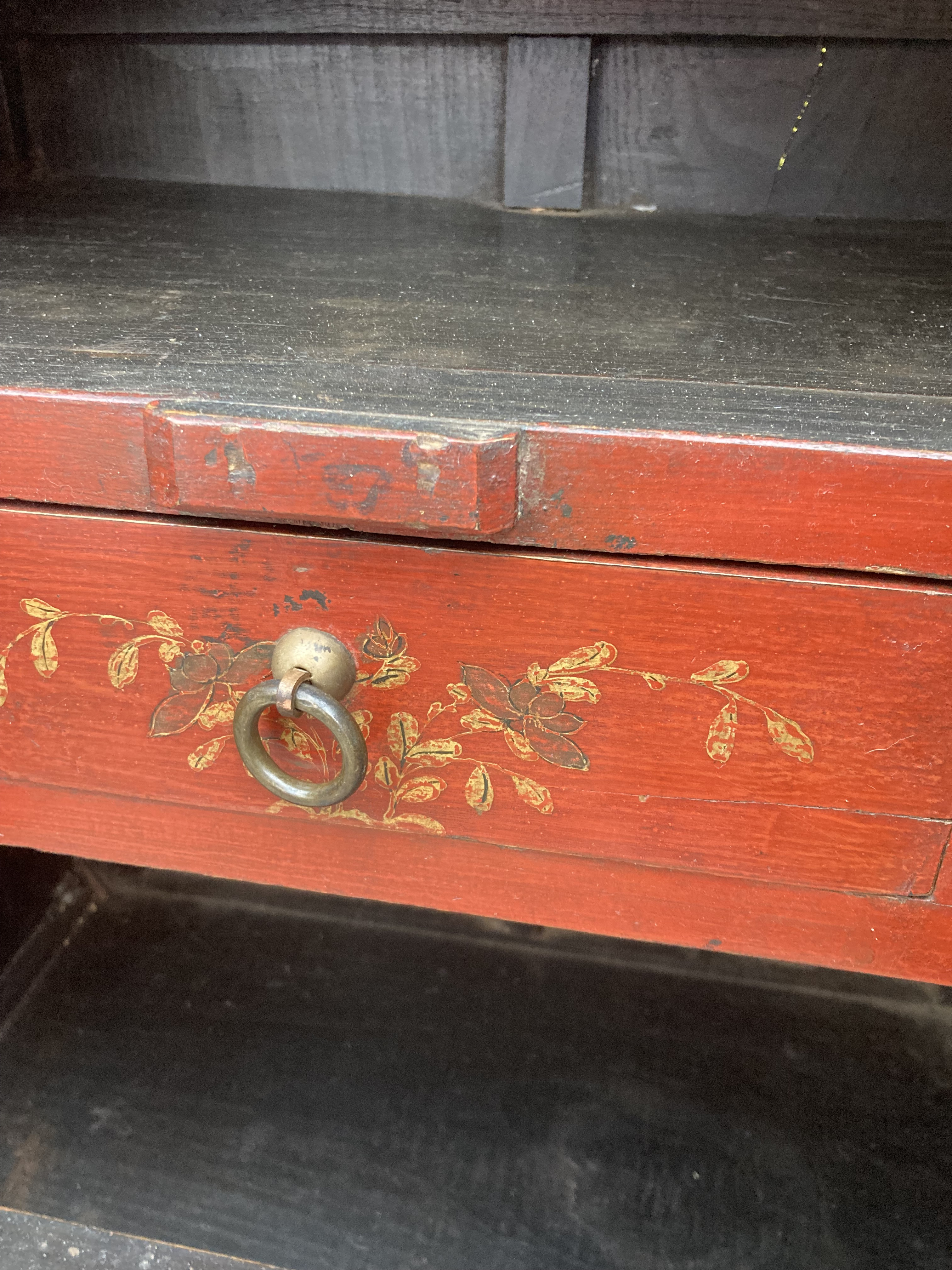
Only marking is the rubber stamp found on the bottom of the little drawer
Category
Furniture
Medium
Wood
Distinguishing marks
Chinese rubber import stamp
Condition
Good
Date Period
1700s
⚠️ You have 1 free appraisal left today
Upgrade for 15-30/day →
Want more from your appraisals?
View Plans →
Upgrade for PDF reports, more daily appraisals, and ad-free experience.
Antique Chinese Lacquer Cabinet
Antique Chinese Lacquer Cabinet
Overview
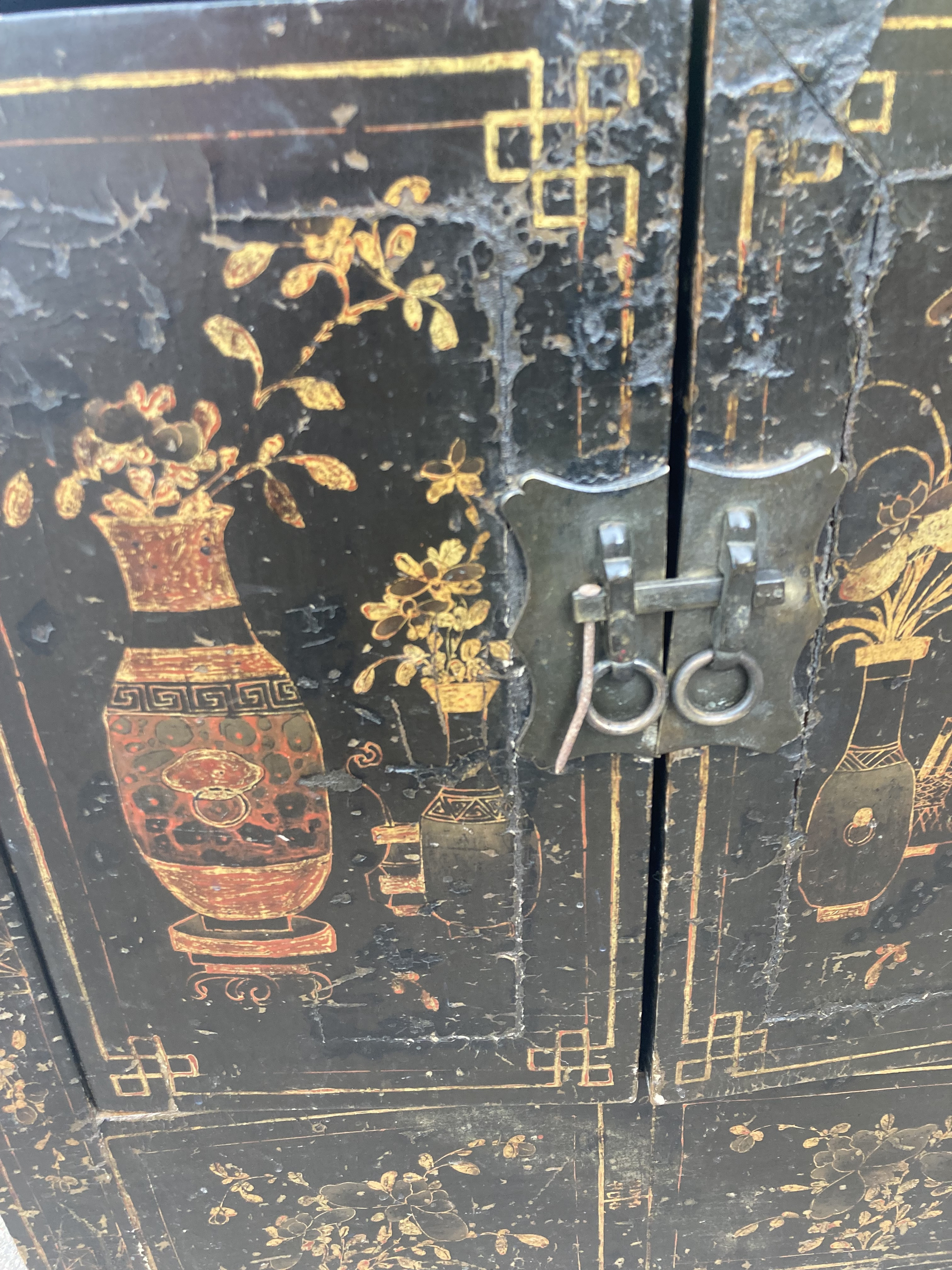
This is a Chinese lacquered wood cabinet featuring hand-painted floral and vase motifs, adorned with a traditional Chinese brass pin lock. The piece has signs of age and wear consistent with an older item and includes a rare red wax import seal on the bottom of the drawer—likely a Chinese export or customs mark.
Description and Features
Authenticity & Dating
Estimated Date: Late 19th century to early 20th century (circa 1880–1930)
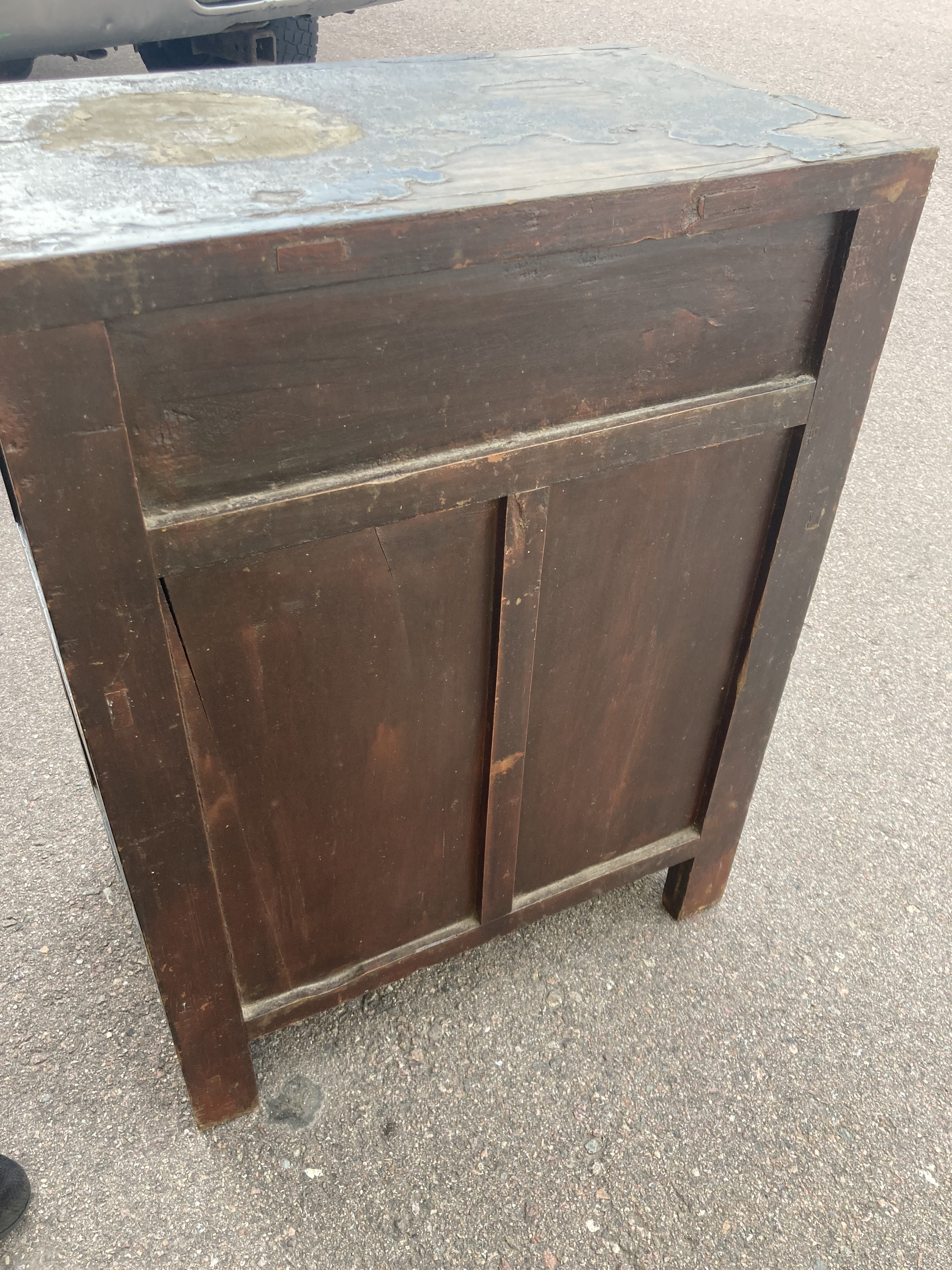
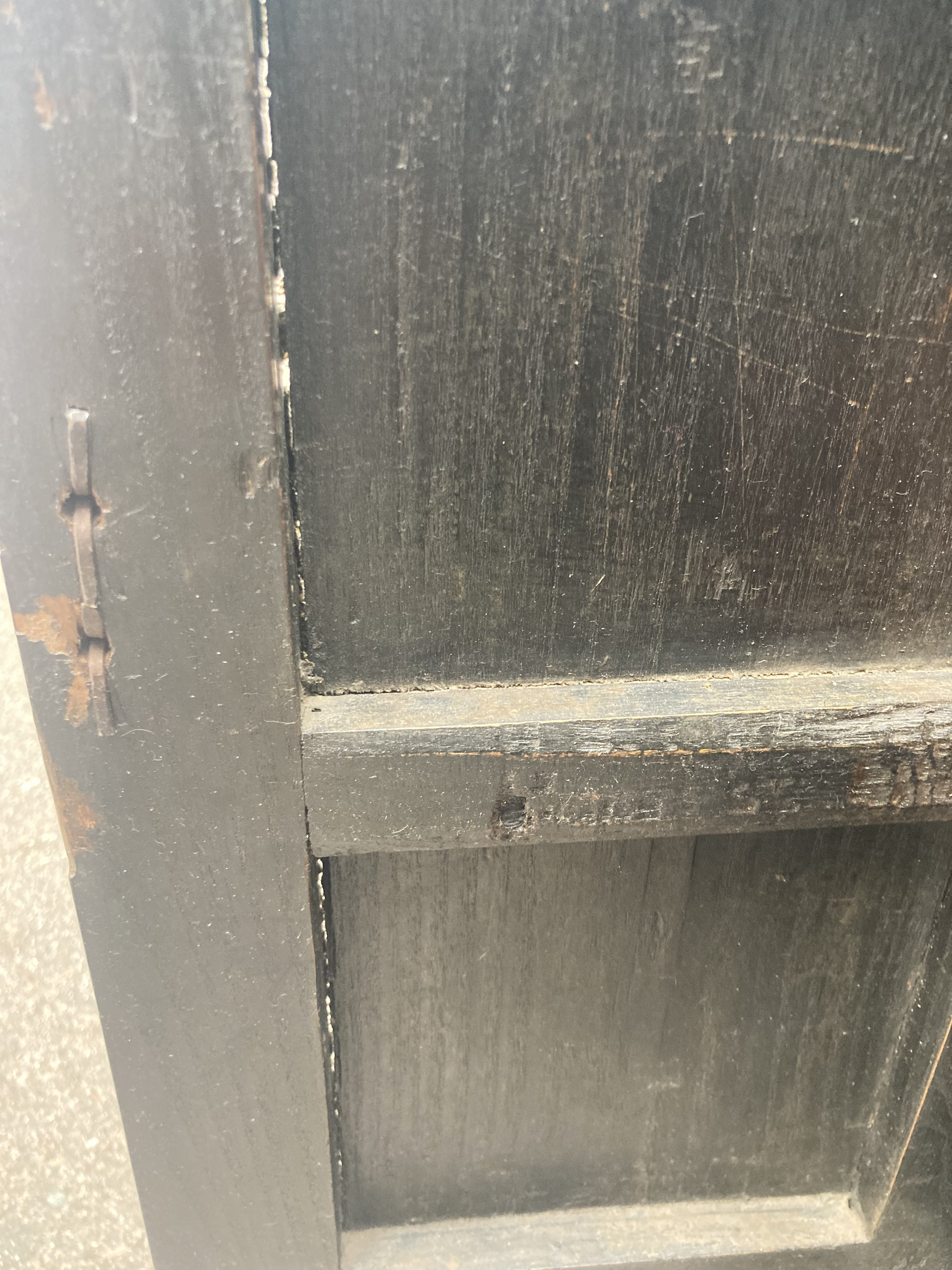
While the style of this piece is in keeping with Qing Dynasty aesthetics (which ended in 1912), several clues point to a later manufacture date:
This cabinet does not date to the 1700s, based on construction techniques, materials, and the presence of an export seal.
Cultural and Historical Context
Cabinets like this were made in northern China (often in Shanxi or Hebei provinces) and intended both for domestic use and export. The black lacquer with gold floral decoration is typical of the Qing period’s decorative tastes, especially for dowry chests or small bedroom cabinets.
Condition
Value Estimate (as of mid-2025)
Market Type
Estimated Value
Private Sale
$300 – $500 USD
Retail (Antique Dealer)
$600 – $900 USD
Auction (Mid-range)
$250 – $450 USD
Values may vary depending on the location, condition, and demand for Asian antiques.
Recommendations
Conclusion
Your item is a late Qing-style Chinese lacquered cabinet, likely dating between 1880–1930, made for domestic or export purposes. It is a fine decorative piece with cultural and collectible value, especially due to its intact traditional design, original painted motifs, and rare export seal.