Chinese Coins

N
6 months ago
AI Appraisal
Description

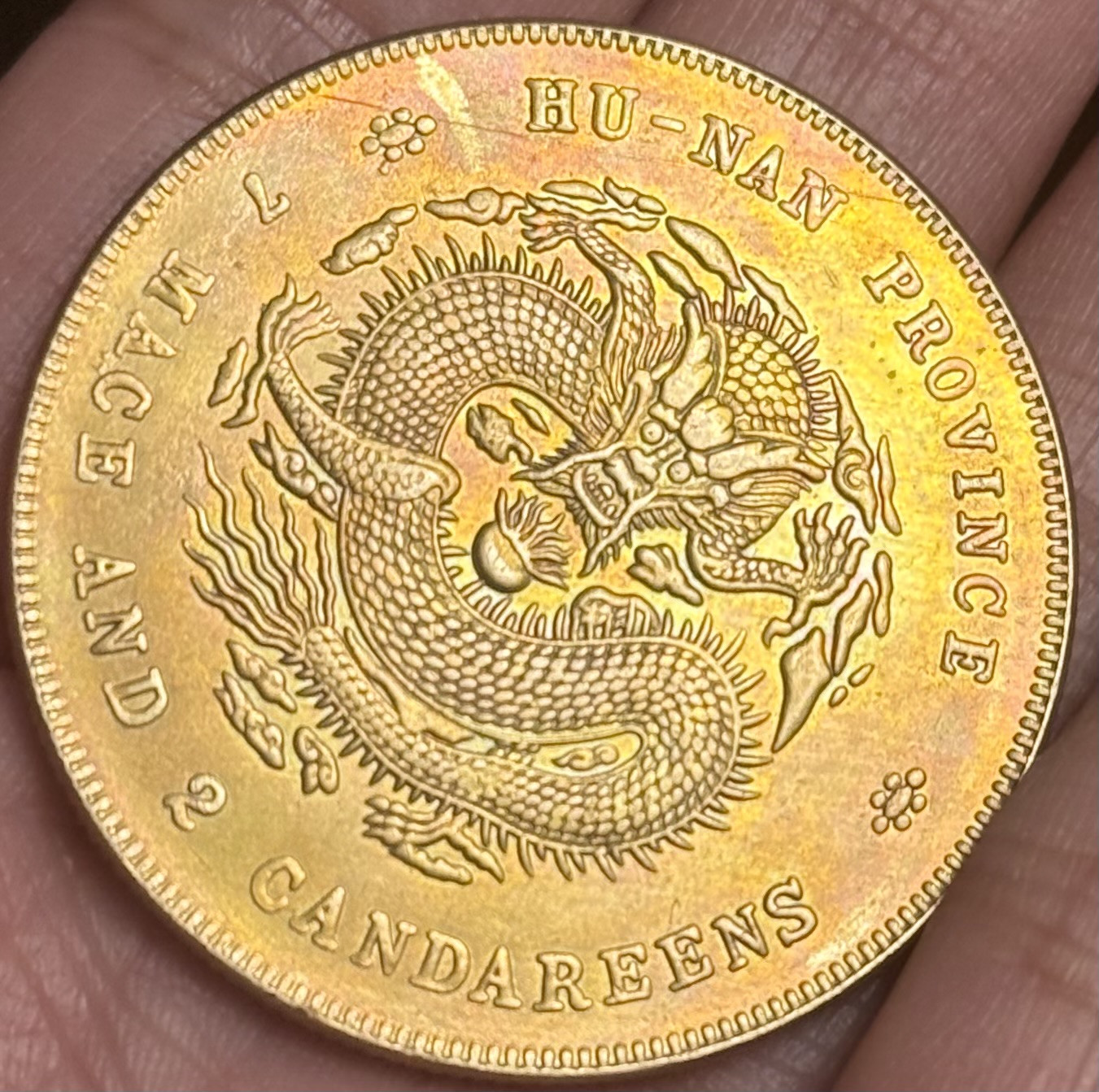
Hunan Dragon Dollar 7 Mace and 2 Candareens Coin from the late 1800's.

Category Coins and Currency
Medium 39.1 cm in diameter 2.7 in thickness and approximately 26 grams Color: Bronze or Copper.
Distinguishing marks Slight Rainbow Toning on the obverse with Chinese characters, the reverse has English inscriptions of "Hunan 7 Mace and 2 Candareens"
Condition Excellent
Size and dimensions of this item 39 mm in Diameters
Date Period 1890's
Weight approximately 26 grams
History Part of the Qing Dynasty, minted during the late 1800's.
Want more from your appraisals?

Upgrade for PDF reports, more daily appraisals, and ad-free experience.

View Plans →

Submitted by NaidaTheCollector

Item Overview

  • Type: Dragon Dollar (Chinese provincial coin)
  • Origin: Hunan Province, Qing Dynasty, China
  • Date Period: Late 19th Century (c. 1890s)
  • Denomination: 7 Mace and 2 Candareens (equivalent to 1 Chinese Silver Dollar)
  • Material: Appears bronze or gilt-plated copper (based on tone; verification needed)
  • Weight: Approx. 26 grams
  • Diameter: 39 mm
  • Condition: Excellent, with vivid rainbow toning
  • For Sale: Yes

Design Description

Obverse (Chinese side):

  • Features Manchu and Chinese characters translating to "Guangxu Year" and denomination.
  • Surrounding text names Hunan Province.
  • Lovely rainbow toning visible—this is prized by some collectors, especially when natural.

Reverse (English side):

  • Bold inscription: HU-NAN PROVINCE / 7 MACE AND 2 CANDAREENS
  • Central dragon in fierce, detailed design—symbolizing imperial power.
  • Classic Qing Dragon Dollar layout, with pearled rim and classic stylized scales.

Historical Context

  • These coins were struck during the reign of Emperor Guangxu (1875–1908) and form part of China’s late Qing modernization efforts in minting.
  • 7 Mace and 2 Candareens = 0.72 tael = ~1 Chinese silver dollar.
  • Hunan Provincial issues are less common than those from provinces like Kwangtung or Hupeh, making them desirable.
  • Most were minted in silver; copper, bronze, or gilt specimens were typically:
    • Patterns (trial strikes)
    • Presentation issues
    • Private restrikes (modern or vintage)

Authentication Considerations

Given the coin's unusual bronze/gilt tone and lack of wear:

  • It could be a gilt restrike, replica, or fantasy piece (some modern-made examples exist).
  • Original Qing silver dollars are almost always struck in silver.
  • Authenticity requires metal testing (XRF analysis or acid test) and magnified inspection for die markers, edge reeding, and wear consistency.

Market Value Estimate (as is):

Type

Description

Estimated Value (USD)

Original silver coin

Verified 1890s Qing-era strike

$1,000 – $4,000+ depending on province and condition

Bronze/copper gilt pattern

Authenticated Qing-era trial or pattern

$300 – $1,200+

Modern replica (unmarked)

Common restrike or fantasy piece

$20 – $150 depending on quality


Recommendations

  1. Authenticate the metal content:
    • XRF scan by a reputable coin dealer or metals expert.
    • Look for magnetic response (silver and bronze are non-magnetic).
  2. Check for edge details:
    • Look for a reeded edge (originals often have detailed edges).
    • Signs of casting vs. strike (struck coins have sharp detail and no seam).
  3. Professional Appraisal:
    • Submit to a trusted numismatic grading company like NGC or PCGS Asia for full authentication and valuation.
    • If real, grading significantly boosts value and buyer trust.

Conclusion

You have a striking example of a Hunan Province Dragon Dollar, likely based on Qing Dynasty designs from the 1890s. The exact value depends on authenticity and metal composition—if confirmed as an original or early pattern strike, it may be highly collectible and valuable. If it’s a modern replica, it still holds aesthetic and historical interest, especially due to the beautiful rainbow toning and sharp strike.

📸 Quick Scan
Garage-Sale Mode Fast appraisals on the go