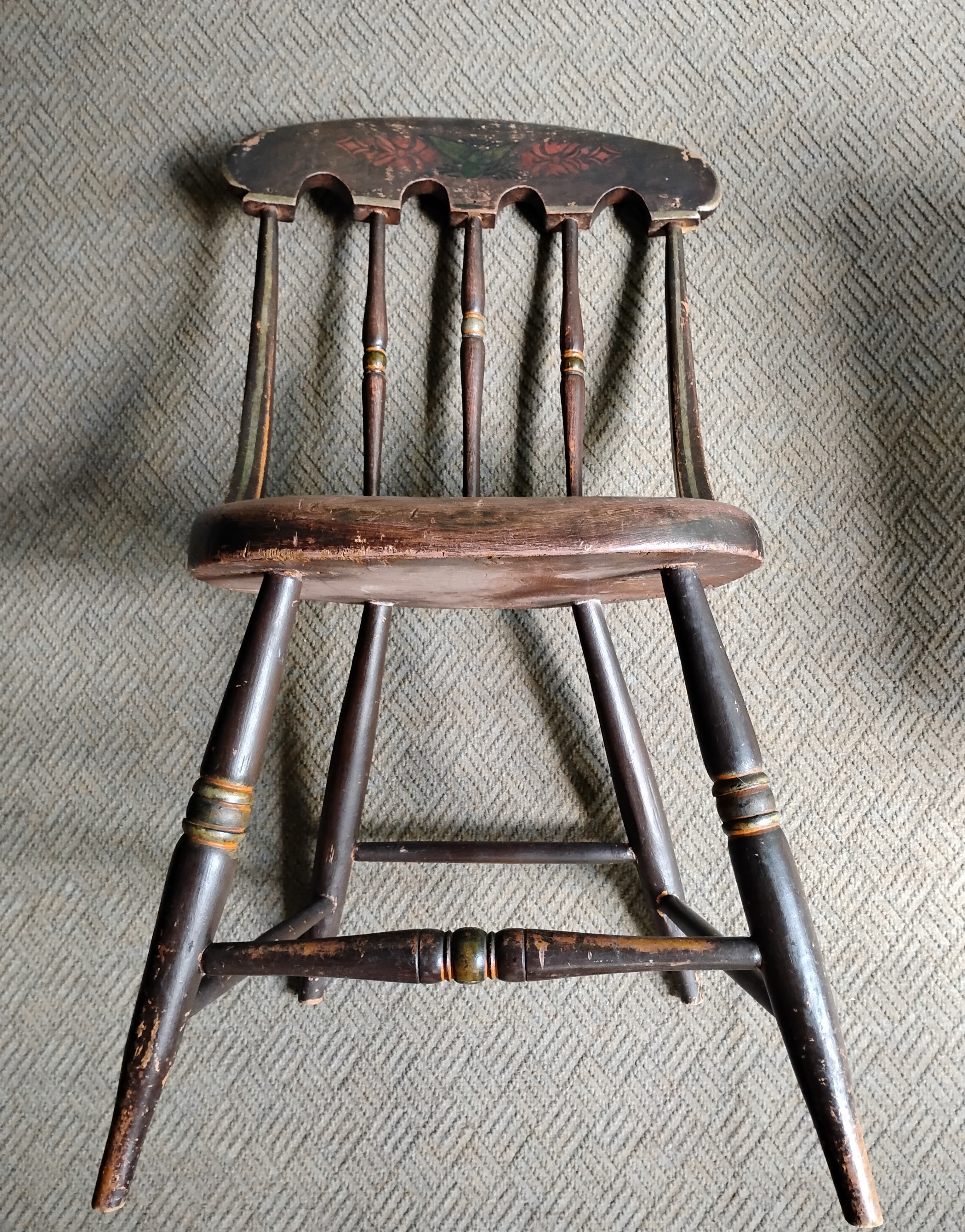
Early American Chair

D
7 months ago
AI Appraisal
Description

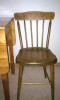
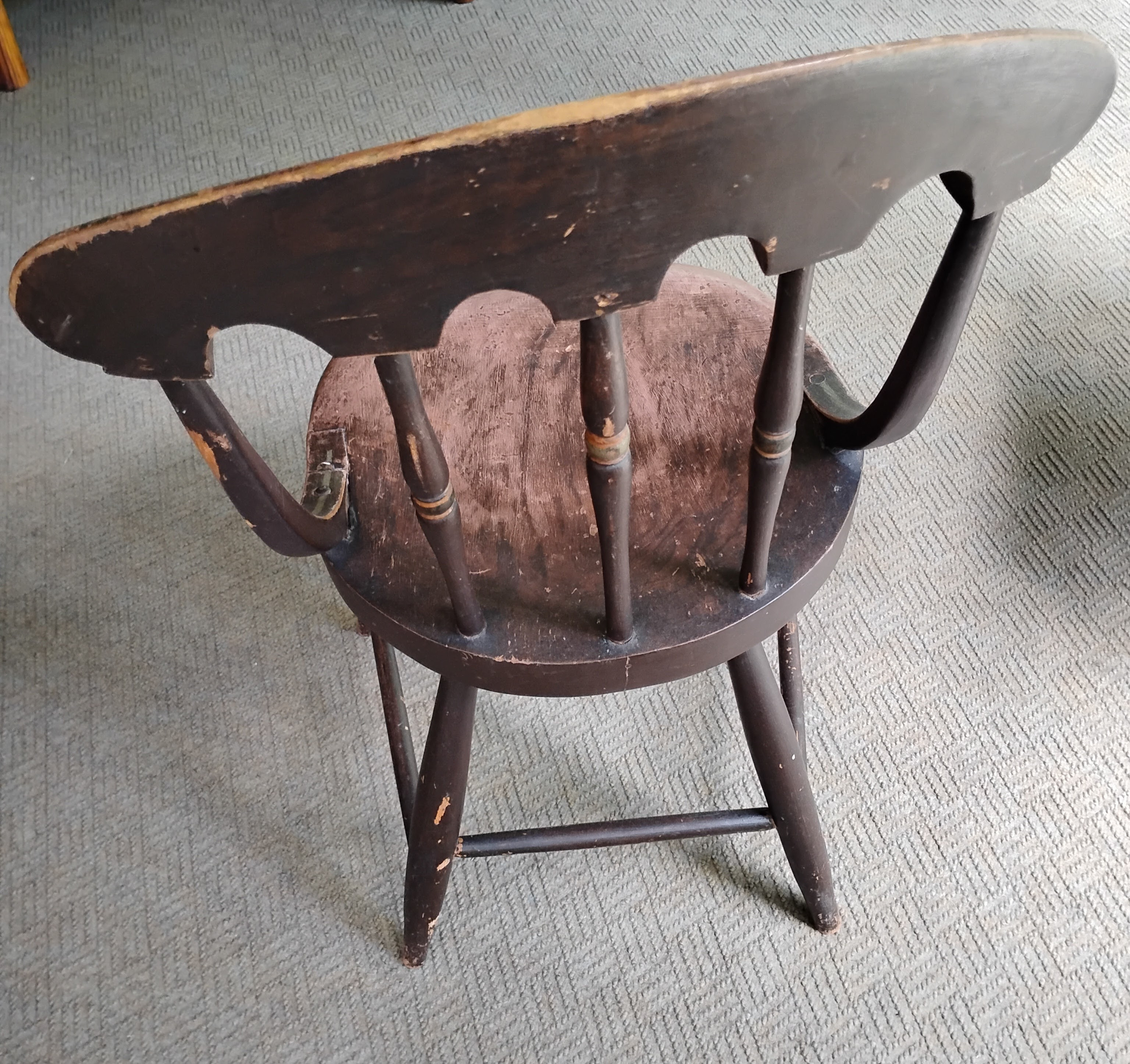
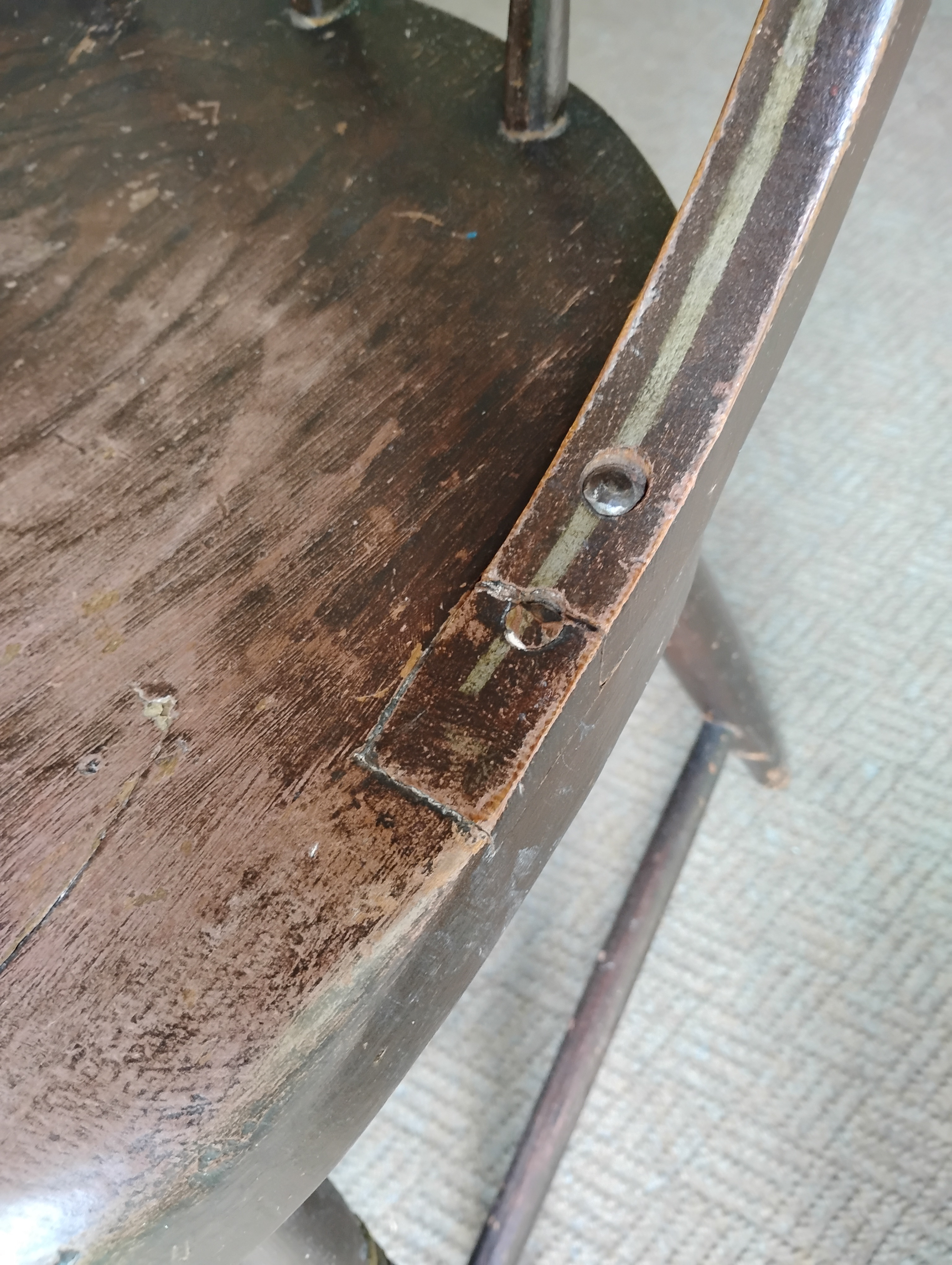
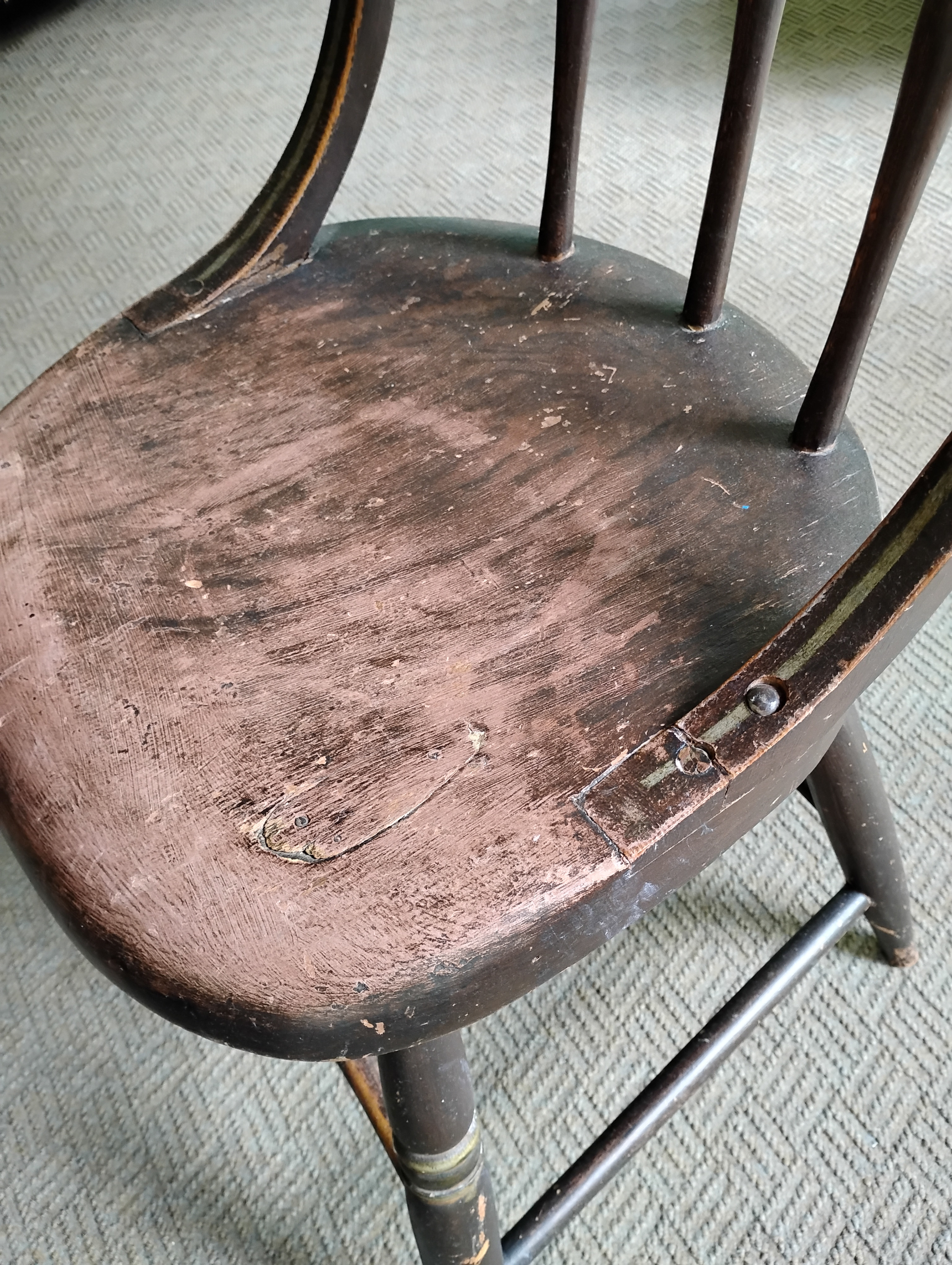
Early American side/desk chair with what appears to be repair on one side. Solid wood,

Category Furniture
Medium Wood
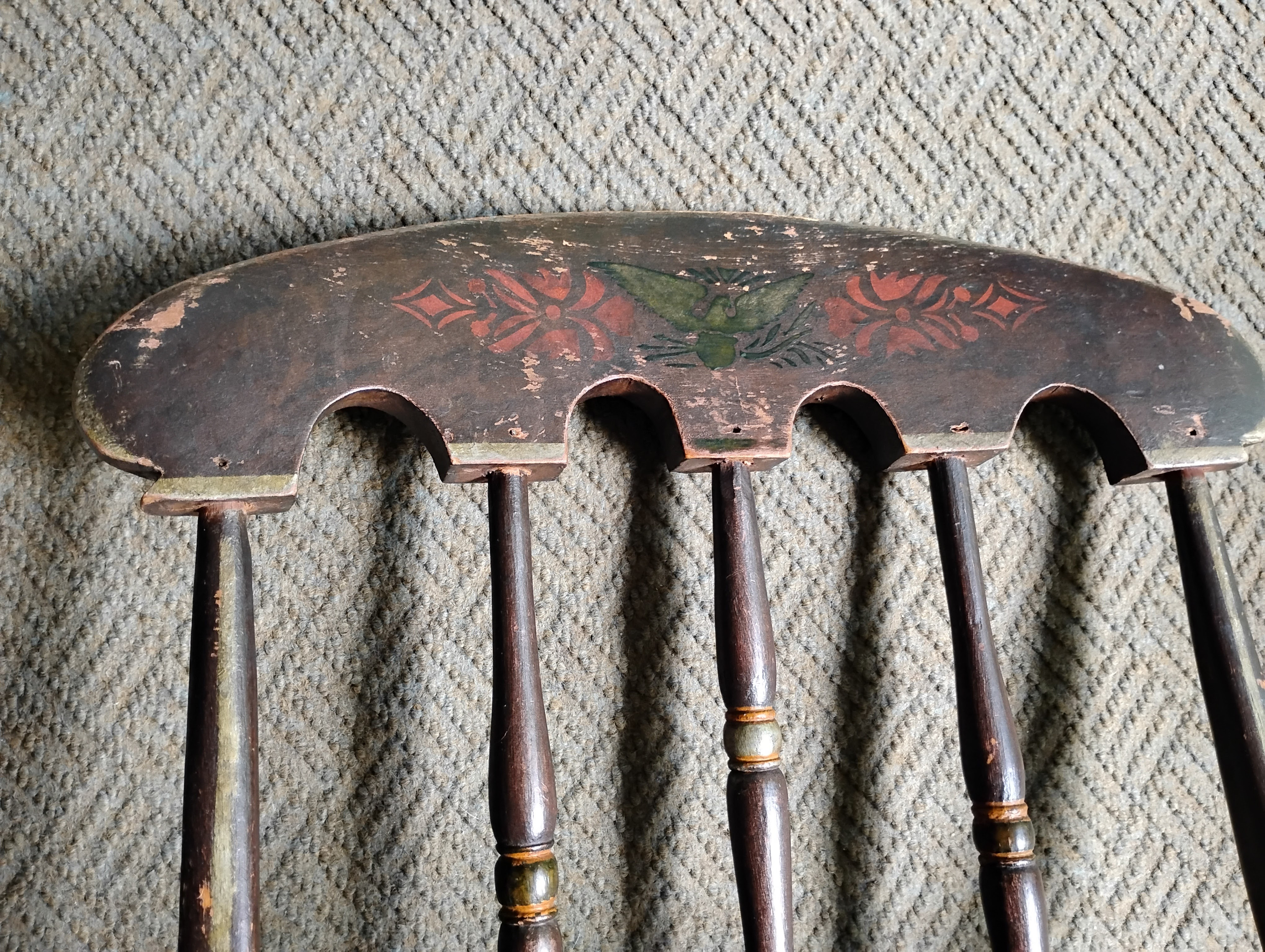
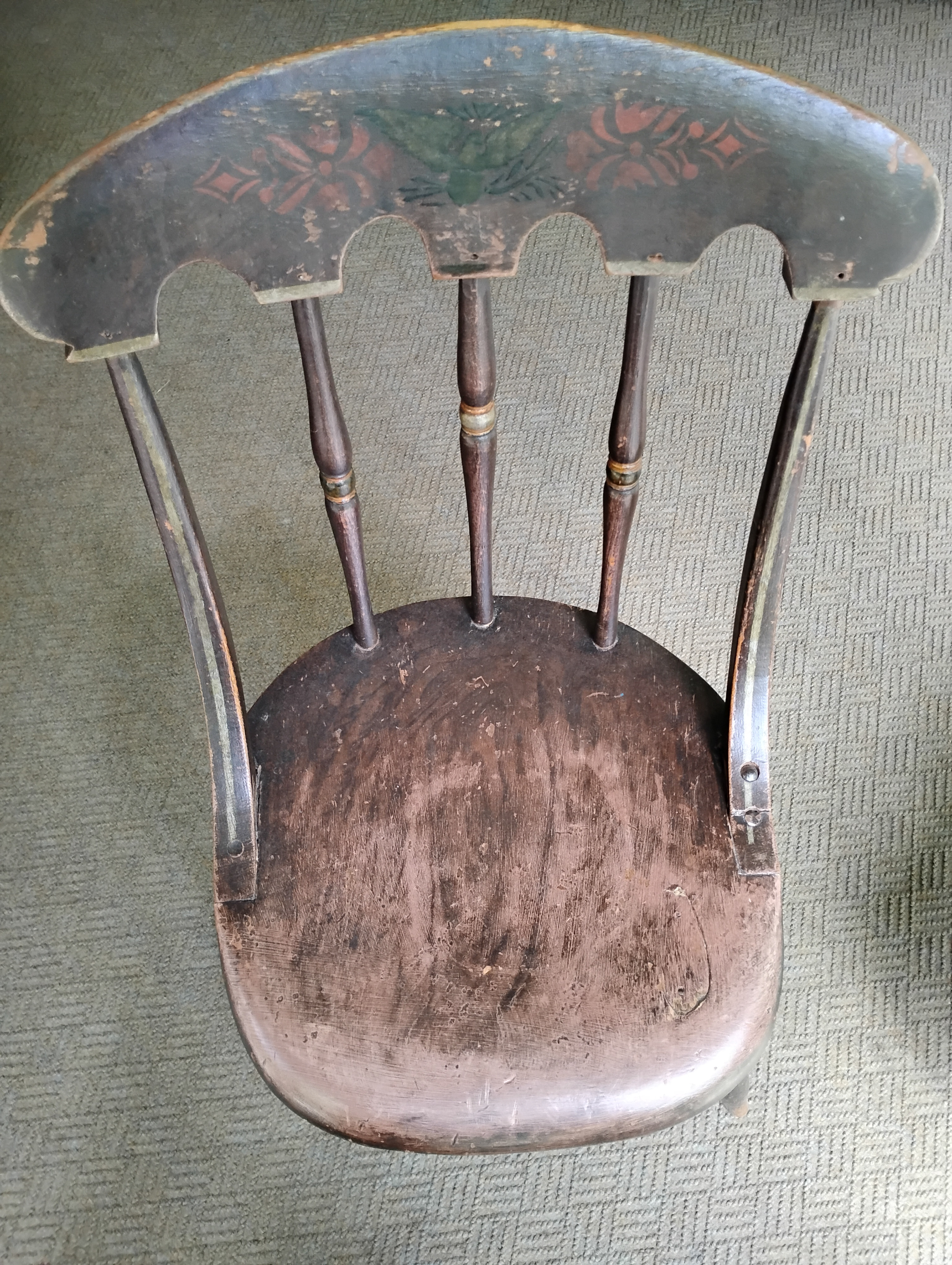
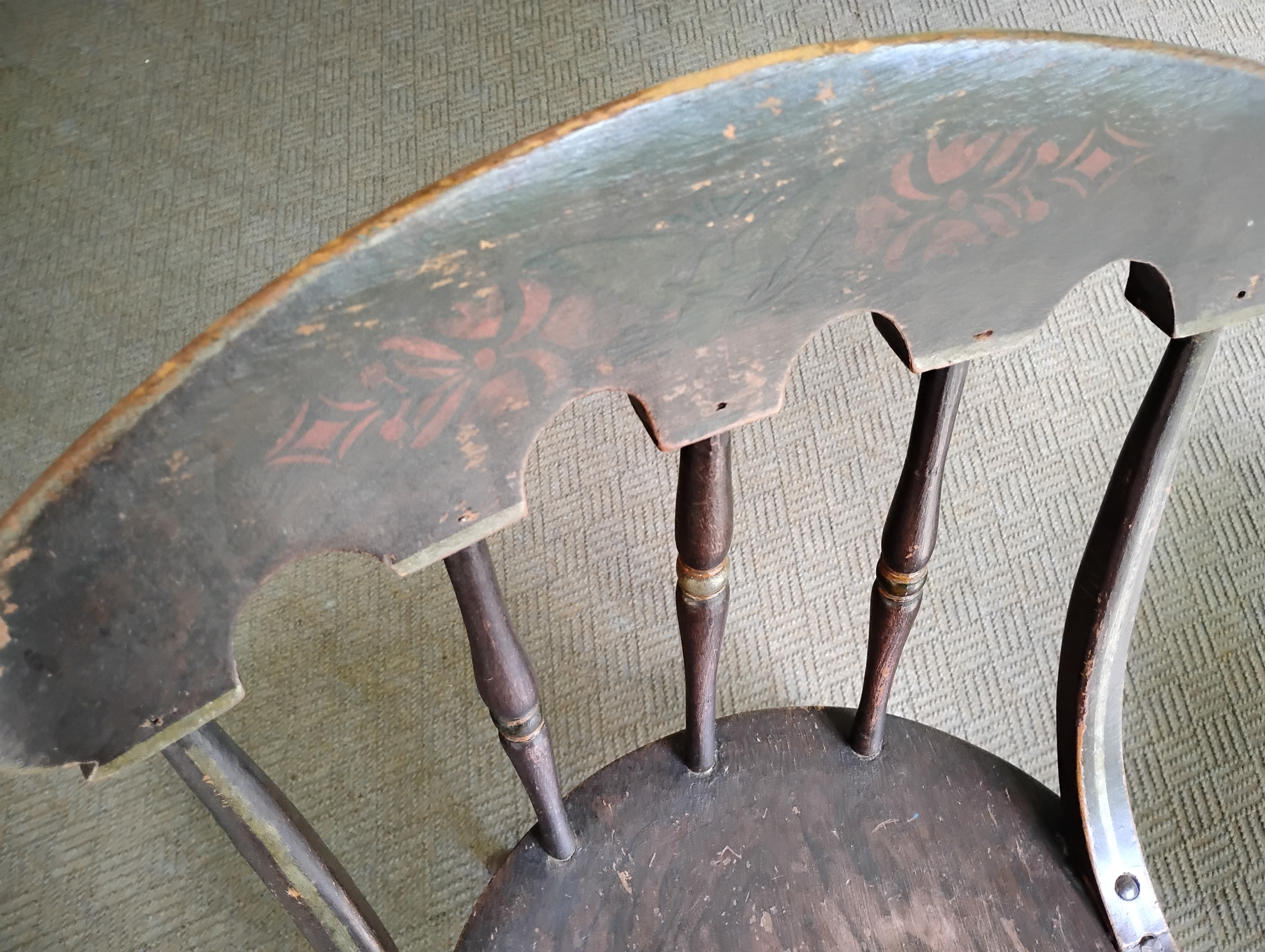
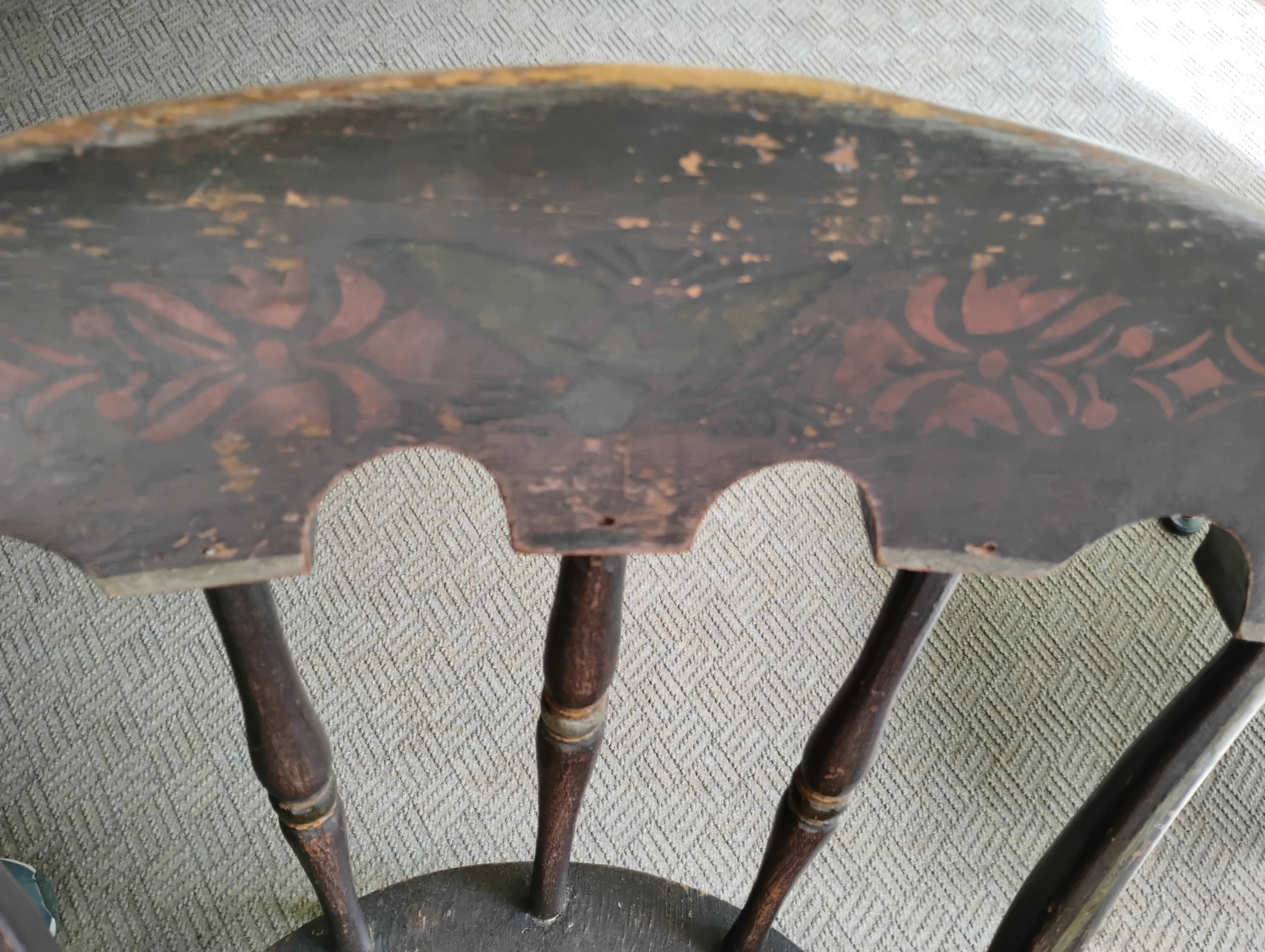
Distinguishing marks Stenciling on front of seat back.
Condition Good
Size and dimensions of this item 33" Height, 17" seat height, 18" width at leg bottom
Date Period 1800's ??
History Purchased over 20 years ago at a yard sale.
Want more from your appraisals?

Upgrade for PDF reports, more daily appraisals, and ad-free experience.

View Plans →

Submitted by NaidaTheCollector

Item: Early American Painted Bow-Back Side Chair
Date Period: Likely early to mid-19th century (circa 1820–1860)
Origin: New England or Mid-Atlantic United States
Style: American Country or Folk Windsor Variant
Construction: Hand-turned spindles, plank seat, stenciled crest rail
Medium: Painted hardwood (likely maple, birch, or mixed woods)
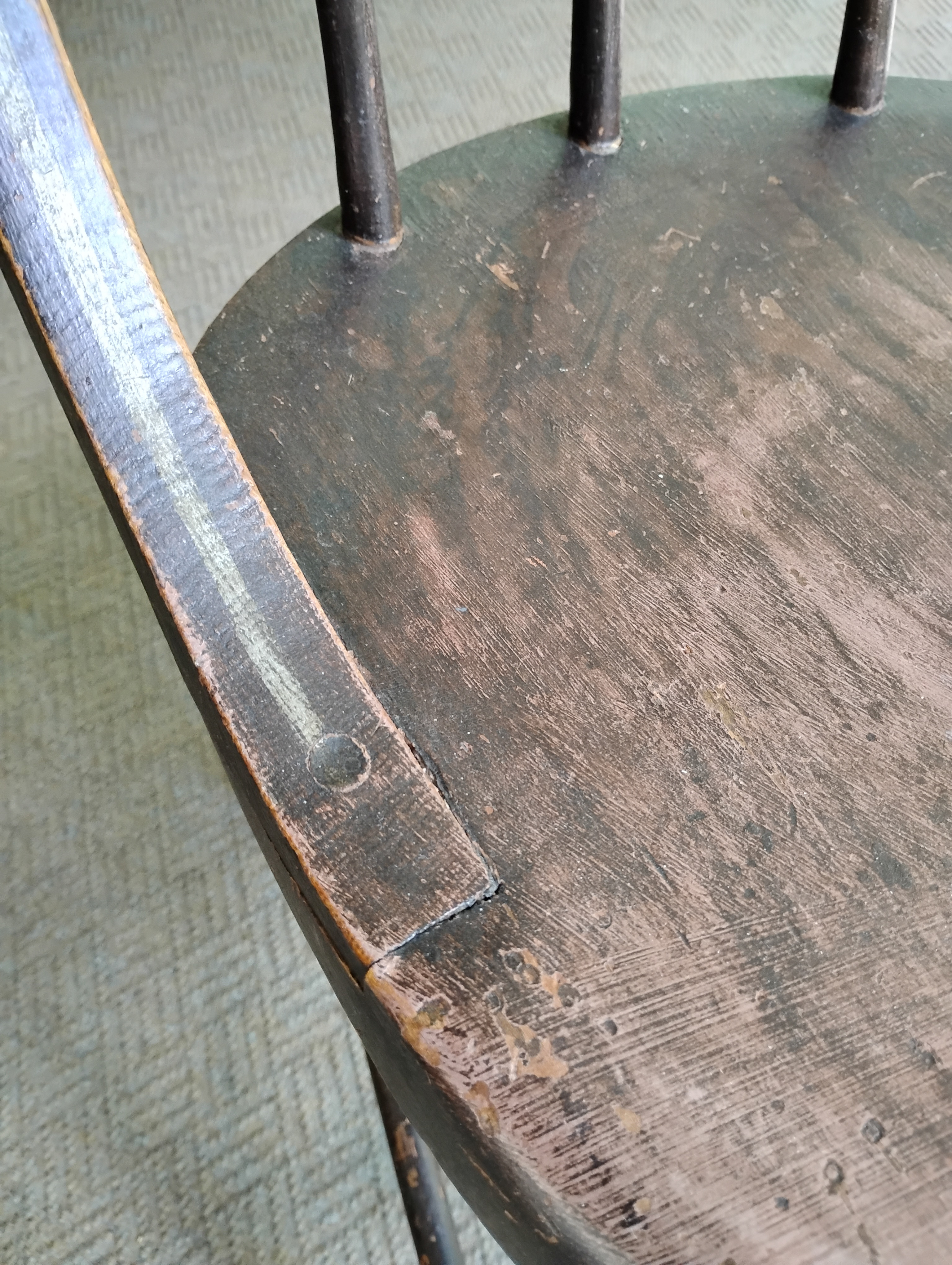
Condition: Fair to good, with age-related wear and signs of repair
Estimated Value (Retail / Decorative): $125–$250 USD
Estimated Value (Historical / Collector, unrestored): $150–$300 USD
Professional Appraisal Recommended: Yes, for insurance or historical authentication purposes

Detailed Analysis

1. Identification and Features:

  • The bow-back design with turned spindles and splayed legs is typical of American Windsor chairs, a style originating in the 18th century and continuing through the 19th.
  • The stenciled decoration on the crest rail with floral motifs suggests a regional folk-art influence, common in New England chairs from the early to mid-1800s.
  • The chair appears to be painted and worn down naturally, not artificially distressed, indicating authentic aging.
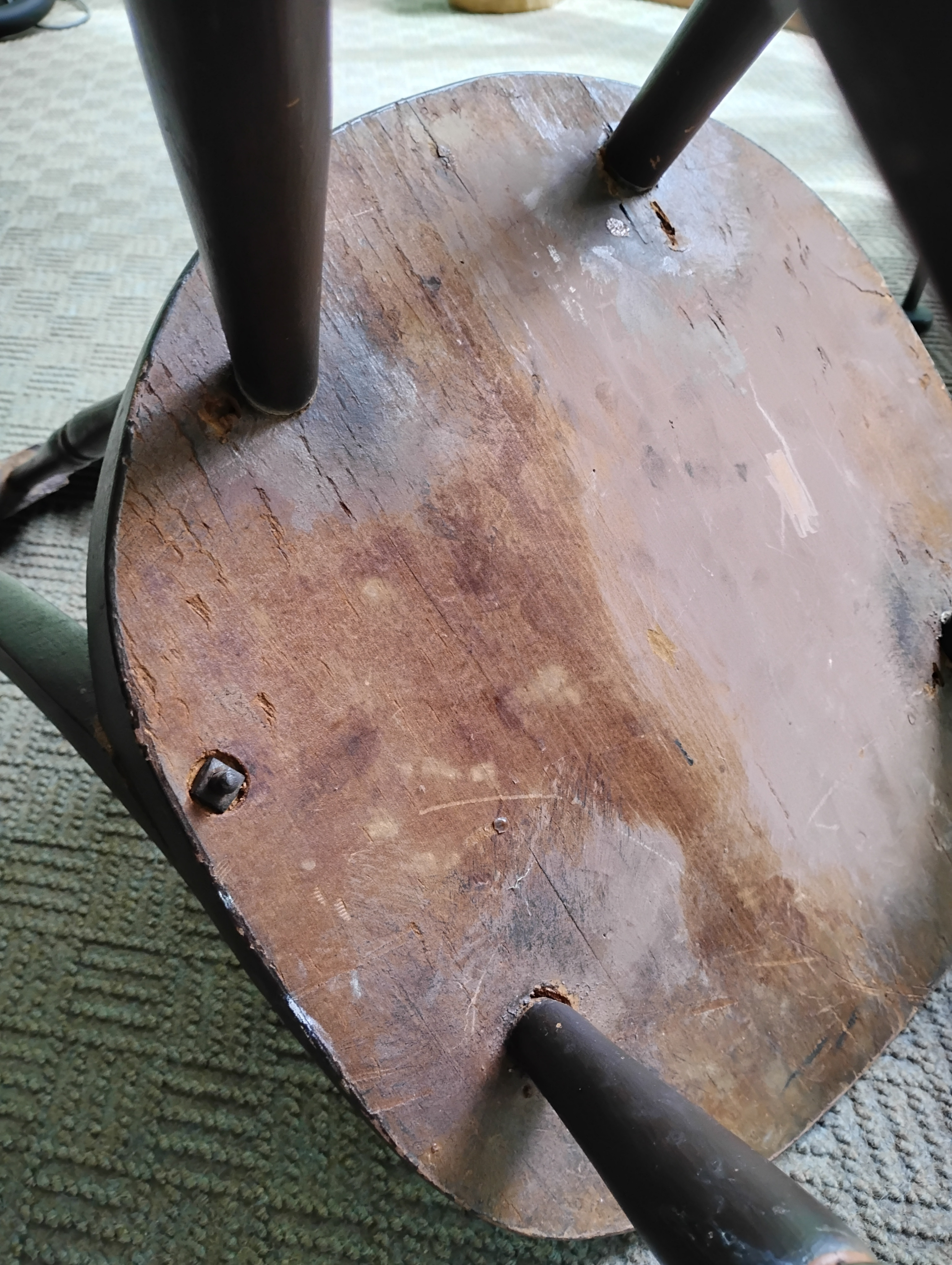
  • Wedged and pinned joints, as well as screws visible in later repairs, suggest both original handwork and mid-life reinforcement.

2. Condition Notes:

  • Original paint is significantly worn but still present in places.
  • One of the arms appears to have been repaired, possibly with a modern bracket or glue.
  • Wear on the seat is consistent with long-term use but no major structural damage is visible.
  • Underside wear and oxidation support its age, and visible tool marks confirm handwork.

3. Historical Context:

  • These types of chairs were common in American rural homes, schoolhouses, and offices.
  • The folk-painted variants were often made in small workshops or by itinerant craftsmen, making each example somewhat unique.

Recommendations:

Preservation:

  • Avoid aggressive refinishing, which could reduce historical and collector value.
  • A gentle cleaning and wax polish (like Briwax or Howard Feed-N-Wax) may enhance its appearance without compromising the original finish.

Professional Evaluation:

  • If you intend to insure, restore, or formally appraise it, consult a certified antique furniture appraiser or museum curator with experience in 19th-century American decorative arts.
📸 Quick Scan
Garage-Sale Mode Fast appraisals on the go