This appraisal is provided for informational and educational purposes only and does not constitute a certified, licensed, or formal appraisal.
Appraisal results are generated using automated systems, including artificial intelligence, and are based solely on the information and images submitted by the user, along with publicly available data. As such, results may contain inaccuracies, omissions, or errors.
InstAppraisal does not authenticate items. No determination of authenticity, origin, materials, maker, or age should be considered verified. Many items—particularly luxury goods, watches, jewelry, coins, art, and designer products—are frequently counterfeited and may closely resemble genuine examples. Authenticity cannot be confirmed from images alone.
Any statements regarding authenticity are expressions of opinion only and should not be relied upon as fact. Independent professional authentication is strongly recommended before any purchase, sale, or valuation decision.
Appraisal values are estimates only and may vary significantly based on condition, provenance, market demand, and additional information not available at the time of review.
Appraisals must not be relied upon for insurance, legal, tax, estate, or financial purposes without independent professional verification.
InstAppraisal disclaims all liability for any losses, damages, or disputes arising from reliance on this appraisal, including transactions conducted based on the information provided.
By using this service, you acknowledge and agree that you assume all risk associated with reliance on appraisal results.
Would like to know age of…
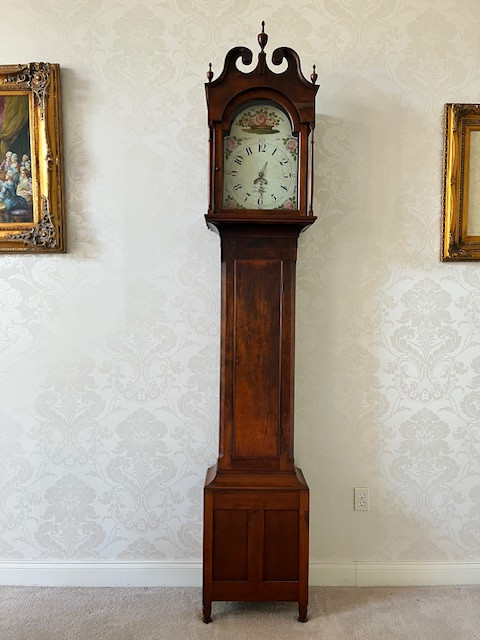
Would like to know age of clock and worth. I found some information on a Thomas Weaver from England who painted mostly cattle and horses. Was unable to find if he ever painted clock faces.
Your tall case clock, or …
Your tall case clock, or "grandfather clock," appears to be an early 19th-century English longcase clock with a hand-painted dial signed by Thos. (Thomas) Weaver of Milham (likely a reference to Milham, England). Based on the floral decoration, Arabic numerals, moon phase aperture, and case style, here's a detailed report:
Early 19th-Century Longcase Clock
Maker: Thos. Weaver
Origin: Milham, England
Estimated Date: Circa 1800–1830
Type: 8-day longcase clock with painted dial
Case Material: Mahogany or walnut (based on grain and patina)
Movement: Time and strike, weight-driven (chain visible), pendulum present
Dial: Hand-painted floral decoration, crackle pattern indicative of age
Size: Full-height longcase (~7–8 ft typically)
Condition:
Historical Context
Thomas Weaver was a known clockmaker active in the early 1800s in England, though not among the most widely documented. These provincial makers often created high-quality pieces for the gentry and middle class. The style of your clock aligns with the post-George III/Regency period.
Current Market Value (2025)
The value of antique longcase clocks can vary significantly based on:
Estimated Value Range:
$1,200 – $2,500 USD
If fully restored and functional: $3,000 – $3,800 USD
Recommendation