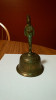

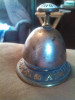
hand bell / desk bell

A
18 years ago
AI Appraisal
Category Other
Medium brass and copper inside bell /the mayflower ship looks like very good quality brass it has never tarnished
Distinguishing marks made in england inside bell,maylower ship is the handle of the bell
Condition Good
Size and dimensions of this item height 10cm diametre of the bell is 21cm
Date Period not known
Weight 165 grams
History came from my stepfarther, who purchased it from an antique shop 30 to 40 years ago looks very old
Price Paid (If known) not known
⚠️ You have 1 free appraisal left today Upgrade for 15-30/day →
Want more from your appraisals?

Upgrade for PDF reports, more daily appraisals, and ad-free experience.
View Plans →

Submitted by 250chief

I don't see any photos, but I believe you are going to find that the key information you supplied is the marking "Made in England". I have been doing some research into these markings and, while I have not been able to isolate a specific date, this is what I have so far found out: When trade between Europe and America was primarily one way (America to England) and in low amounts (sailing ships are so slowwwwww), most material sent was unmarked unless the manufacturer did so on their own. (signed it usually!) At around WWI there was an interest in where the raw materials were coming from mostly. So the materials were stamped with the country of origin of the base metal usually. So a bell stamped "England" had most of the content actually from England. Shortly after WWII the US Government wanted to TAX imported finished products. This was to 'encourage' the importing of raw material (base metals) that were in short supply but create manufacturing jobs locally. This caused the same item as an import to be higher priced than a locally produced one. I suspect that this really came into strong enforcement during the depression, so that might be why the specific date of implementation is so hard to find. Therefore the USA required all imported finished products to have the stamp "Made In ..." embedded on them. Simply so that the Tax man could apply the import tax. This means that your "Made in England" Brass Mayflower Bell, is most likely a post WWII commemorative tourist import bell. You might be able to isolate it further using a couple other 'tests'. 1. Place the bell on it's side so that the clapper falls to the bottom. Now hold a reasonably strong magnet to the bell lip furthest away from the clapper. If it sticks, you have a high iron content. The scrapping of now redundant WWII iron ships resulted in a glut of iron on the market for a few years. So a number of bells were produced of Iron and then plated with other metals (silver and copper as the most common ones). 2. Check the Clapper, is it of the same material or iron or a scrap of some other metal hung in place? Is it an all in one molded clapper or is it hung from a chain? How is it attached to the bell? (Molded in hanger? Stapled with recessed grab points? Stapled directly to the inside? Hung from an eyebolt screwed into the handle from the underside?) Generally, the cheaper the construction the newer the bell. You may also be able to match some of these features with known bells in books or museums - even if your particular style does not appear. I hope this helps, But enjoy your bell anyway- sounds like it also has some family heritage also being attached to it now! Garry
📸 Quick Scan
Garage-Sale Mode Fast appraisals on the go