
Photos Submitted for Appraisal
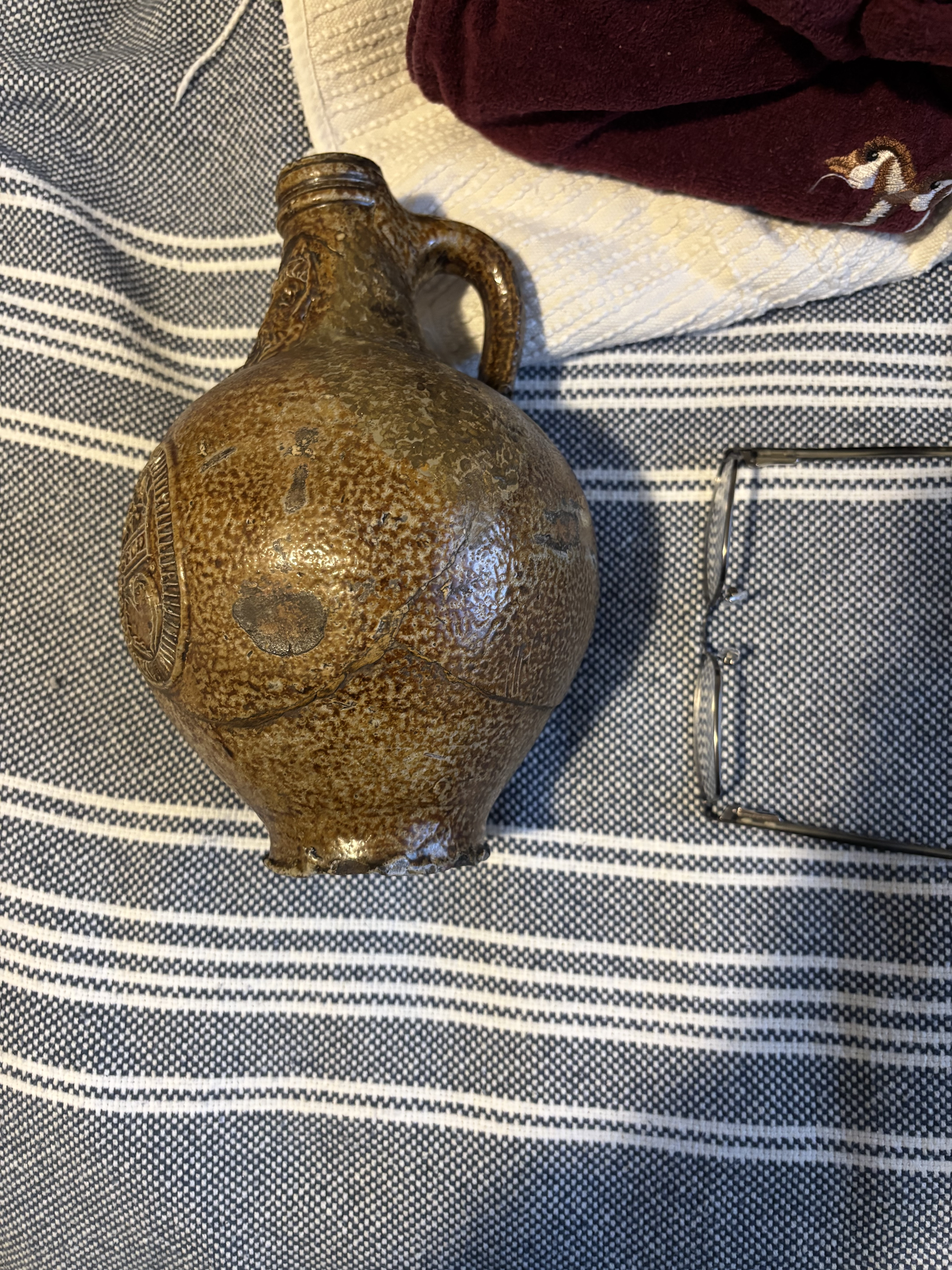
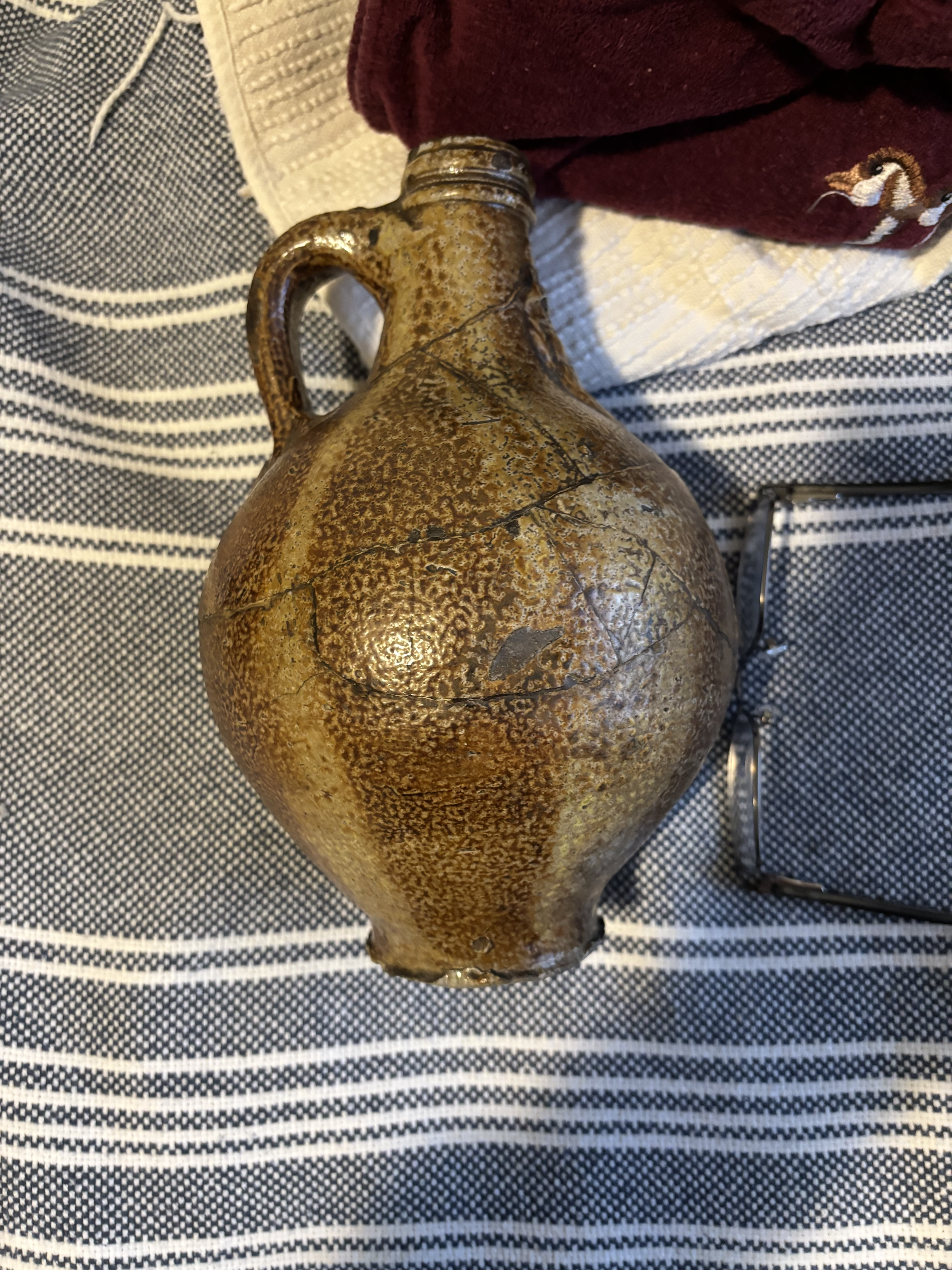
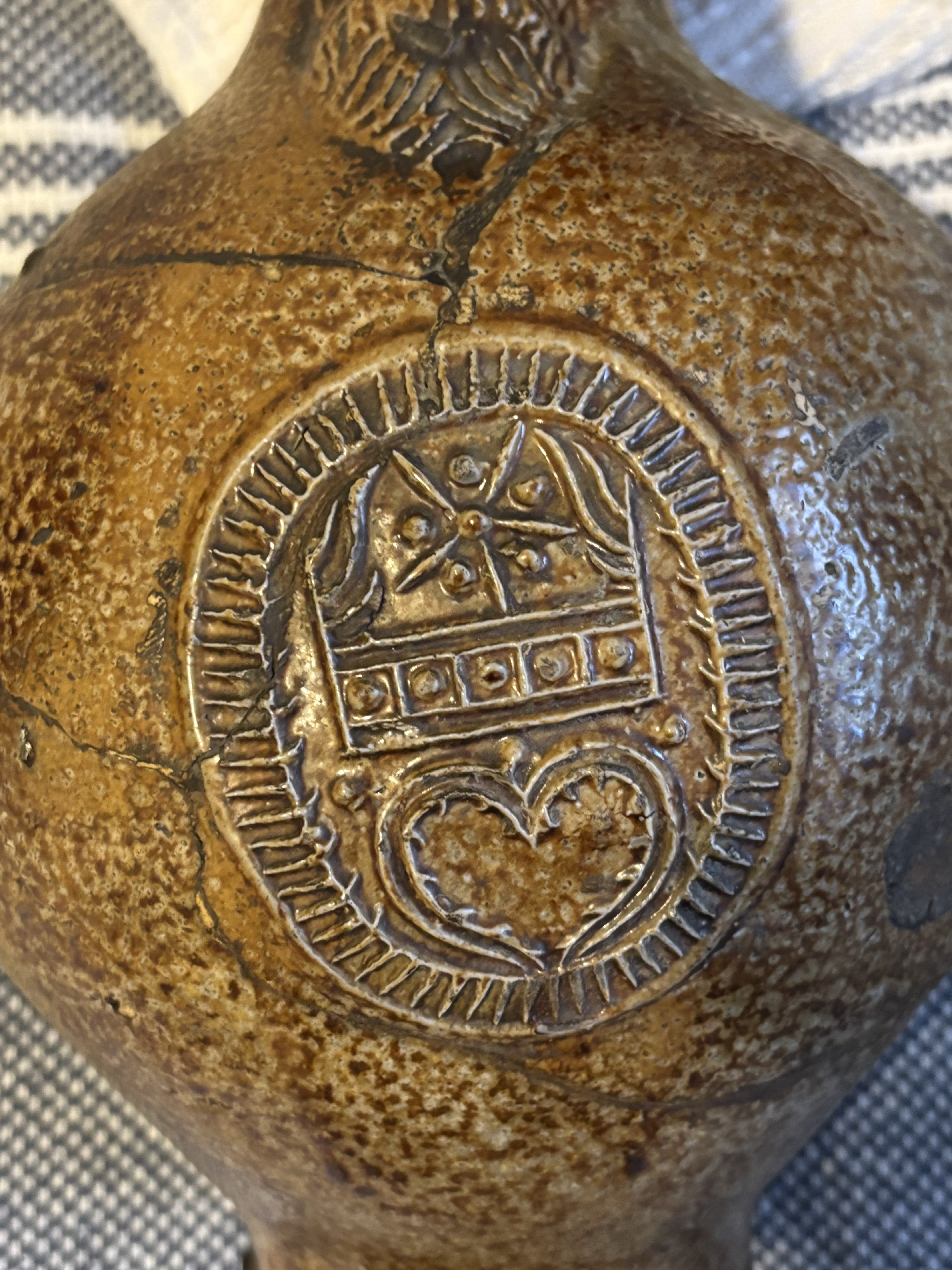
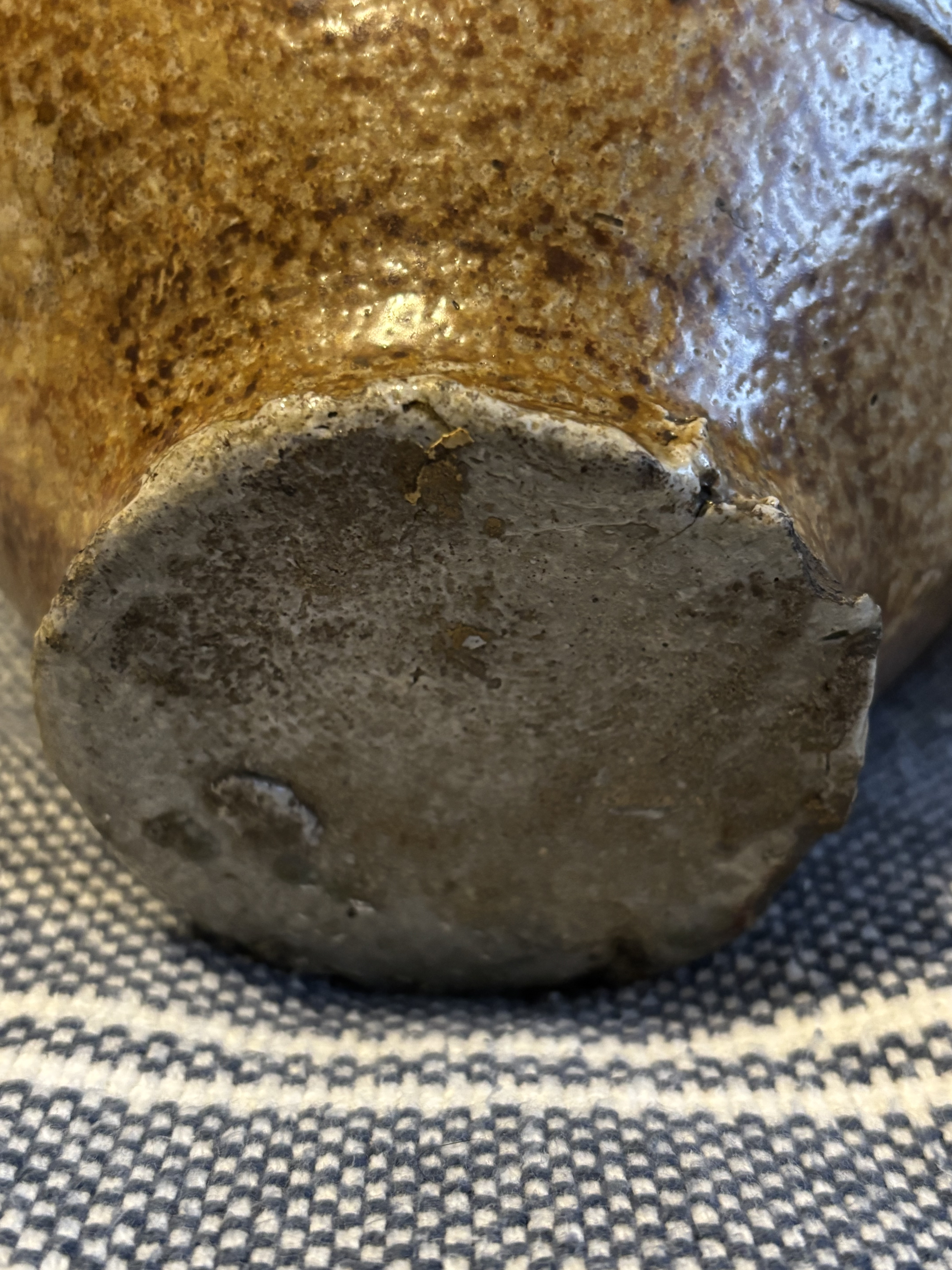
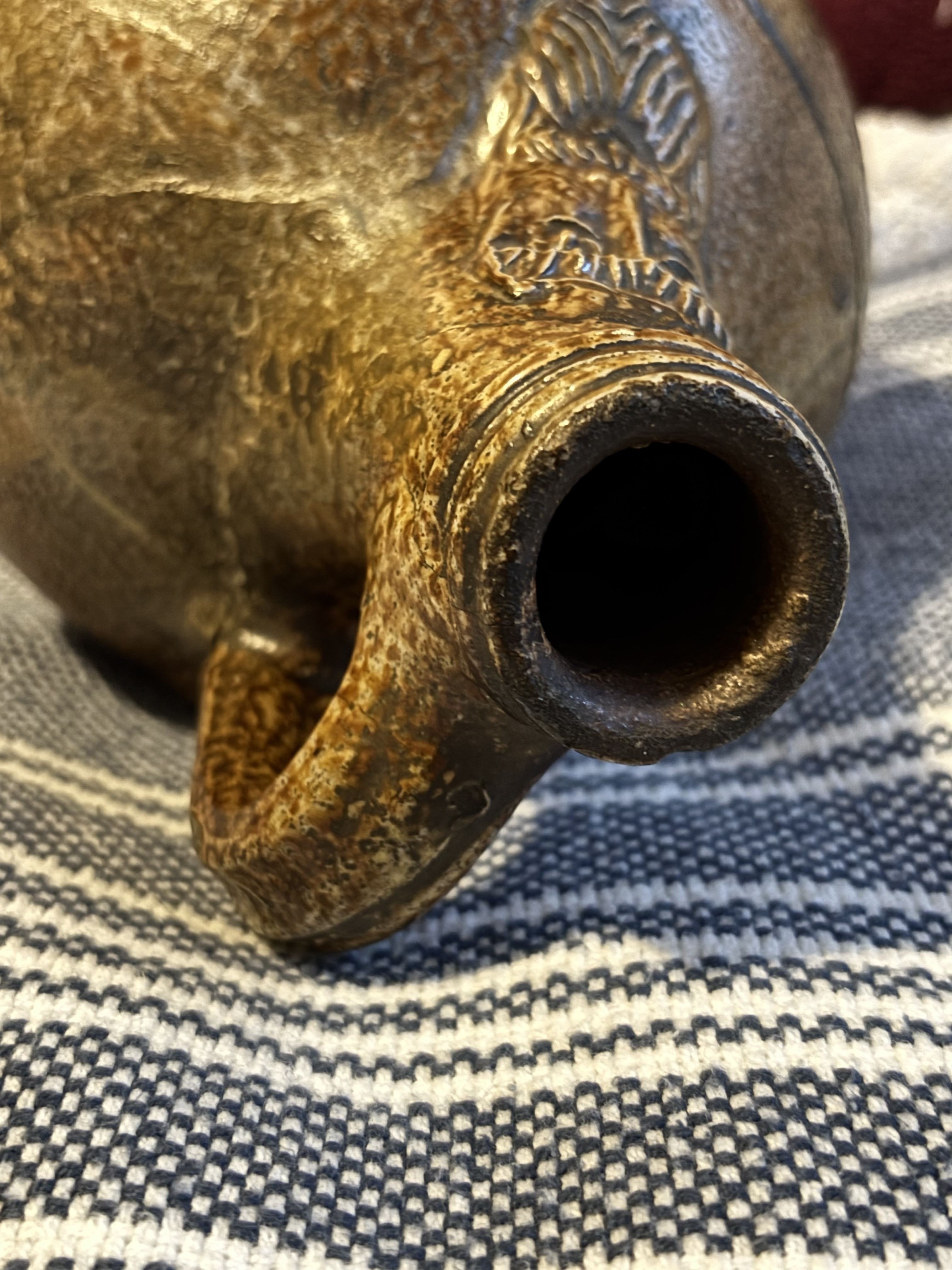
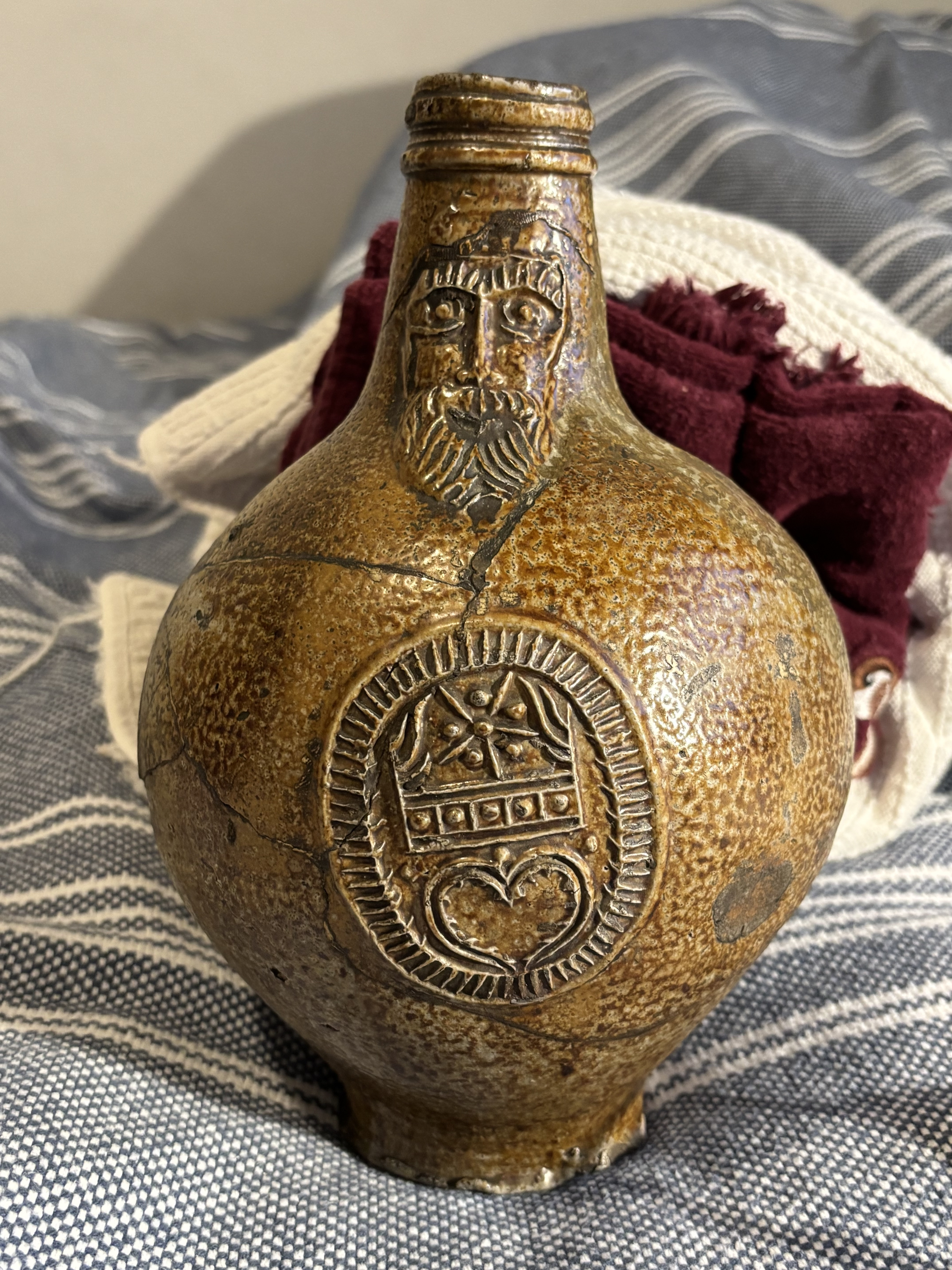
🔍 Click to enlarge and inspect marks, signatures, and condition detailsTap to zoom and inspect details
AI Appraisal
Description
I've seen one other in a museum in Canterbury England. Theirs was described as Germanic dated early 1600s. Unverified. Theirs was also in very poor condition.
Category
Ceramics and Porcelains
Condition
Fair
Collectors with this item
Want to appraise yours? Upload photos for a free appraisal →
⚠️ You have 1 free appraisal left today
Upgrade for 15-30/day →
Want more from your appraisals?
View Plans →
Upgrade for PDF reports, more daily appraisals, and ad-free experience.
Collector Discussion
Do you recognize this piece? Collectors often identify maker marks, share comparable sales, or suggest additional research steps.
Salt-Glazed Bartmann Jug (Bearded Man Jug)
Salt-Glazed Bartmann Jug (Bearded Man Jug)
Object Type:
Bartmann jug (also known as a Bellarmine jug)
Category: Ceramics and Porcelains
Material: Salt-glazed stoneware
Estimated Origin: Cologne or Frechen, Rhineland, Germany
Date: Early to mid-17th century (circa 1600–1650)
Dimensions: Approximate size based on eyeglasses (7–10” tall)
Identification and Description:
Your item is a Bartmann jug, a form of salt-glazed stoneware that was widely produced in the Cologne and Frechen regions of Germany from the 1500s through the 1700s. These jugs are immediately recognizable due to the applied bearded face mask on the neck and medallion-like stamped decoration on the belly.
Condition:
Historical Significance:
Bartmann jugs were used primarily for storing and transporting liquids like wine, beer, or spirits. Their robust design made them ideal for trade, and they were exported extensively, turning up in archaeological sites around the world, including colonial America and England.
Given that you saw a similar one in a museum in Canterbury, England, it's entirely plausible yours was also exported early or collected in the 19th or 20th century.
Estimated Market Value (as is):
Note: Jugs with visible repairs and cracking fetch much less than intact examples, but early 17th-century Bartmann jugs are still highly desirable among collectors of early ceramics and European export ware.
Authentication:
Based on the form, applied decoration, salt glaze, and material, this jug appears to be authentic and period-correct for an early 17th-century German Bartmann jug. That said, a professional appraisal or ceramic expert (e.g., through a major auction house or regional museum) could verify this with high certainty, especially if provenance or restoration history is desired for insurance or donation purposes.
Recommendation:
Thank you for the detailed…
Thank you for the detailed information!