This appraisal is provided for informational and educational purposes only and does not constitute a certified, licensed, or formal appraisal.
Appraisal results are generated using automated systems, including artificial intelligence, and are based solely on the information and images submitted by the user, along with publicly available data. As such, results may contain inaccuracies, omissions, or errors.
InstAppraisal does not authenticate items. No determination of authenticity, origin, materials, maker, or age should be considered verified. Many items—particularly luxury goods, watches, jewelry, coins, art, and designer products—are frequently counterfeited and may closely resemble genuine examples. Authenticity cannot be confirmed from images alone.
Any statements regarding authenticity are expressions of opinion only and should not be relied upon as fact. Independent professional authentication is strongly recommended before any purchase, sale, or valuation decision.
Appraisal values are estimates only and may vary significantly based on condition, provenance, market demand, and additional information not available at the time of review.
Appraisals must not be relied upon for insurance, legal, tax, estate, or financial purposes without independent professional verification.
InstAppraisal disclaims all liability for any losses, damages, or disputes arising from reliance on this appraisal, including transactions conducted based on the information provided.
By using this service, you acknowledge and agree that you assume all risk associated with reliance on appraisal results.
Re: Sewing Machine Wheeler & Wilson n 9
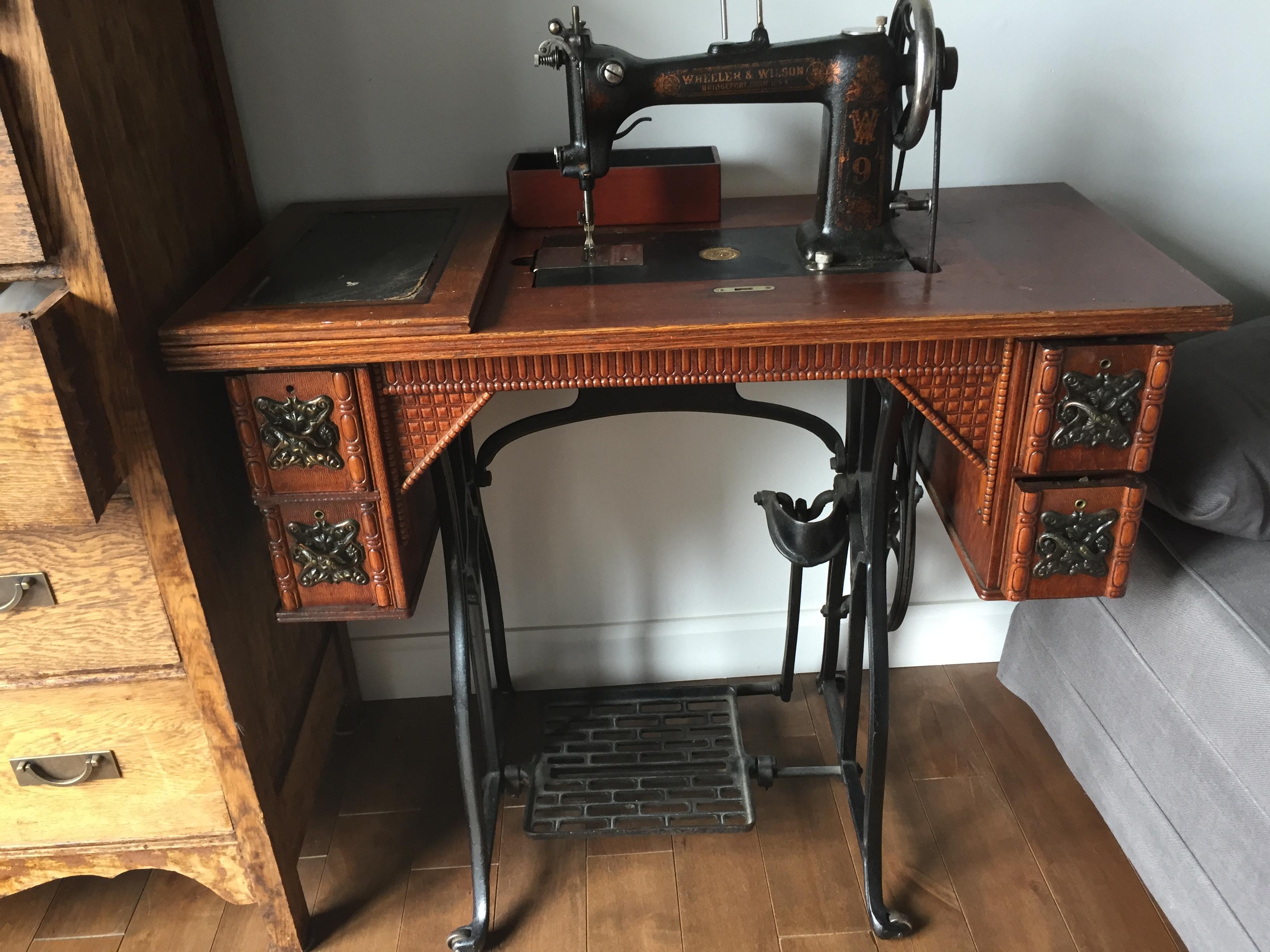
Here is what I have on file for this machine.
"Wheeler & Wilson's No. 9 machine was introduced in 1887 it was designed for Family use with its high arm it was advertised as 'The Only Perfect Sewing Machine for Family Use'.
No. 9 machines use the same bobbin mechanism as the No. 8 and very early examples have the stitch length adjuster on the pillar which was subsequently relocated to the bed and the design of the No. 9 then remained largely unchanged until the introduction of the D-9.
In 1895 the D-9 was introduced which adapted the mechanism of the No. 11 manufacturing machine. Externally the most obvious difference was the hand appliance which was more compact. In Great Britain the D-9 was primarily sold as a hand machine although it could be used with a treadle. Following the initial launch of the machine the company seems to have dropped the "D" and simply advertised it as the No. 9.
After Singer's take over of the Wheeler & Wilson Manufacturing Company in January 1907 the D-9 was produced under the Singer brand name as the 9W until at least 1913."
Sadly the values for treadle machines remain modest becuses they were made in the tens of millions, Singer alone made over 50,000,000 of them. Generally they sell at auction for under $100.00.