
Photos Submitted for Appraisal
🔍 Click to enlarge and inspect marks, signatures, and condition detailsTap to zoom and inspect details
AI Appraisal
Description
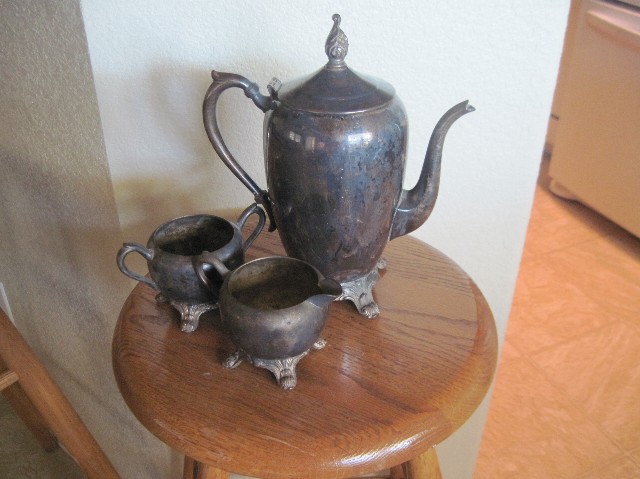
3 peice silver tea set...The lid to the sugar is missing....Needs cleaning...It was purchased at least 50 years ago...maybe longer...on the bottom is the crown trade mark 1883 and F B Rogers Siver Co.
Thanks...Judy
Category
Silver and Silver Overlay
Condition
Good
Date Period
purchased maybe in the 60's sometime
Weight
total is 4.47 lbs
History
It was purchased for my grandparent by my mother over 50 years ago...
eBay Auction Link
Collectors with this item
Want to appraise yours? Upload photos for a free appraisal →
⚠️ You have 1 free appraisal left today
Upgrade for 15-30/day →
Want more from your appraisals?
View Plans →
Upgrade for PDF reports, more daily appraisals, and ad-free experience.
Collector Discussion
Do you recognize this piece? Collectors often identify maker marks, share comparable sales, or suggest additional research steps.
Re: silver tea set
To determine a value you'd really have to polish it up first. If the plating is pitted or worn such sets have almost no value at all. Try giving it a polish and see how it comes up and get back to us.
Re: silver tea set
I always thought that polishing would damage the patina and thus significantly lower the value of the silverware. Is that not true?
In reply to Re: silver tea set by Lovejoy
Re: silver tea set
Polishing silver is a very personal choice. I have found most customers prefer their silver to be in like new polished condition and the value is rarely affected. Unless you are dealing with a piece of exceptional age or quality, the patina's devolped by authentic sterling/fine silver items often turns to black or brown over time, and is undesireable, bringing it back to life often makes selling much easier IMO. My personal prefrence is a half polish/half patina, where I leave the black patina in the cracks and grooves in the piece, which adds dark bold lines to the piece.
Again, with fine, higher end, and very old silver, I do not polish it and leave that option to the customer. If they want the patina it comes with the piece, and if they want bright and shiny an hour or two of elbow grease is put in to polishing. Once polished, especially with actively used flatware sets, a good polish should be done regularly.
As to this particular silver set, it does not matter either way and I would polish it. It is late 19th century/early 20th century plated set, very common and of little value. As it, quite frankly it is ugly. With a polish, an interior decorator or anyone looking to spruce up the decor on their kitchen table is left with a great display piece that appears to be more valuable and old than in reality.
In reply to Re: silver tea set by Joseph
Re: silver tea set
Not on electroplated silver, it was meant to be highly polished and routinely was. The key is not polishing it too often, or using overly course polishing compounds, which can eventually wear through the plating.
In reply to Re: silver tea set by Joseph