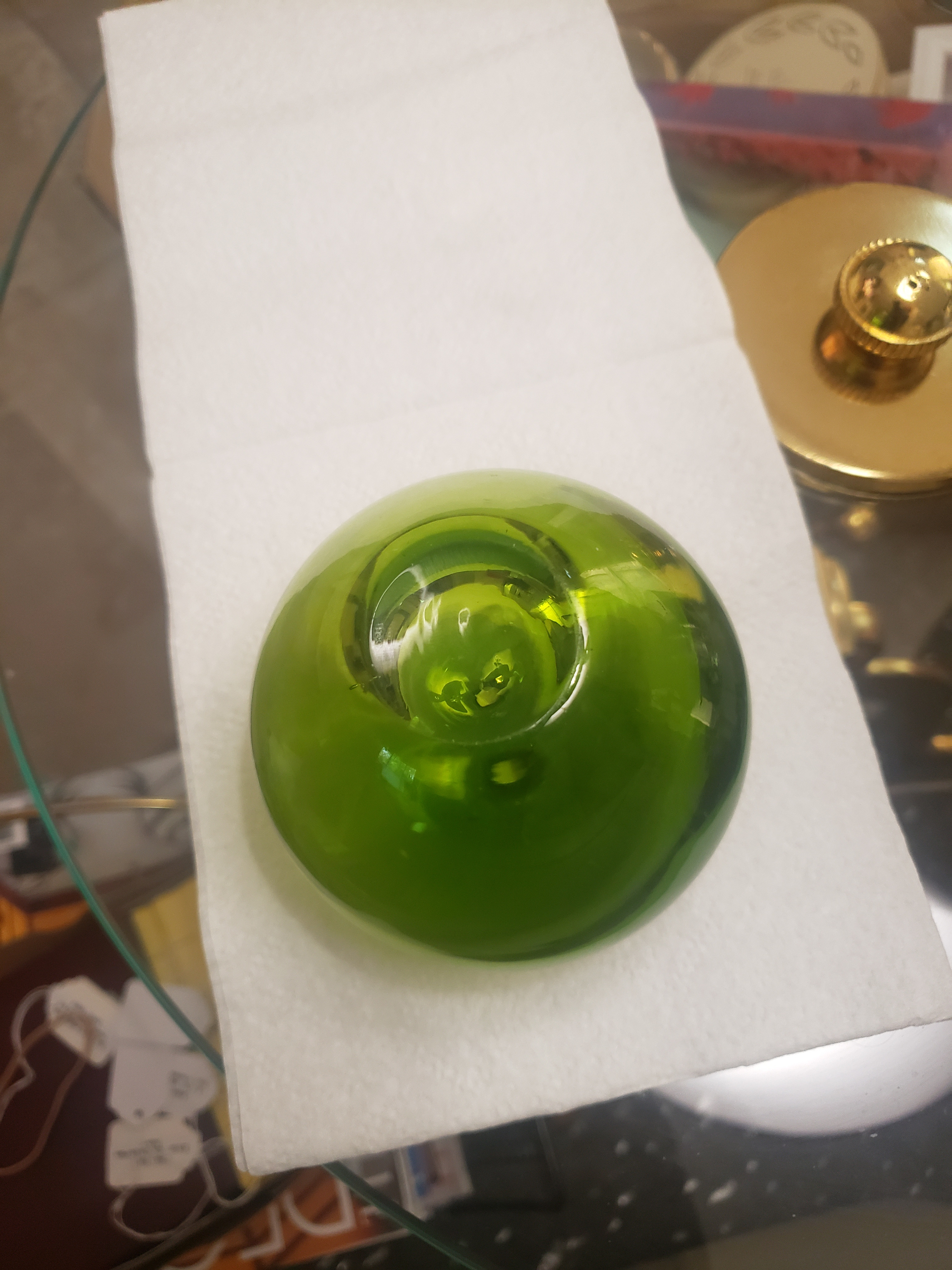
Small green glass bubble with a hole at the top of it. This item looks like it was handblown by the cut-off mark on the bottom.
Upgrade for PDF reports, more daily appraisals, and ad-free experience.
Small green glass bubble with a hole at the top of it. This item looks like it was handblown by the cut-off mark on the bottom.
Upgrade for PDF reports, more daily appraisals, and ad-free experience.
This appraisal is provided for informational and educational purposes only and does not constitute a certified, licensed, or formal appraisal.
Appraisal values are estimates based on submitted information, publicly available data, and input from InstAppraisal community, and may vary due to condition, provenance, regional demand, or additional information.
Appraisals must not be relied upon for insurance, legal, tax, or estate purposes without independent professional verification. InstAppraisal makes no guarantees regarding accuracy, completeness, or suitability for any specific use.
Small Handblown Green Glass Bubble Vase
Description & Characteristics:
This object appears to be a small handblown art glass vase or decorative bubble form, measuring approximately 4" x 4". The vivid green coloration, smooth rounded shape, and visible pontil mark (the circular scar at the base where the glassblower detached the item from the blowing rod) confirm it was likely handmade, probably by a studio glass artist. The hole at the top suggests it could function as a bud vase, incense holder, or simply as decorative glass art.
Condition:
Mint – no visible chips, cracks, or defects. Glass retains its luster and clarity.
Likely Origin & Period:
Due to the style, color, and technique, this piece likely dates from the mid-to-late 20th century (1950s–1990s), though it could be newer. These types of studio art glass pieces were popularized in the U.S. and Europe by artists such as Blenko (USA), Holmegaard (Denmark), and various unsigned studio glassmakers.
Estimated Market Value (2024):
Note: The value could increase if attributed to a known artist or studio. Because this piece is unsigned, a professional appraisal would only be necessary if you suspect it to be from a notable maker or if it’s part of a larger collection of studio art glass.