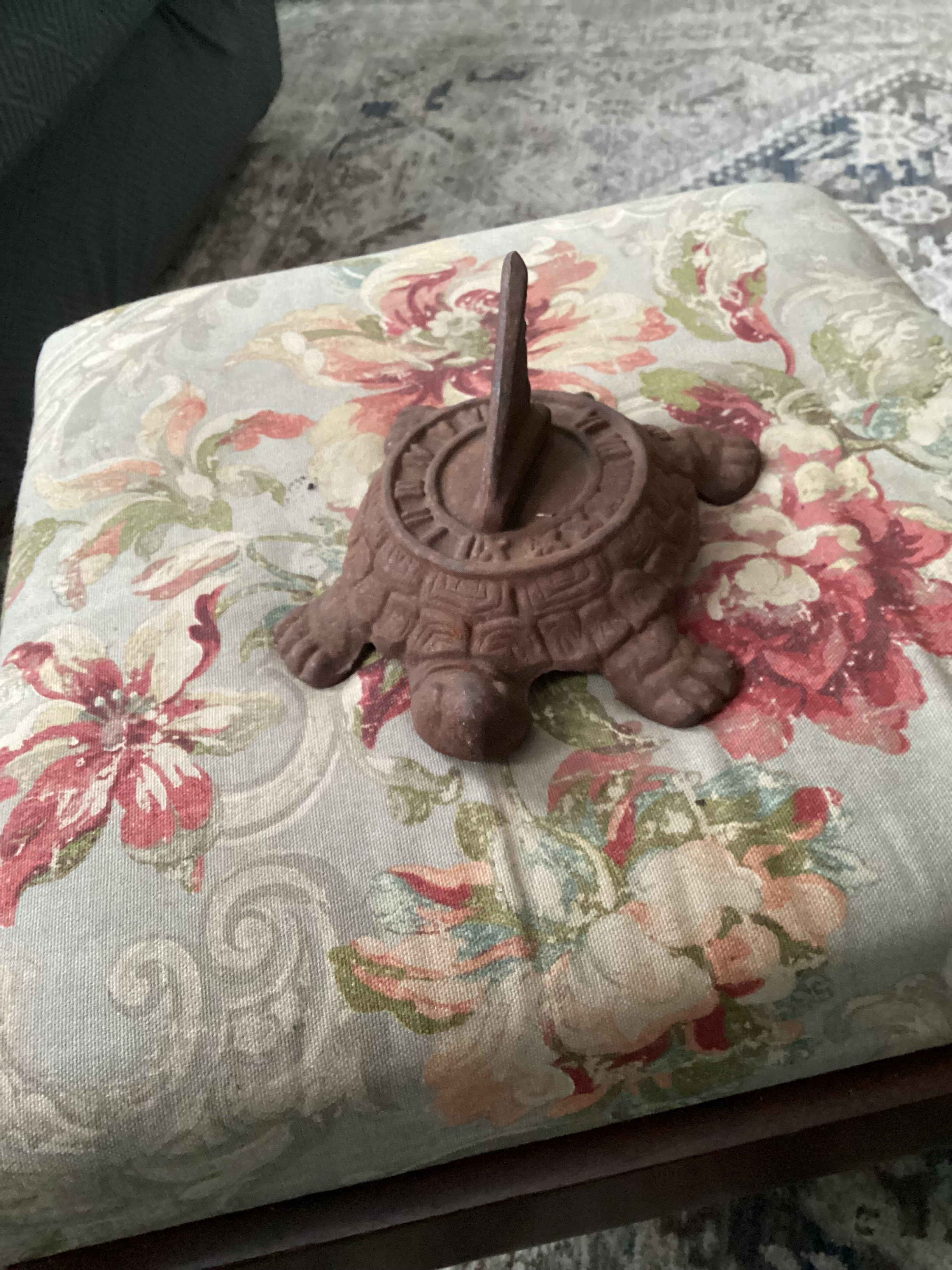
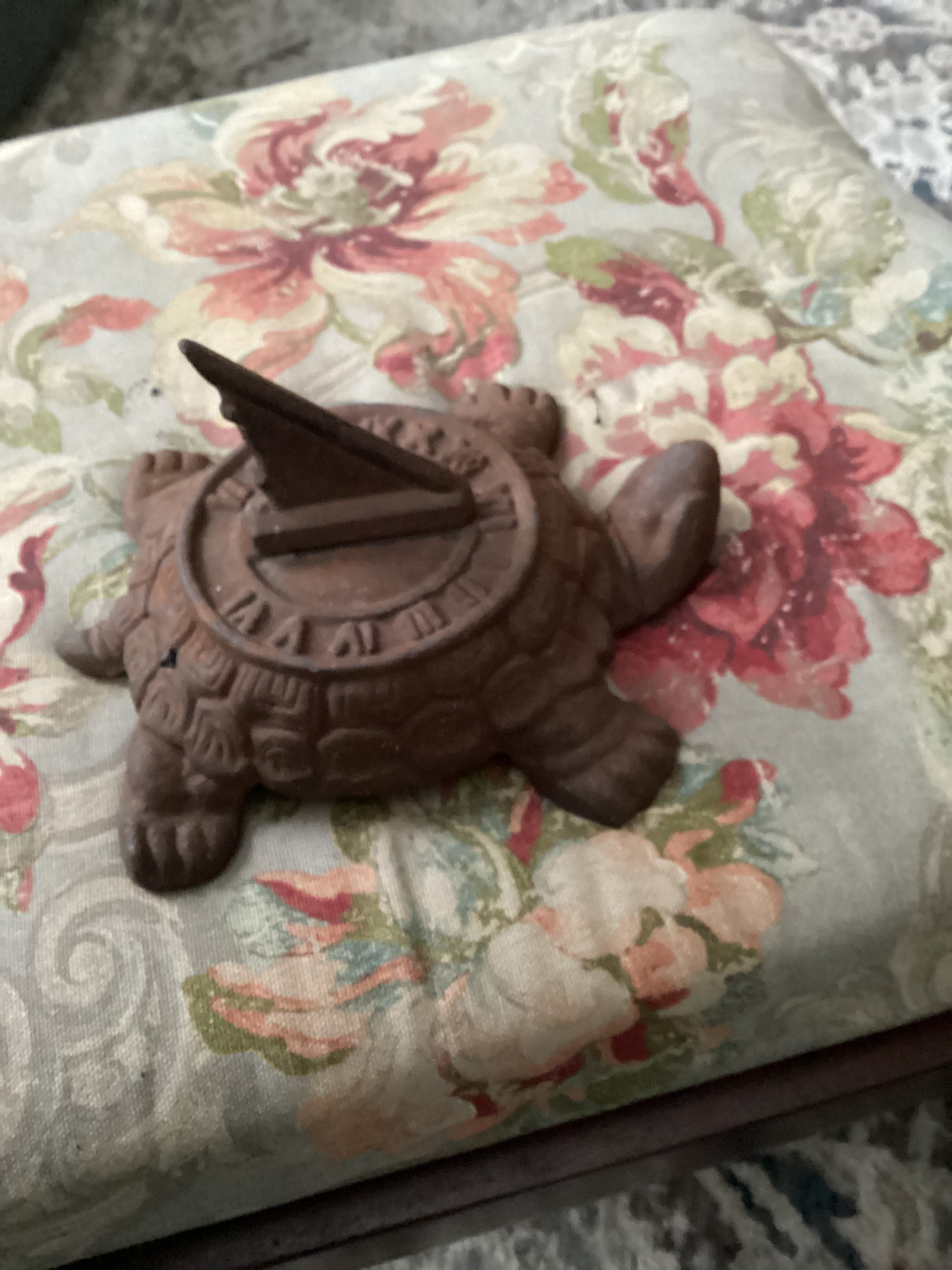
Turtle sun dial

K
4 months ago
AI Appraisal
Description

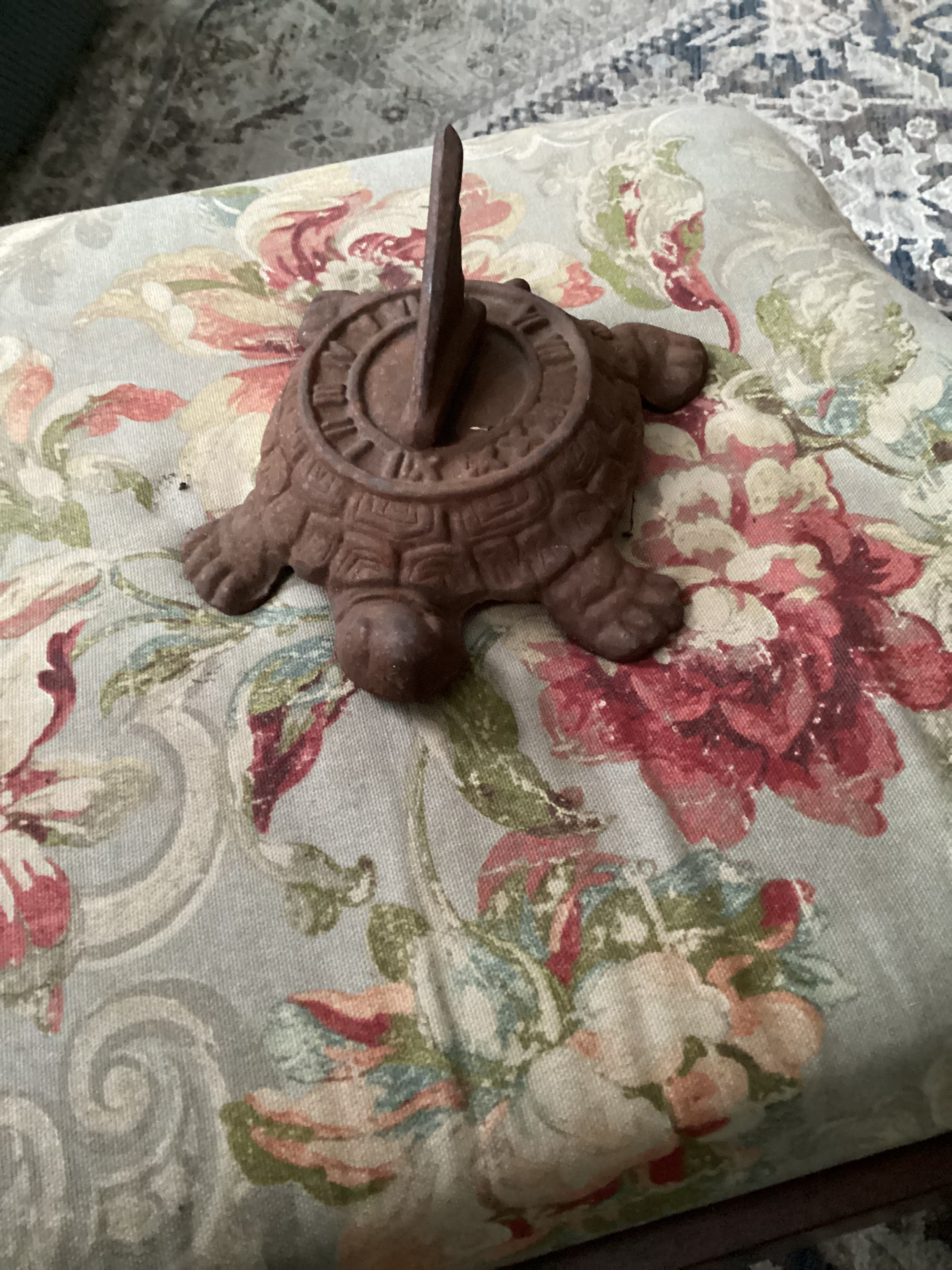
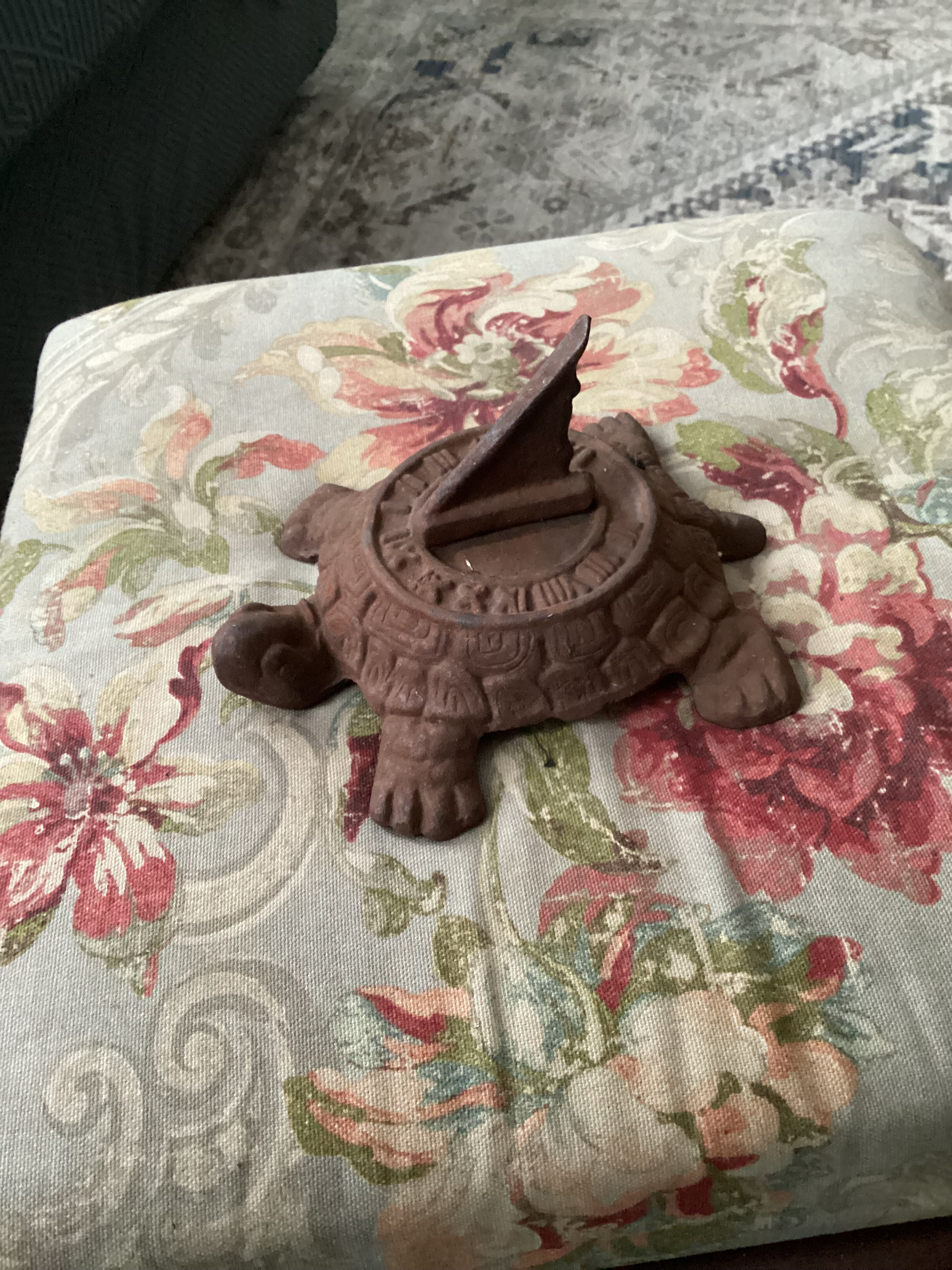
Old sun dial found in the yard of my home 

Category Metalware
Medium Heavy metal. Not sure what type.
Condition Excellent
Size and dimensions of this item 7” x 4”
Date Period Unknown
Weight Approx 1lb
Want more from your appraisals?

Upgrade for PDF reports, more daily appraisals, and ad-free experience.
View Plans →

Submitted by karoromo62

Old turtle sun dial found in my yard. My home was built in 1900

Submitted by NaidaTheCollector

What it is

  • Object: Small turtle‑form sundial with Roman‑numeral chapter ring and fixed triangular gnomon.
  • Material: Appears to be cast iron (uniform rust-brown patina, rough sand‑cast underside; will attract a magnet).
  • Size: c. 7" L x 4" W (miniature/desktop scale rather than garden‑pillar scale).
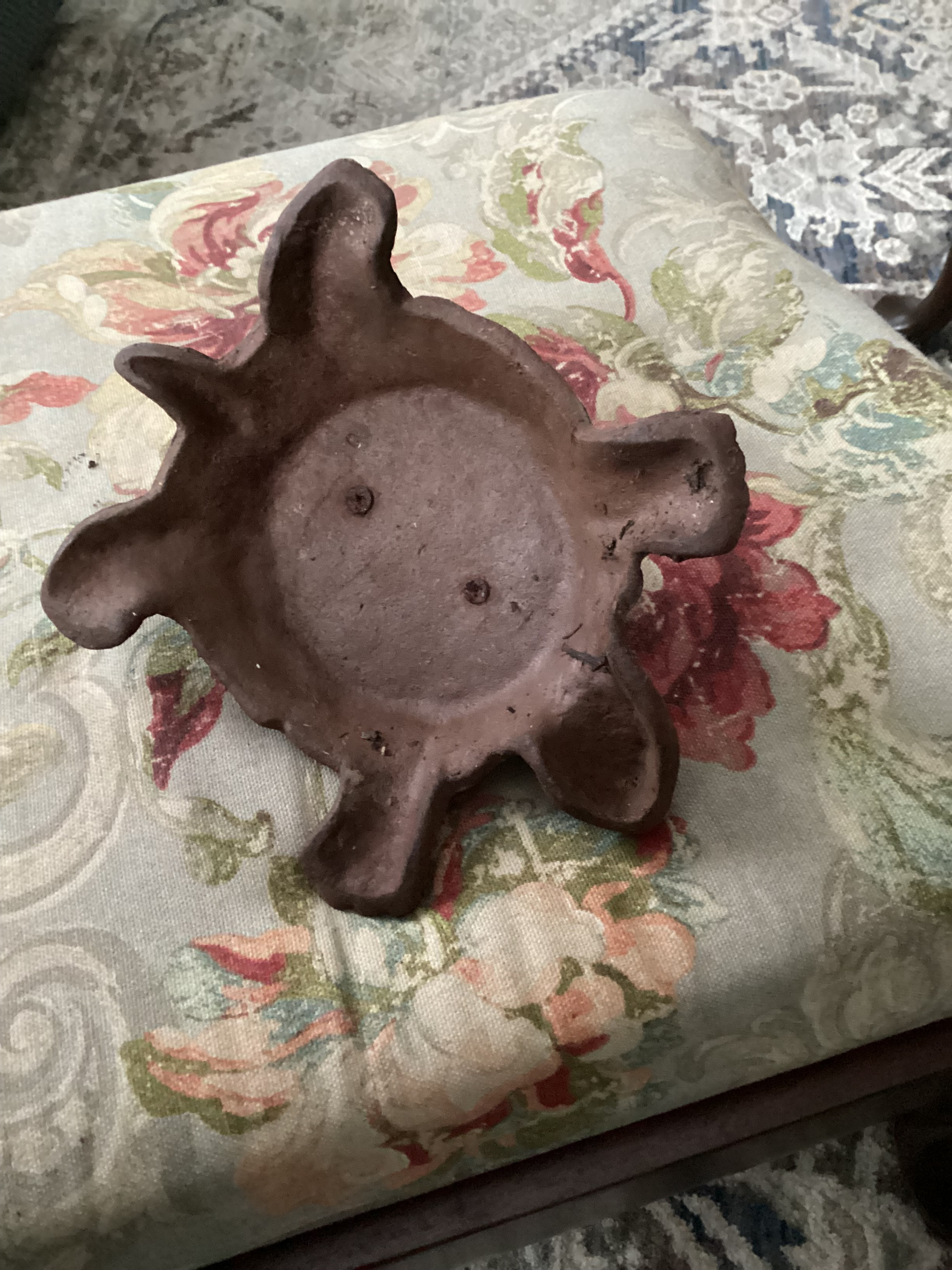
  • Construction: One-piece turtle body with a slotted seat for the gnomon; underside shows casting/vent marks and no maker’s plate.

Likely origin & date

  • Type: Decorative novelty sundial rather than a precision timekeeper. These were popular mid‑20th century (c. 1940s–1970s) as garden or desk ornaments.
  • Probable maker: American foundry production. Several firms made whimsical animal sundials in this era—e.g., Wilton (Columbia, PA), John Wright, Iron Art/Sexton, and Virginia Metalcrafters. Your example lacks the stamped marks those companies usually applied (e.g., “VM” + date, “WILTON,” “JOHN WRIGHT”), which points to unbranded catalog/ironworks output rather than a named maker.
  • Why not earlier (Victorian): Earlier 19th‑century turtle sundials tend to be larger, crisper castings with separate, pinned gnomons and/or foundry inscriptions.

Condition

  • Overall: Structurally excellent from the photos—no cracks or losses.
  • Surface: Stable, even oxidation (desirable patina for cast iron). Minor casting flaws consistent with sand casting.

Value

Values vary by region and season; the following reflects current U.S. secondary‑market prices for unmarked miniature animal sundials:

  • Fair‑market value (what it would likely bring at local auction/online marketplace): $30 – $60.
  • Retail asking price (antique shop/Dealer): $60 – $100.
  • Upside if a maker mark is found: If later inspection reveals a mark for Virginia Metalcrafters or John Wright, expect value to rise into roughly $90 – $150 due to brand following.

Authentication tips (quick checks)

  1. Magnet test: Confirms cast iron (should stick strongly).
  2. Underside inspection: Look for cast-in/stamped marks such as “VM” + year, “WILTON – COLUMBIA, PA”, “JOHN WRIGHT”, or “Sexton”.
  3. Gnomon angle: A fixed angle near your latitude indicates functional intent; very blunt/vertical angles are a sign of purely decorative production (common in mid‑century novelty pieces).

Care & sale suggestions

  • Cleaning: Avoid grinding or wire-brushing. Lightly dust, then seal with a thin microcrystalline wax (e.g., Renaissance Wax) to deepen color and slow future oxidation.
  • Selling: Photograph outdoors in natural light, include closeups of the dial, gnomon, and underside, and note weight and dimensions. List under “cast iron turtle sundial / novelty desk sundial.”

Do you need a formal appraisal?

A professional, written appraisal usually isn’t necessary unless you discover a maker’s mark tying it to a collectible foundry (especially Virginia Metalcrafters) or if you plan to insure a larger collection. If a mark turns up, I can point you to specialists who issue written valuations.

📸 Quick Scan
Garage-Sale Mode Fast appraisals on the go