
Click any image to enlarge

AI Appraisal
Description
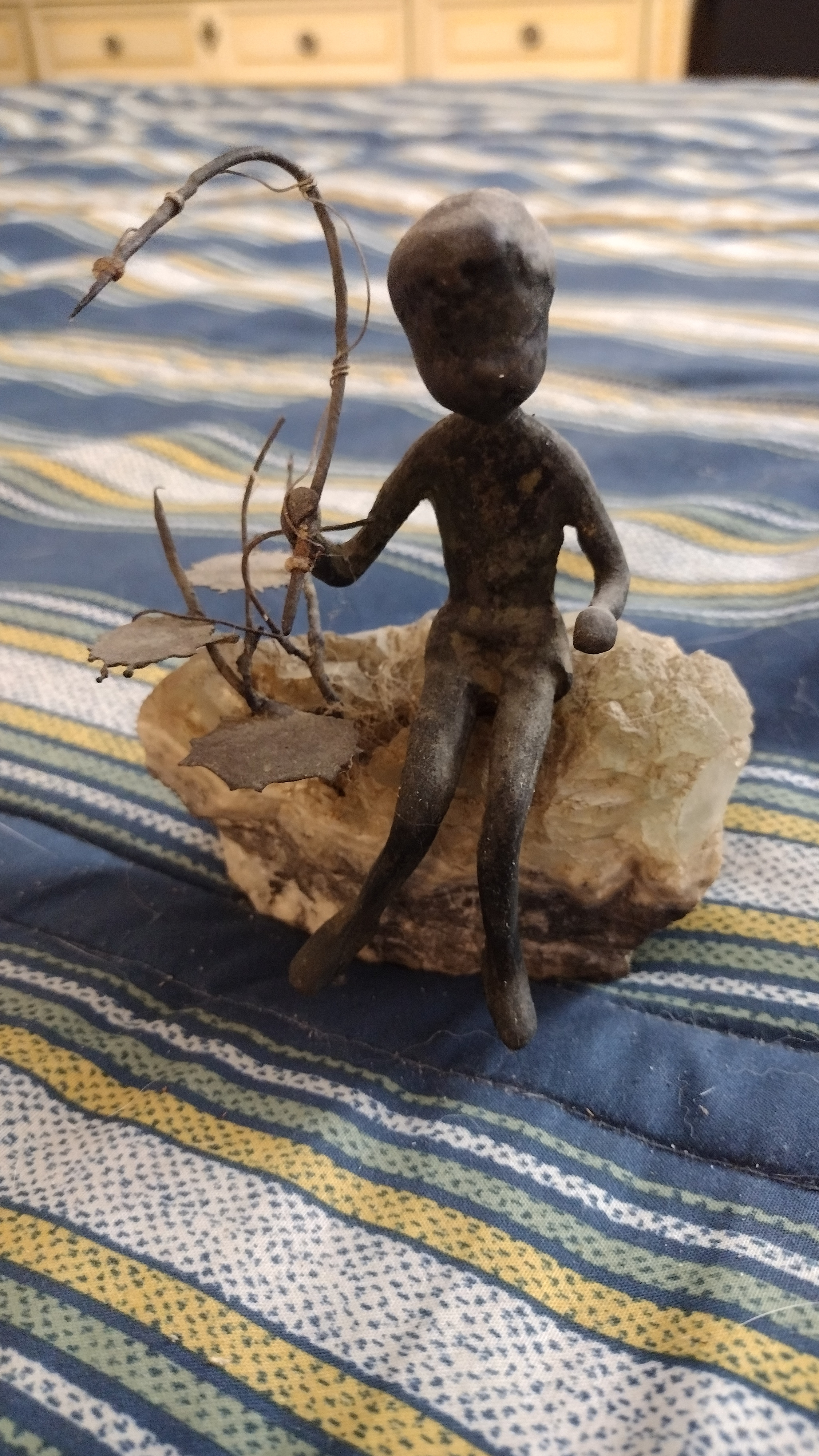
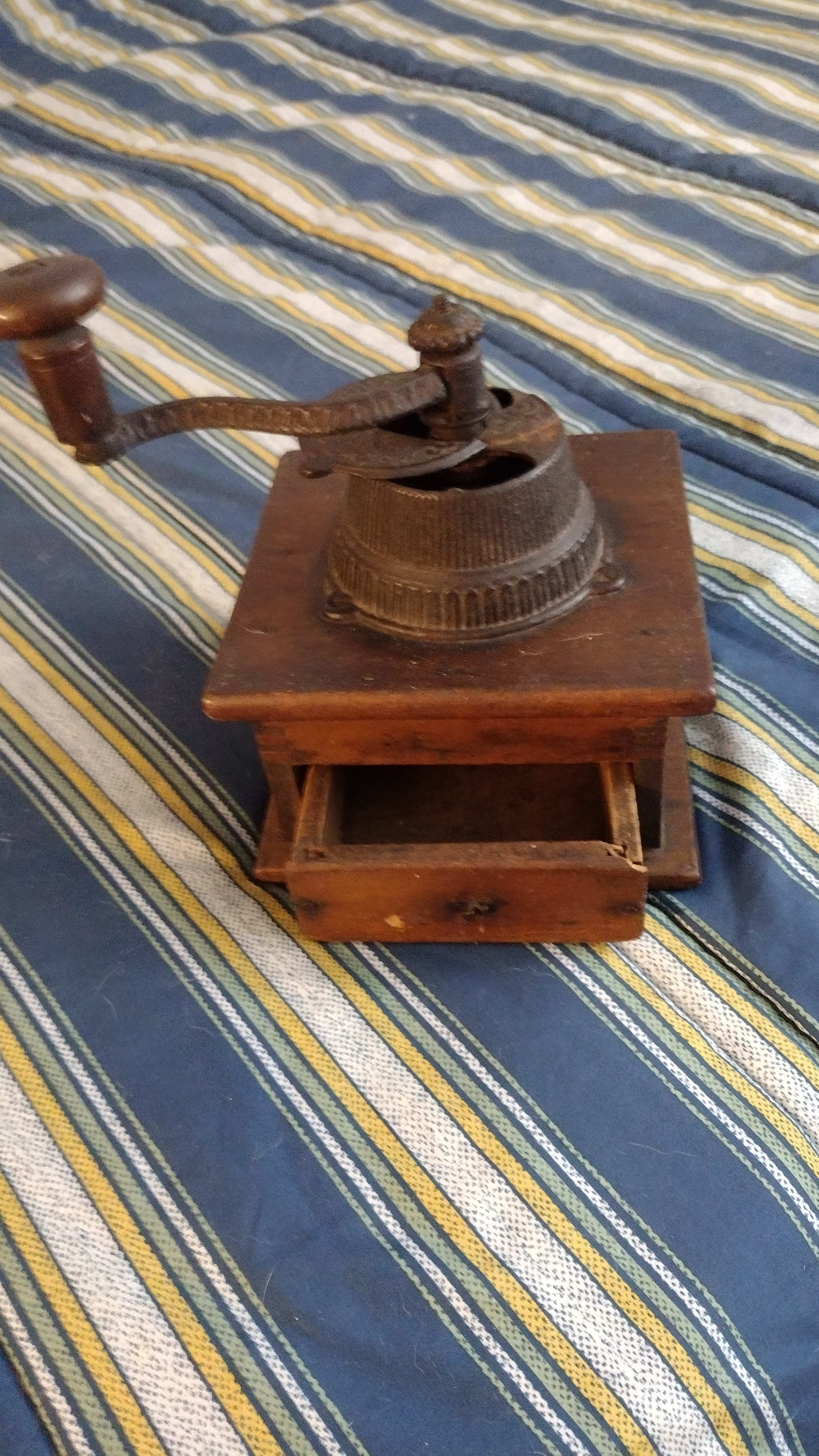
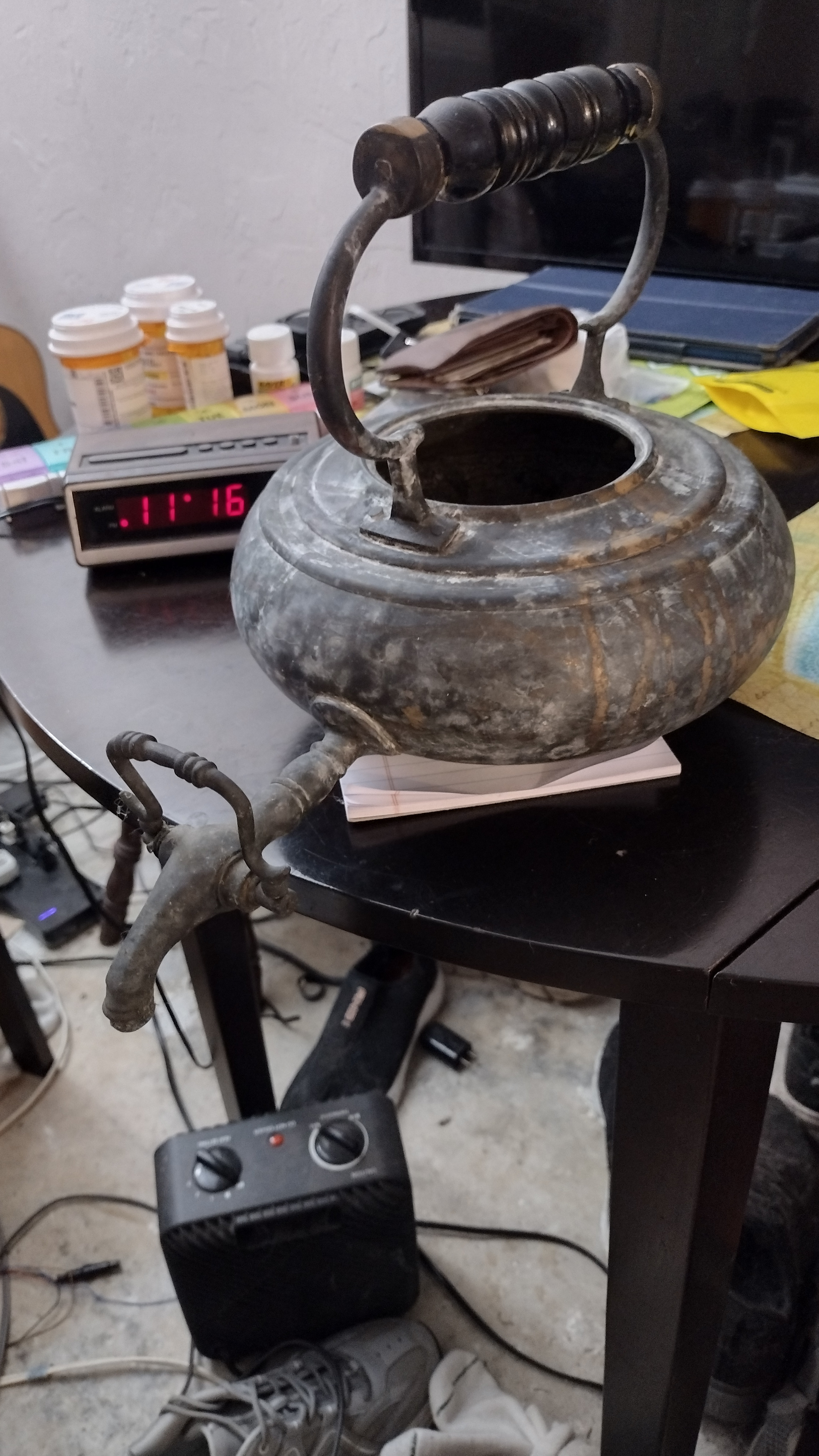
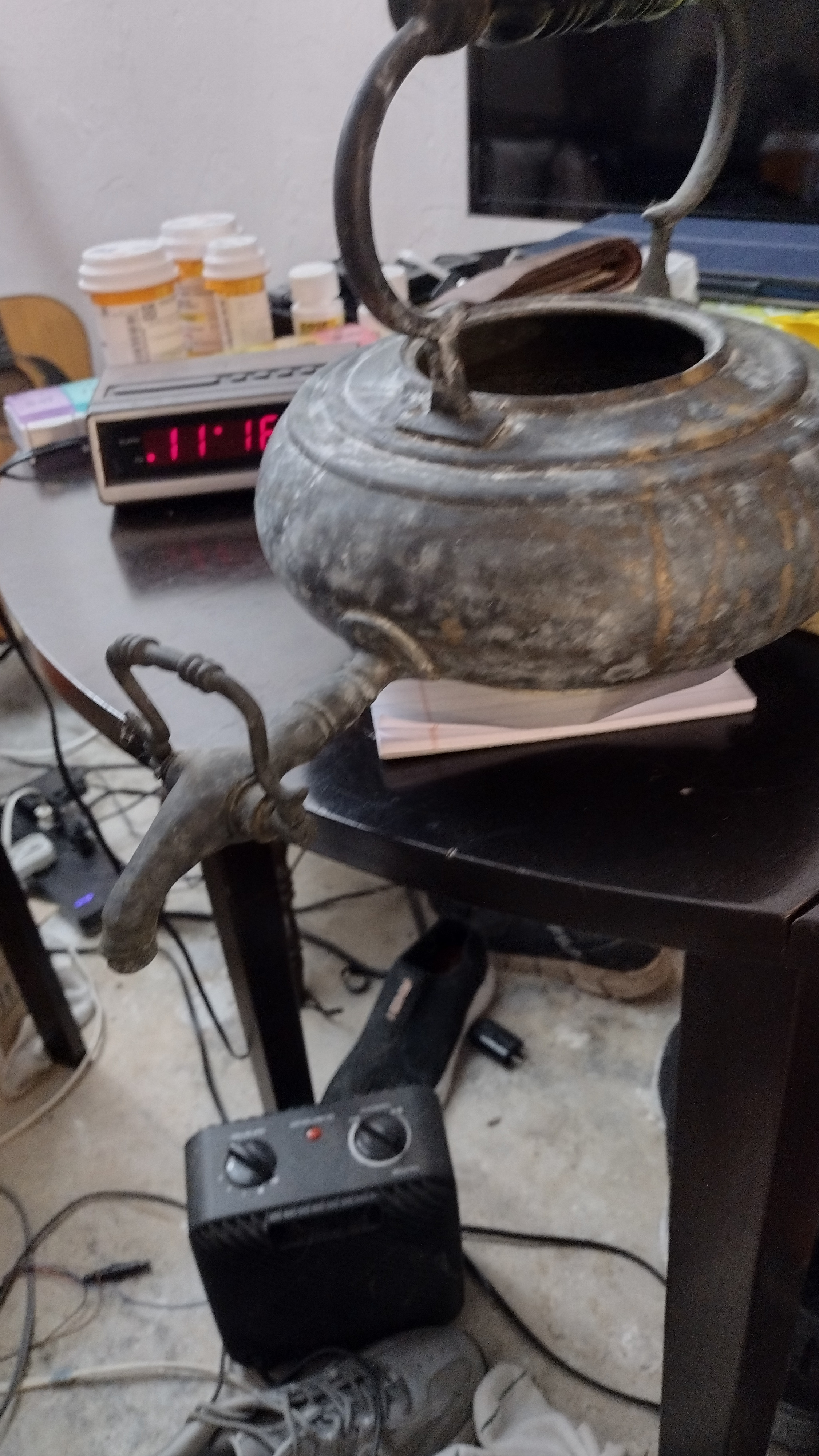
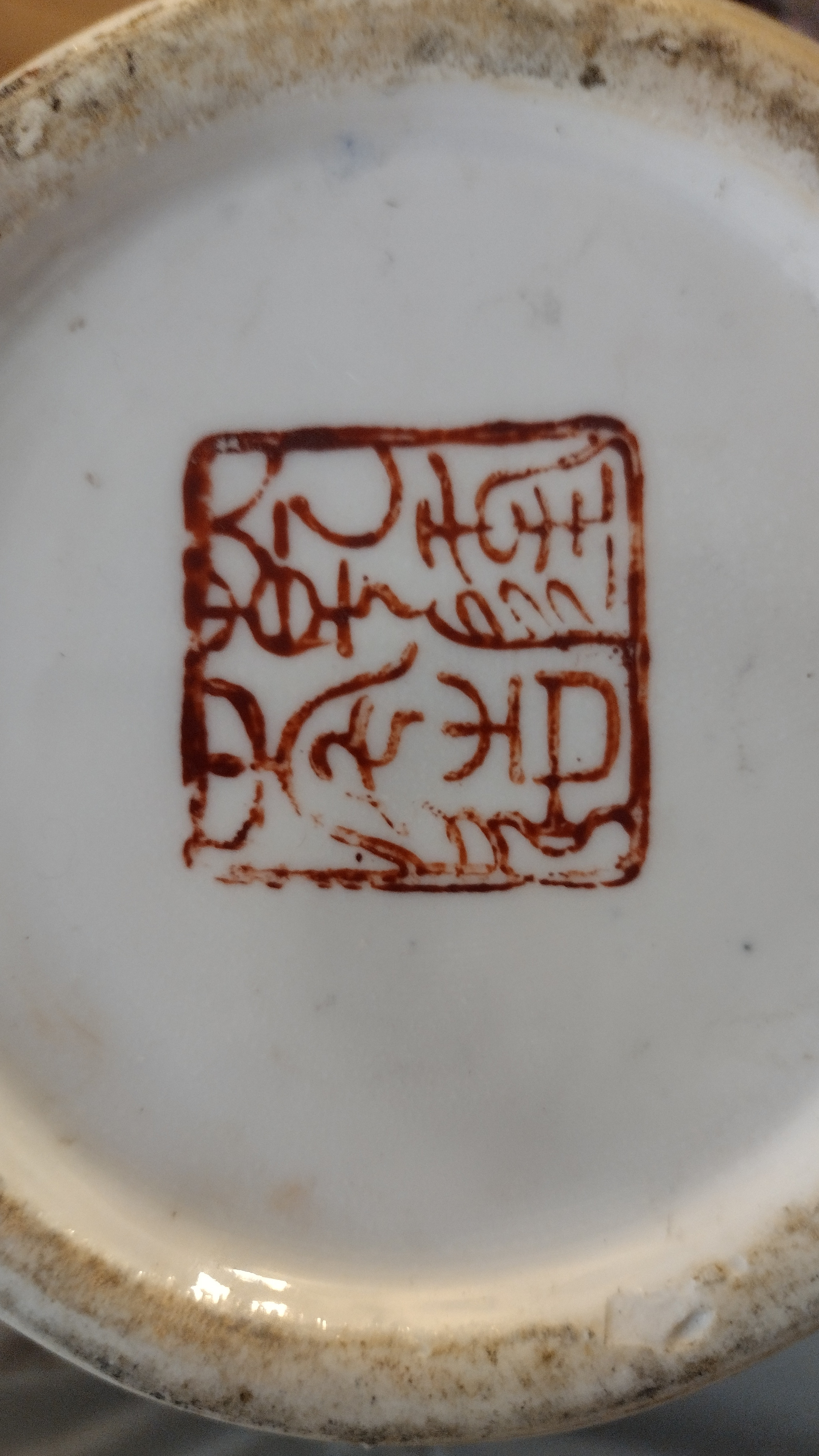
The ceramic vase I'm not sure what the marking on the bottom is. The brass teapot I think it is the the push forward and backwards valve on the end of the spout it has a 16 underneath the bottom I tried to clean it that's why it looks a little weird. I think other item is a coffee grinder please let me know more about these thank you so much.
Category
General Antiques and Collectibles
Condition
Excellent
⚠️ You have 1 free appraisal left today
Upgrade for 15-30/day →
Want more from your appraisals?
View Plans →
Upgrade for PDF reports, more daily appraisals, and ad-free experience.
I might want to sell the…
I might want to sell the items I have a lot of other items too be appraised thank you for all that you can do.
Hand-Painted Chinese Famille Rose-Style Vase
The system will only allow me to do an appraisal for a single item at a time so this is for the porcelain vase.
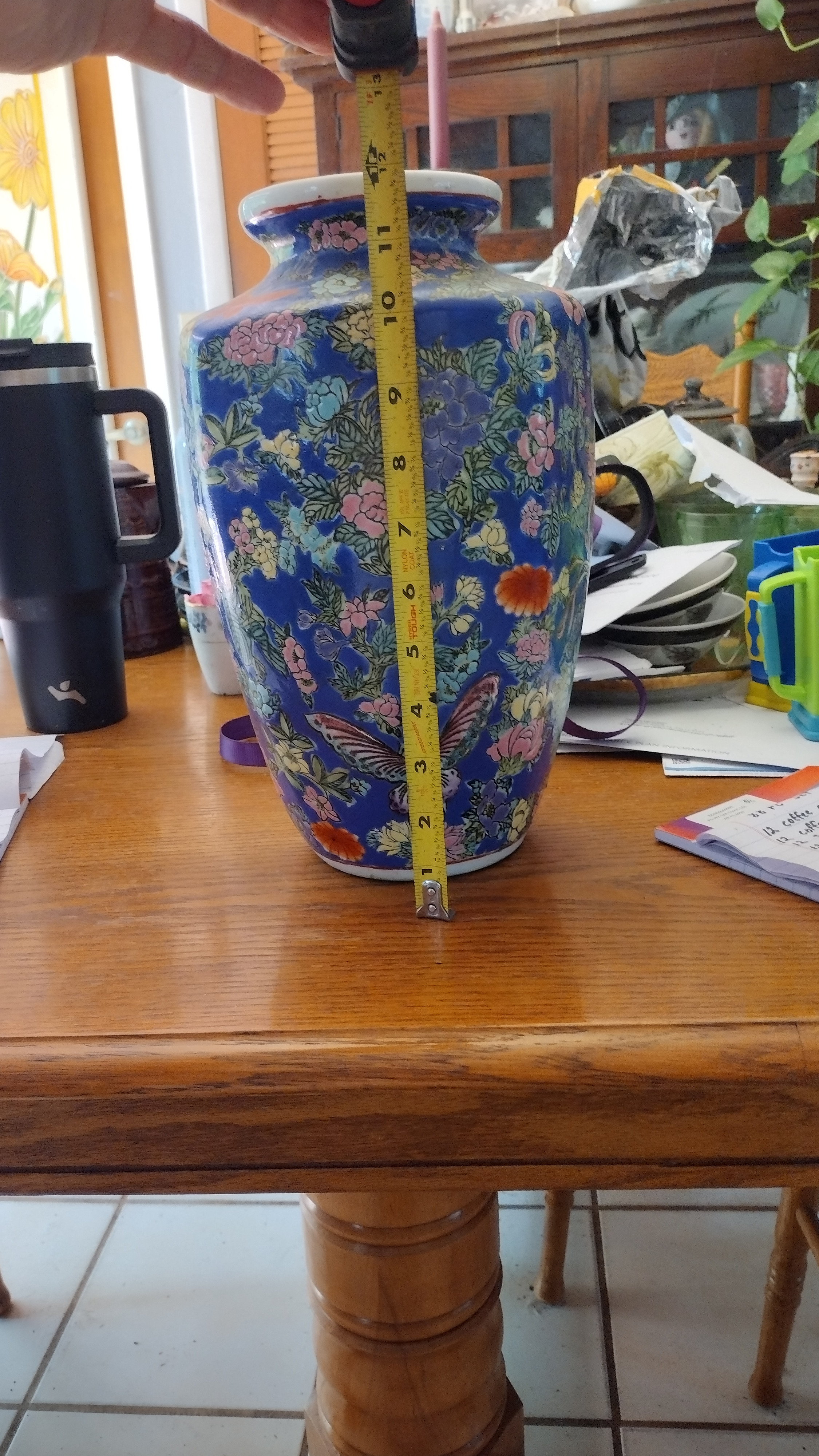
Object: Hand-painted porcelain vase
Estimated Origin: Chinese export, 20th century (likely mid-century, circa 1950s–1970s)
Style: Famille Rose / Chinese Canton Enamel Style
Dimensions: Approx. 11.5 inches tall
Material: Glazed porcelain
Markings: Red square seal mark on the base (stylized Chinese characters)
Condition: Excellent, with no visible cracks, chips, or glazing loss
Description and Analysis
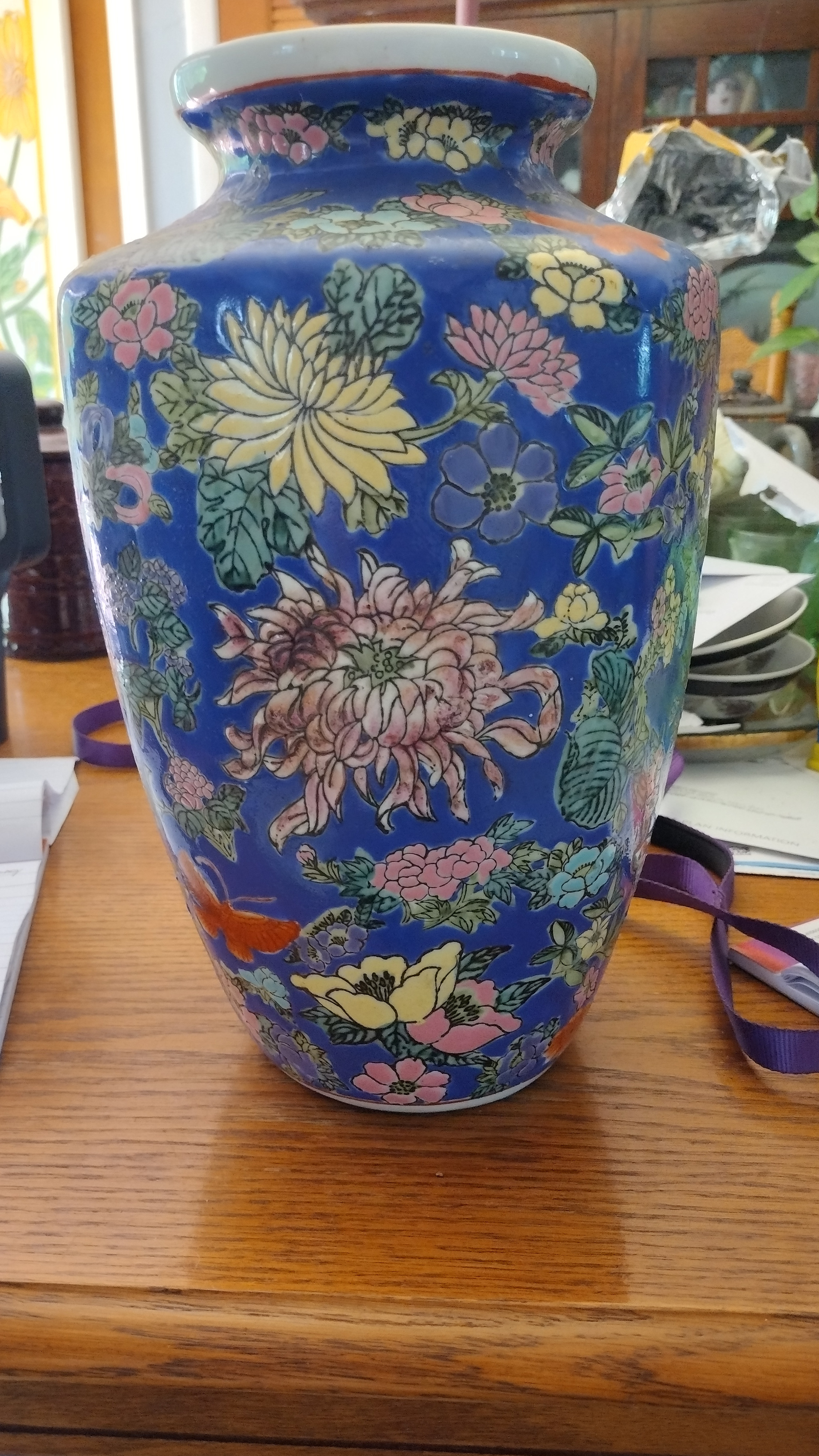
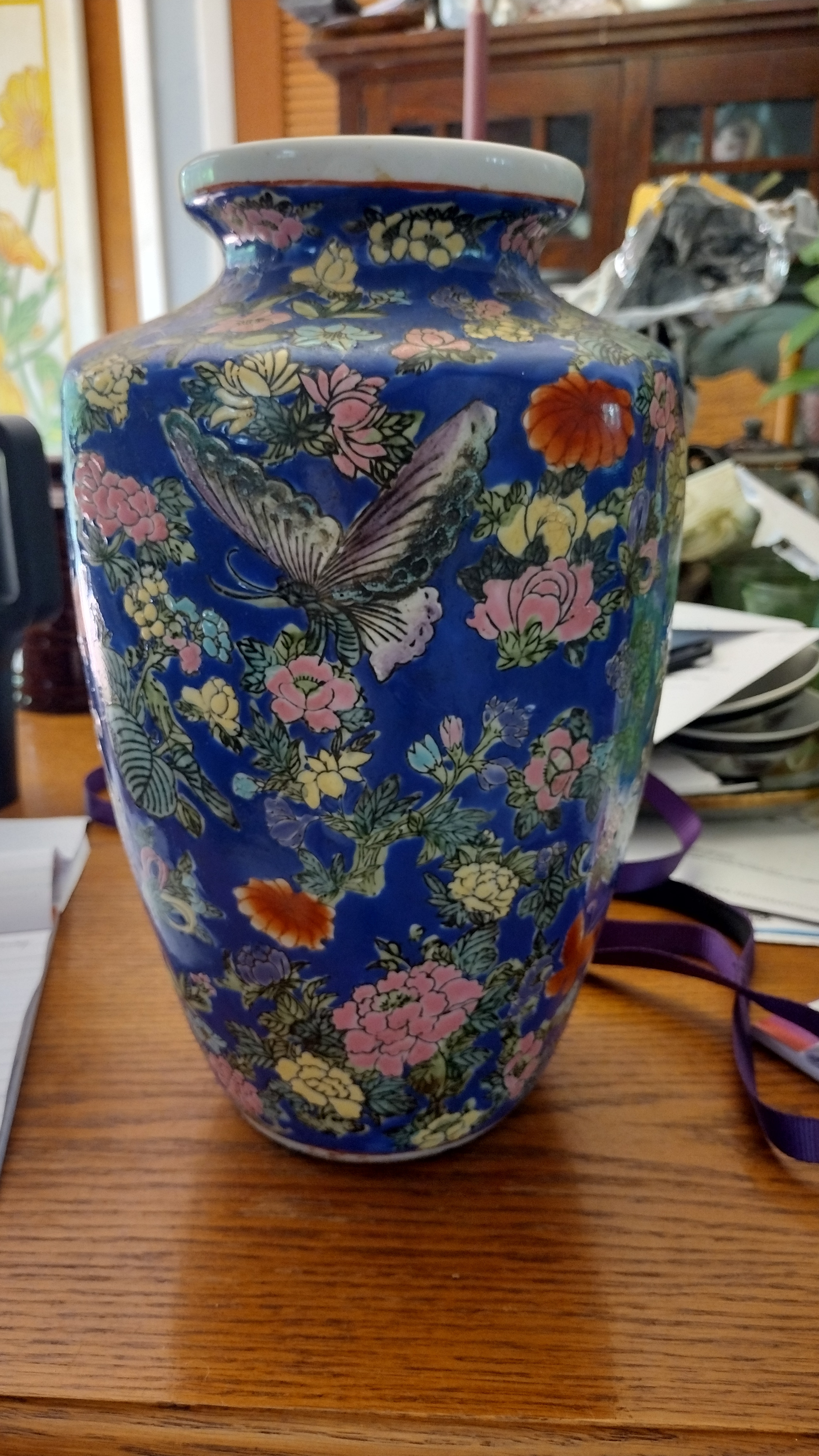
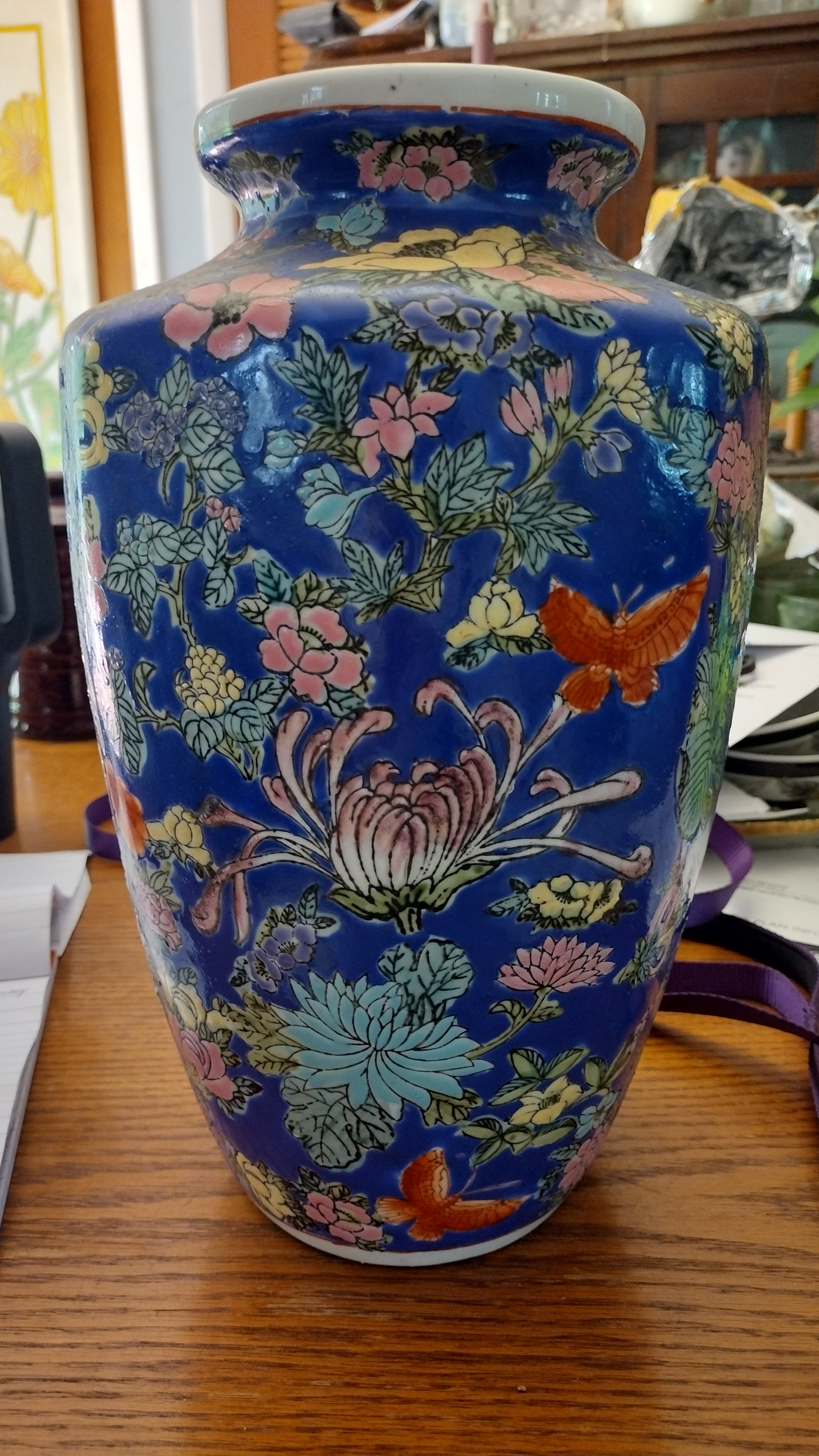
This is a vividly hand-painted Chinese porcelain vase featuring a profusion of floral blossoms—peonies, chrysanthemums, plum blossoms—and butterflies, all set against a striking cobalt blue ground. The decoration is characteristic of the "Famille Rose" tradition, which originated in the Qing Dynasty but was revived extensively for export throughout the 20th century.
The floral motifs are outlined in black with vibrant overglaze enamels in pink, yellow, orange, green, and purple—another hallmark of post-Qing Famille Rose export wares. The butterflies symbolize love, joy, and marital bliss in Chinese decorative arts. The broad shoulder, tapered body, and flared neck form are typical of both decorative and functional temple jars and vases.
Base Mark
The red seal mark on the bottom appears to be a stamped or hand-brushed apocryphal mark (possibly imitating Qianlong or other imperial reign marks) commonly found on decorative wares produced for export during the Republic or mid-20th century era. These marks are not usually meant to be authentic indicators of age but rather aesthetic or symbolic additions. The glaze, color palette, and form support a dating of mid-20th century rather than earlier.
Market Value Estimate
Retail (decorative use or giftware markets): $80 – $150
Auction/Fair Market (collector-focused or estate sale): $50 – $100
Note: Values can vary based on regional interest in Chinese export porcelain, particularly floral Famille Rose styles. The excellent condition, bold coloration, and traditional imagery make this piece highly attractive for interior décor, even if it does not date from the Qing period.
Collector Notes
Authentication and Further Action
This appears to be an authentic Chinese porcelain vase made for export in the mid-1900s. The piece is in excellent display condition and does not require a professional authentication unless intended for high-value resale. However, for insurance or gallery-level valuation, a certified appraiser in Asian decorative arts could provide a formal document.