
Photos Submitted for Appraisal
🔍 Click to enlarge and inspect marks, signatures, and condition detailsTap to zoom and inspect details
AI Appraisal
Description
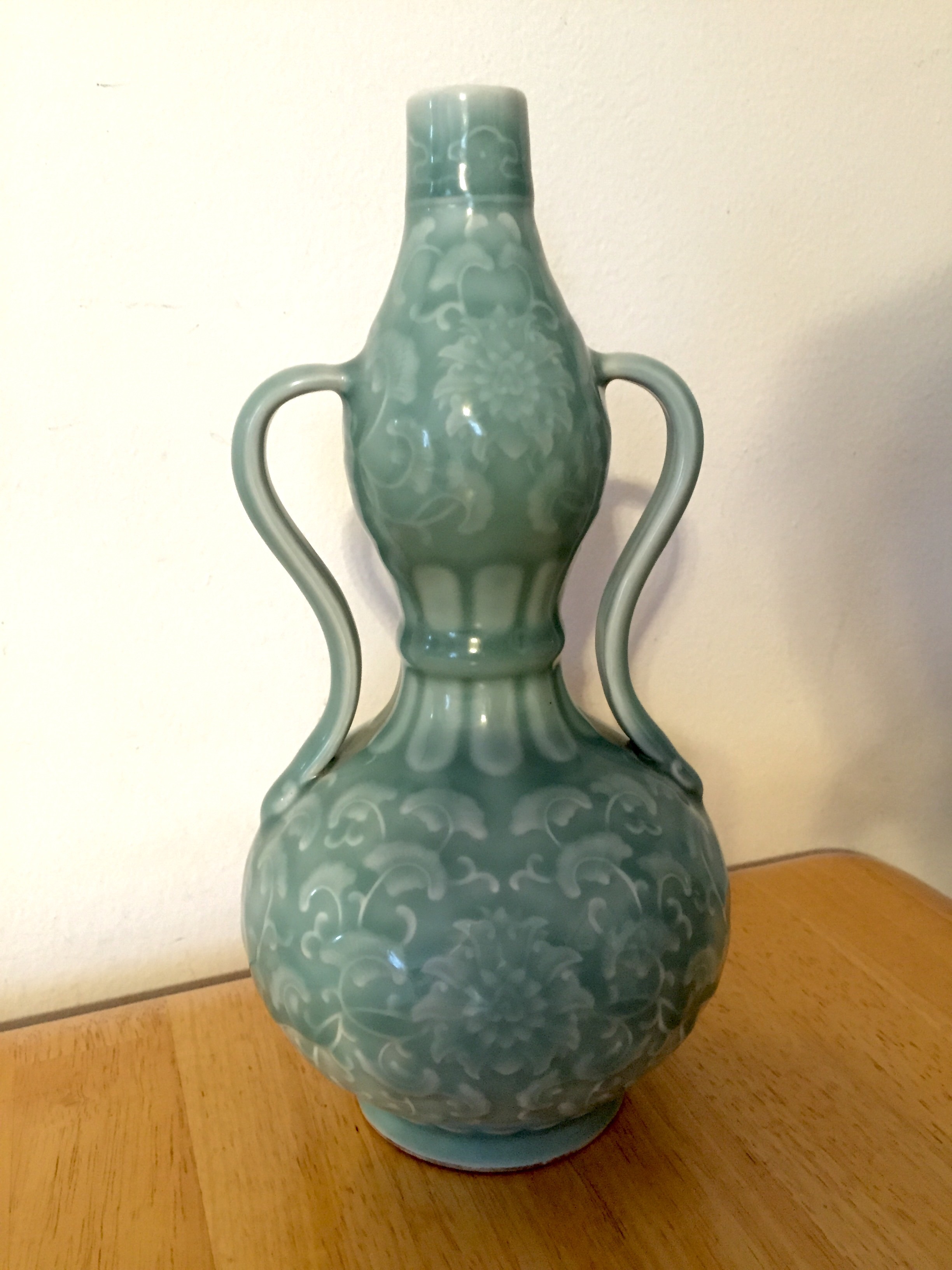
This vase was acquired in China. I was told it was a Qing
double gourd vase.
Category
Asian Art
Medium
Ceramic?
Distinguishing marks
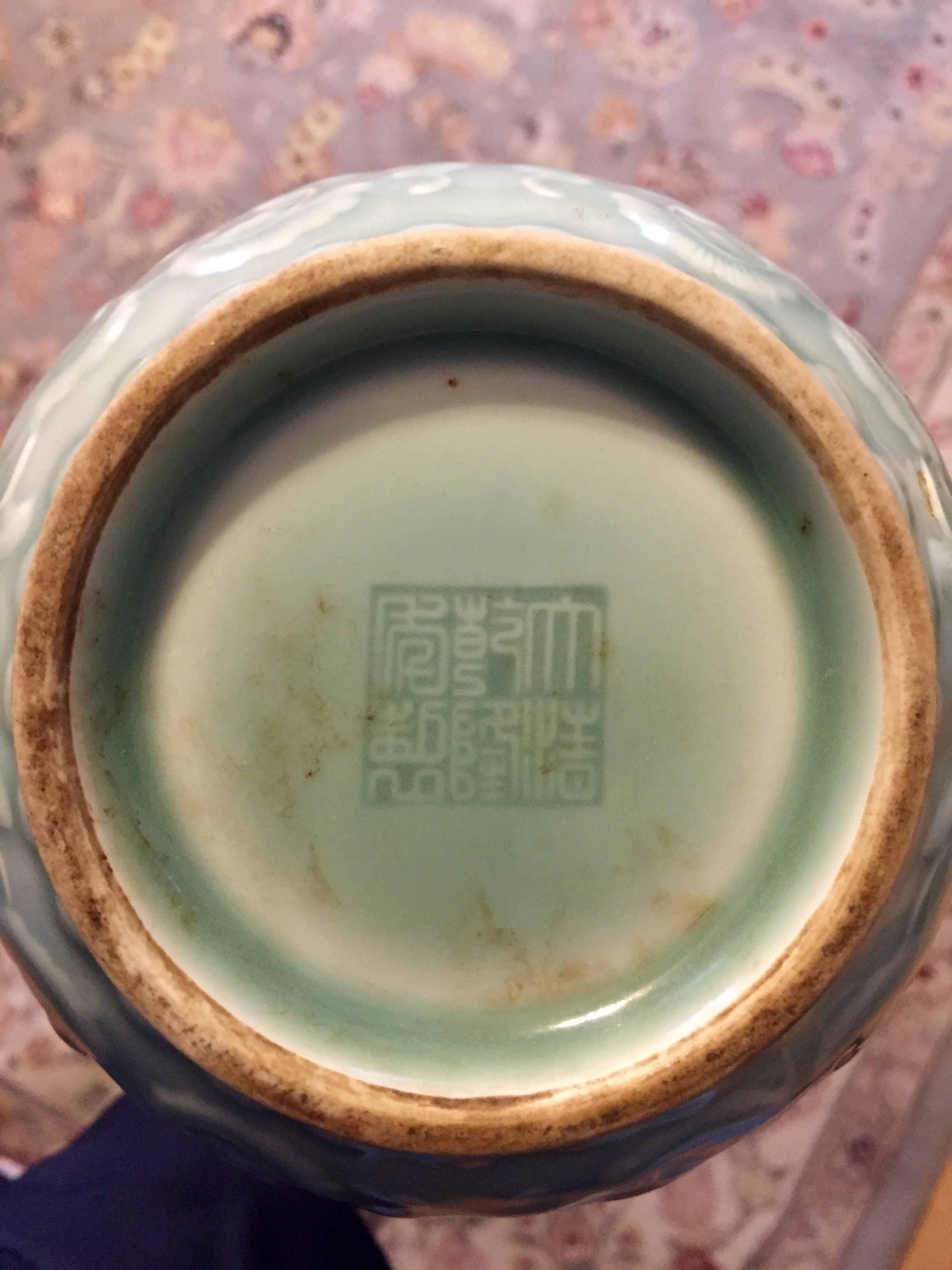
The bottom of the case has Chinese characters that appear to indicate that it was made during the Qing dynasty.
Condition
Excellent
Size and dimensions of this item
12" high and about 4" wide
Date Period
1644-1912?
Weight
About 2 lbs
History
Acquired in China
Price
Unknown
Price Paid (If known)
Not known
Collectors with this item
Want to appraise yours? Upload photos for a free appraisal →
⚠️ You have 1 free appraisal left today
Upgrade for 15-30/day →
Want more from your appraisals?
View Plans →
Upgrade for PDF reports, more daily appraisals, and ad-free experience.
Collector Discussion
Do you recognize this piece? Collectors often identify maker marks, share comparable sales, or suggest additional research steps.
Re: Qing double gourd
This is a Ming-style celadon double-gourd vase, with a spurious six-character "zhuan shu" (archaic-style seal mark) for the Qing Dynasty Emperor Qianlong (1736-95). The freshness of the glaze together with the rubber-stamp look of the seal suggests that the vase dates from the second half of the 20th century, or later. Actually, the fact that you obtained the piece in China is not a good sign, aspre-1911 (Qing Dynasty and earlier) antiques are considered cultural "patrimony". Their export, therefore, is strictly prohibited by the Cultural Relics Bureau.