
Photos Submitted for Appraisal
🔍 Click to enlarge and inspect marks, signatures, and condition detailsTap to zoom and inspect details
AI Appraisal
Description
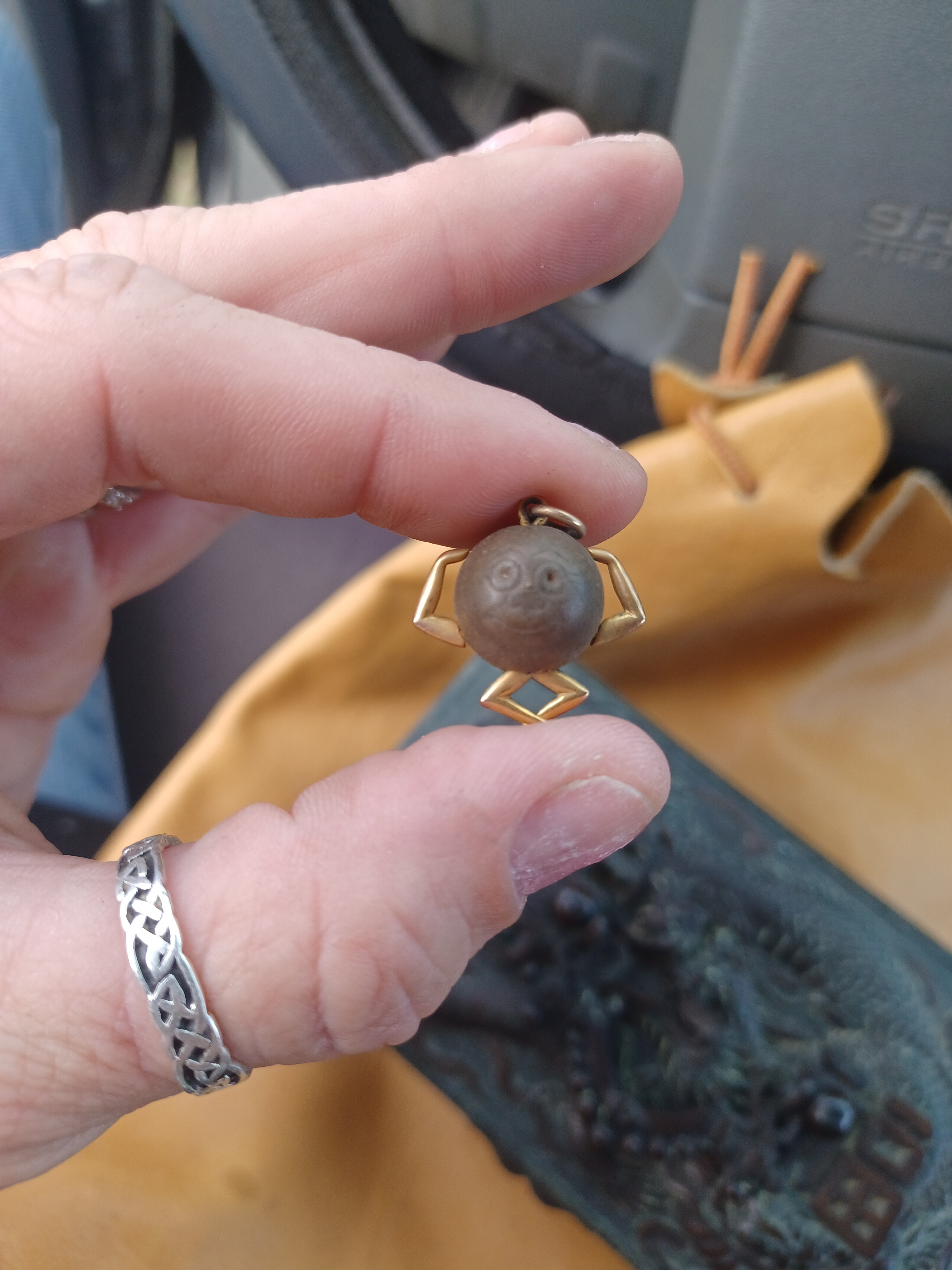
Soldiers good luck charm carried during war
Category
Militaria
Medium
Wood and gold
Distinguishing marks
Touch wud engraved on back
Condition
Mint
Date Period
1941
History
Carried by a solider whom served during ww1
Collectors with this item
Want to appraise yours? Upload photos for a free appraisal →
⚠️ You have 1 free appraisal left today
Upgrade for 15-30/day →
Want more from your appraisals?
View Plans →
Upgrade for PDF reports, more daily appraisals, and ad-free experience.
Collector Discussion
Do you recognize this piece? Collectors often identify maker marks, share comparable sales, or suggest additional research steps.
Circa 1910-1920 "Touch Wud" good luck charm
I'm seeing comparables all over the place -- as low as $20 to $500.
Best to take this to a jeweler for testing. The metal could be gold, or just a base metal which explains the discrepancy in prices.
From my research:
"In 1914, British entrepreneur Henry Brandon designed a good luck token for loved ones to give to soldiers heading off to World War I. They took the form of a "Touch Wud" charm that could be worn around the neck: a round little dude with silver limbs touching its own wooden head. Many surviving charms show evidence of frequent rubbing, indicating they were kept close on the body so the young WW1 soldier could avoid being "tagged" in warfare....forever."
If you are selling, listing it in the UK may be a smart bet (assuming you are in the USA).