
Photos Submitted for Appraisal
🔍 Click to enlarge and inspect marks, signatures, and condition detailsTap to zoom and inspect details
AI Appraisal
Description
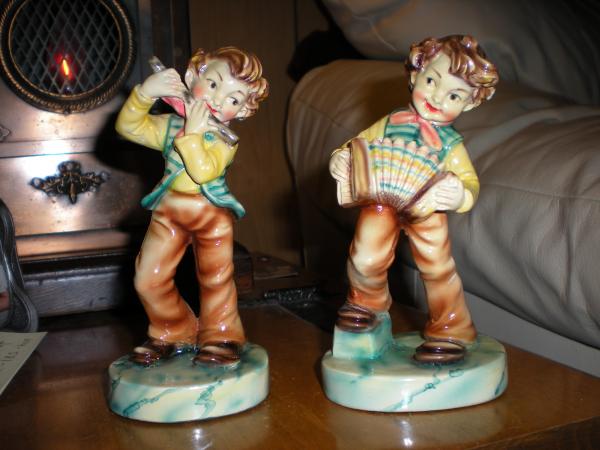
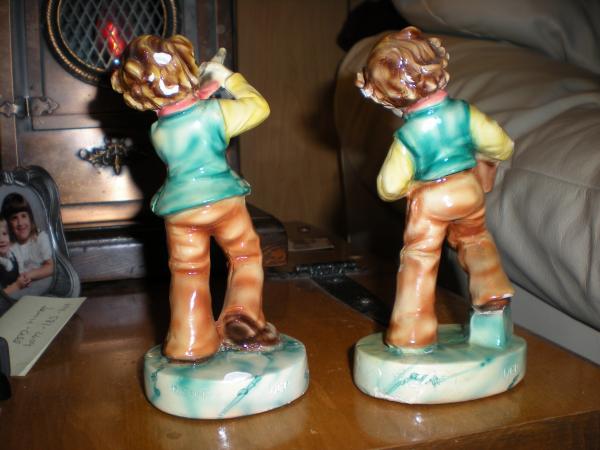
These two figurines which look somewhat like Hummels, are of musicians. One with a flute, one with an Accordian. On the back side of the base etched in, it says, "A. Santini" Then a little further down it says DEP. I looked up A. Santini and I know that he did his work in Italy. I can find nothing that he did that looks anything like these two items.
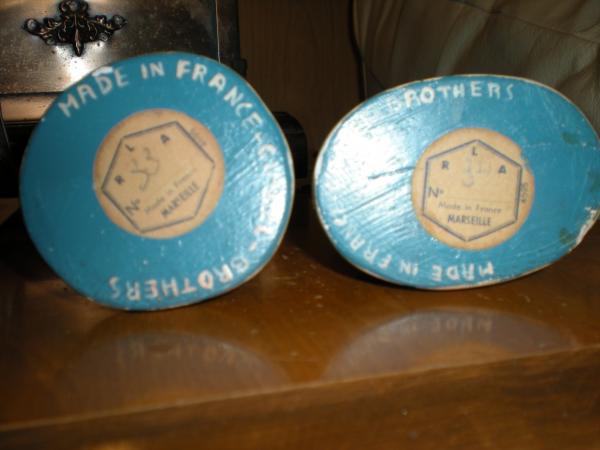
On the bottom of the figurines, it is painted blue and in the middle is a round sticker with a hexagon shape that has within it R L A No. 33 (the other one is No. 34). The number is handwritten. Then it says Made in France Marseille. Now here is what I find odd, hand painted on the outer edge of the bottom of the base, in white paint it says, MADE IN FRANCE - GIMBEL - BROTHERS.
I believe that Gimbel Brothers refers to the Gimbel's of the department store fame. I could be wrong.
There are some chips on the back side of the figures. I have included a couple of photos below.
Category
General Antiques and Collectibles
Medium
Ceramic ?
Distinguishing marks
A. Santini DEP
Condition
Good
Size and dimensions of this item
5.75 inches
Date Period
1940's?
Weight
unknown
History
These were owned by my grandmother. Fou Nnd in a drawer.
eBay Auction Link
Price Paid (If known)
part of estate
Collectors with this item
Want to appraise yours? Upload photos for a free appraisal →
⚠️ You have 1 free appraisal left today
Upgrade for 15-30/day →
Want more from your appraisals?
View Plans →
Upgrade for PDF reports, more daily appraisals, and ad-free experience.
Collector Discussion
Do you recognize this piece? Collectors often identify maker marks, share comparable sales, or suggest additional research steps.
Re: A.Santini Figurines
Hi,
I've got some 30 figurines with markings A.Santini or prof. Ruggeri. The themes are often children playing musical instruments, with cute animals or women with horses or saluki dogs, dancing couples etc.
The figurines are hand painted and unique. My collection is of finnish origin. In 1952 two italians established a small business in Helsinki. I suppose the clue was in the material: something that connected plastic and gypsum. Most propably the molds were early Santini production - and figurines were produced in different countries in Europe. The figurines are often numbered with a hand written number on a paper label in the bottom of the figurines. Not so often the number is engraved in the mass.
It was interesting to hear of the french production or distribution, too!