This appraisal is provided for informational and educational purposes only and does not constitute a certified, licensed, or formal appraisal.
Appraisal results are generated using automated systems, including artificial intelligence, and are based solely on the information and images submitted by the user, along with publicly available data. As such, results may contain inaccuracies, omissions, or errors.
InstAppraisal does not authenticate items. No determination of authenticity, origin, materials, maker, or age should be considered verified. Many items—particularly luxury goods, watches, jewelry, coins, art, and designer products—are frequently counterfeited and may closely resemble genuine examples. Authenticity cannot be confirmed from images alone.
Any statements regarding authenticity are expressions of opinion only and should not be relied upon as fact. Independent professional authentication is strongly recommended before any purchase, sale, or valuation decision.
Appraisal values are estimates only and may vary significantly based on condition, provenance, market demand, and additional information not available at the time of review.
Appraisals must not be relied upon for insurance, legal, tax, estate, or financial purposes without independent professional verification.
InstAppraisal disclaims all liability for any losses, damages, or disputes arising from reliance on this appraisal, including transactions conducted based on the information provided.
By using this service, you acknowledge and agree that you assume all risk associated with reliance on appraisal results.
Re: Etched Brass Urns & Stands
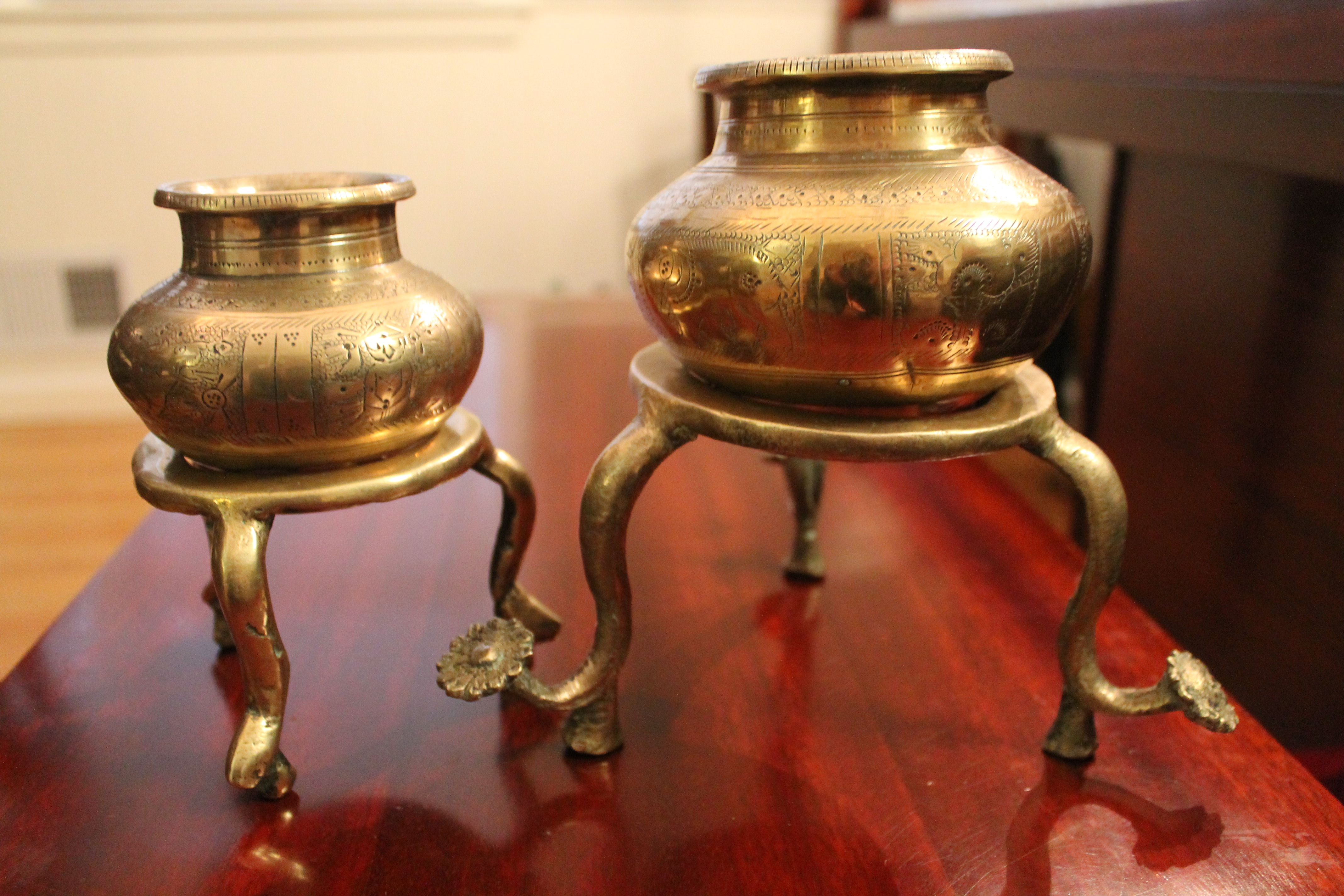
I've just about got this one figured out. The urns are actually water vessels. More than likely came from the middle east or India. Brass water vessels are what they stored and drank water from in the 19th Century. Im still not sure of the age, if they are still made for decorative purposes.
As for the stands - I believe they did not actually go with the vessels but they are nice for display.
Re: Etched Brass Urns & Stands
Matki, (or Matka) is the Hindustani word for an earthen pot. It is used all over India, as well as Pakistan, Bangladesh and Sri Lanka, as a home "water storage cooler". It has been in use since ancient times and can be found in houses of every class
Kalasha, also spelled as Kalash and kalasa is a metal pot with a large base and small mouth, large enough to hold a coconut. Sometimes "Kalasha" also refers to such a pot filled with water and topped with a coronet of mango leaves and a coconut. This combination is often used in Hindu rites and depicted in Hindu iconography. The entire arrangement is called Purna-Kalasha Purna-Kumbha or Purna-ghata . Each of these names literally means "full or complete vessel" when the pot is referred to as the Kalasha (to avoid confusion, this article will refer to the pot as Kalasha and the entire arrangement as Purna-Kalasha). Sometimes the Kalasha is filled with coins, grain, gems, gold, or a combination of these items instead of water. The coronet of 5, 7, or 11 mango leaves is placed such that the tips of the leaves touch water in the Kalasha. The coconut is sometimes wrapped with a red cloth and red thread; the top of the coconut (called Shira – literally "head") is kept uncovered. A sacred thread is tied around the metal pot. The Shira is kept facing the sky.
The Kalasha is viewed as an auspicious object in Jainism. The Kalasha is used as a ceremonial object as well as a decorative motif inIndian art and architecture. The Kalasha motif was used in decorating bases and capitals of pillars from the 5th century
1850s Indian Antique Hand Crafted Engraved Brass Holy Water Panchpatra Pot
1850s Indian Antique Hand Crafted Engraved Brass Pot Matki Stand
looking at what you have,looks like you might have two parts here stands and pots. pots asking prices are around $24.00 each. The Stands asking prices around $50.00 to $99.00
The markings match the 1850s style maker's tools. hope this helps you.. I'm not an expert....good luck
Re: Etched Brass Urns & Stands