
Photos Submitted for Appraisal
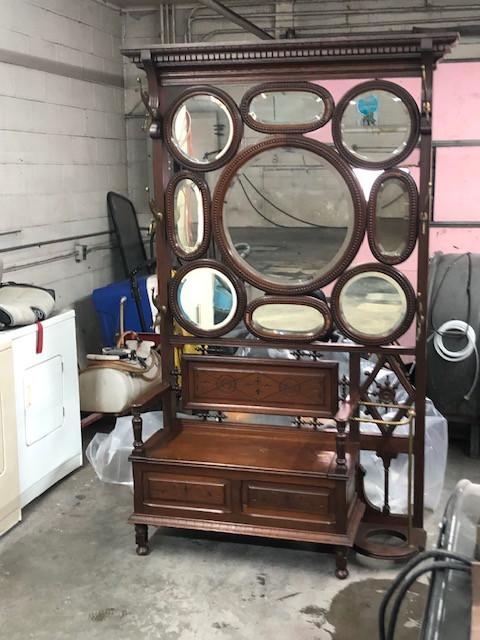
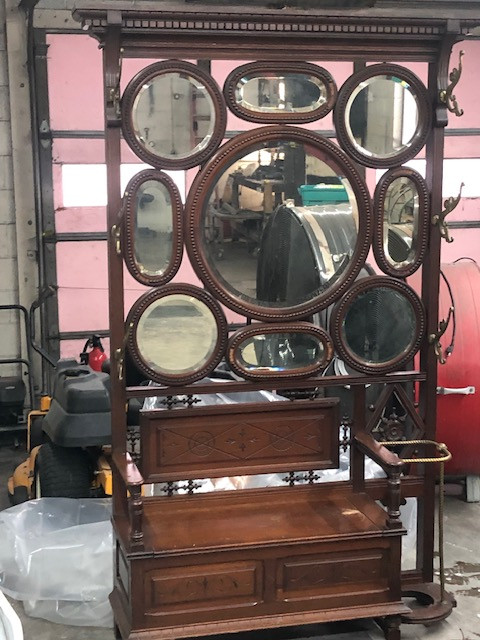
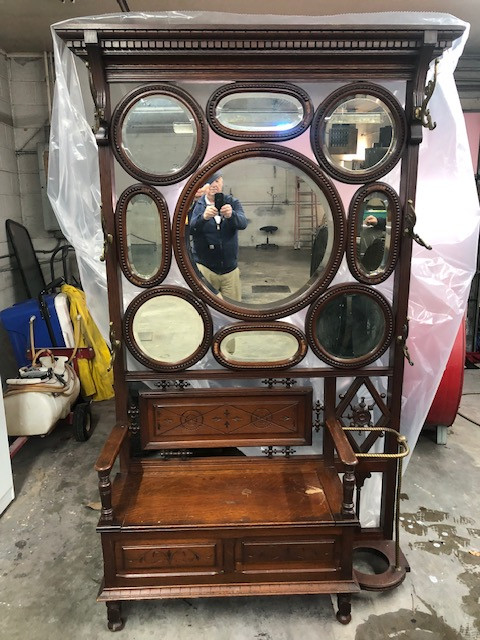
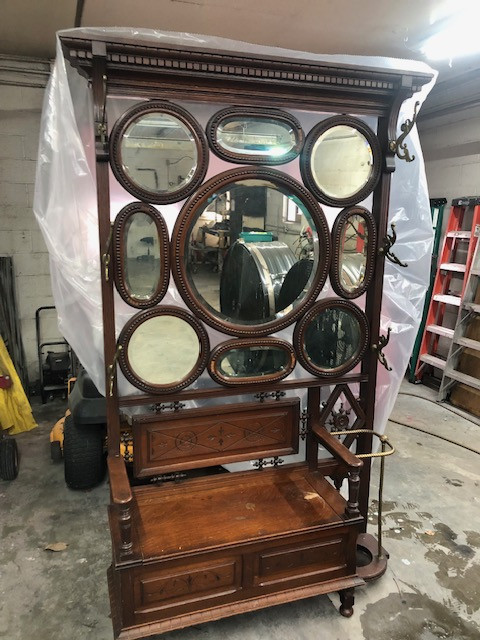
🔍 Click to enlarge and inspect marks, signatures, and condition detailsTap to zoom and inspect details
AI Appraisal
Description
I am selling this for my sister's estate. it was purchased at an Estate sale in the Natchez MS Area.
Category
Home Furnishings
Condition
Excellent
Size and dimensions of this item
54" wide 7' tall
Weight
200#?
Collectors with this item
Want to appraise yours? Upload photos for a free appraisal →
⚠️ You have 1 free appraisal left today
Upgrade for 15-30/day →
Want more from your appraisals?
View Plans →
Upgrade for PDF reports, more daily appraisals, and ad-free experience.
Collector Discussion
Do you recognize this piece? Collectors often identify maker marks, share comparable sales, or suggest additional research steps.
Antique Hall Tree
Item Overview
Identification & Historical Context
This is a late 19th-century to early 20th-century Victorian-style hall tree, likely made from solid oak or walnut, featuring:
Origin & Style
Market Value Estimate
Professional Appraisal Recommendation
To determine exact age, maker, and premium value, consider:
Conclusion
This is a highly collectible, well-preserved Victorian hall tree, valued at $1,500 - $5,000+ USD, depending on the selling venue. Given its estate provenance and Southern historical interest, it may fetch a premium price in a high-end auction or specialty antique sale
Your piece is a Victorian…
Your piece is a Victorian piece in the "Eastlake style", circa 1880, the style getting its name from Charles Eastlake, who wrote a book entitled "Hints on Household Taste" in 1868. In this influential book he rejected the ornate decorations favored on earlier Victorian furniture and espoused simpler more incised rectangular lines sparingly accented with machined forms, and raised panels with figured veneers for decoration. Eastlake furniture was produced on both sides of the Atlantic from about 1870- 1890, the American version of this style were more ornate than Eastlake's original designs, but his name has been forever linked to this furniture ever since. The majority of American Eastlake furniture was constructed of walnut, with later pieces being made of lighter colored hardwoods such as maple, oak and ash. The earlier piece such as yours in walnut tend to be much higher quality than the later examples, which were mass produced on a much larger scale by the 1890's. Today the demand for Victorian furniture has softened due to changing tastes of collectors and the sheer number of pieces on the market. Speculation is that this is a result of the "Downsizing" of the "Baby Boom" generation that is now heading for retirement. In the current market values for comparable Eastlake pieces varies a huge amount depending on local demand, often selling at auction under $1000.00