

Click any image to enlarge
AI Appraisal
Description
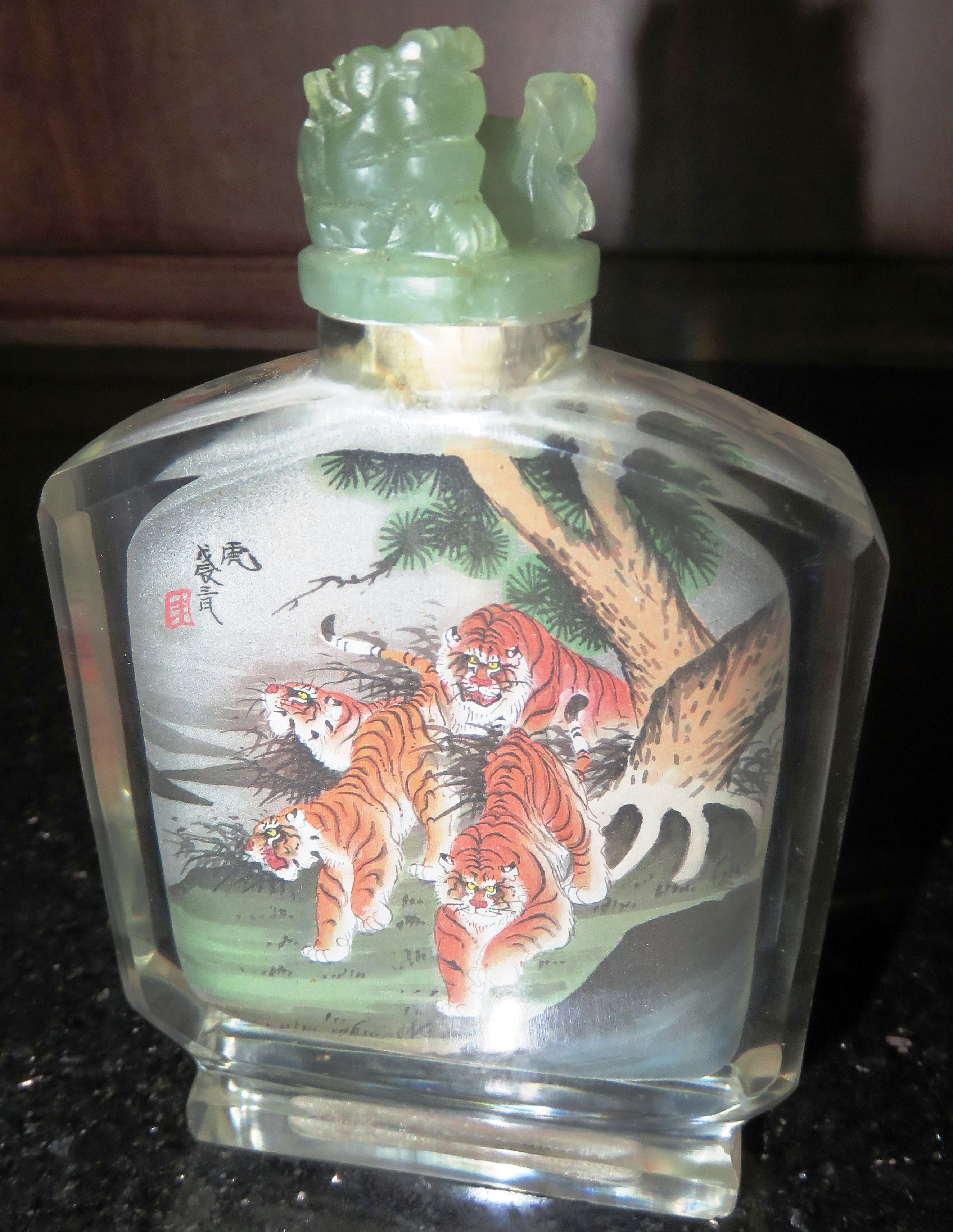
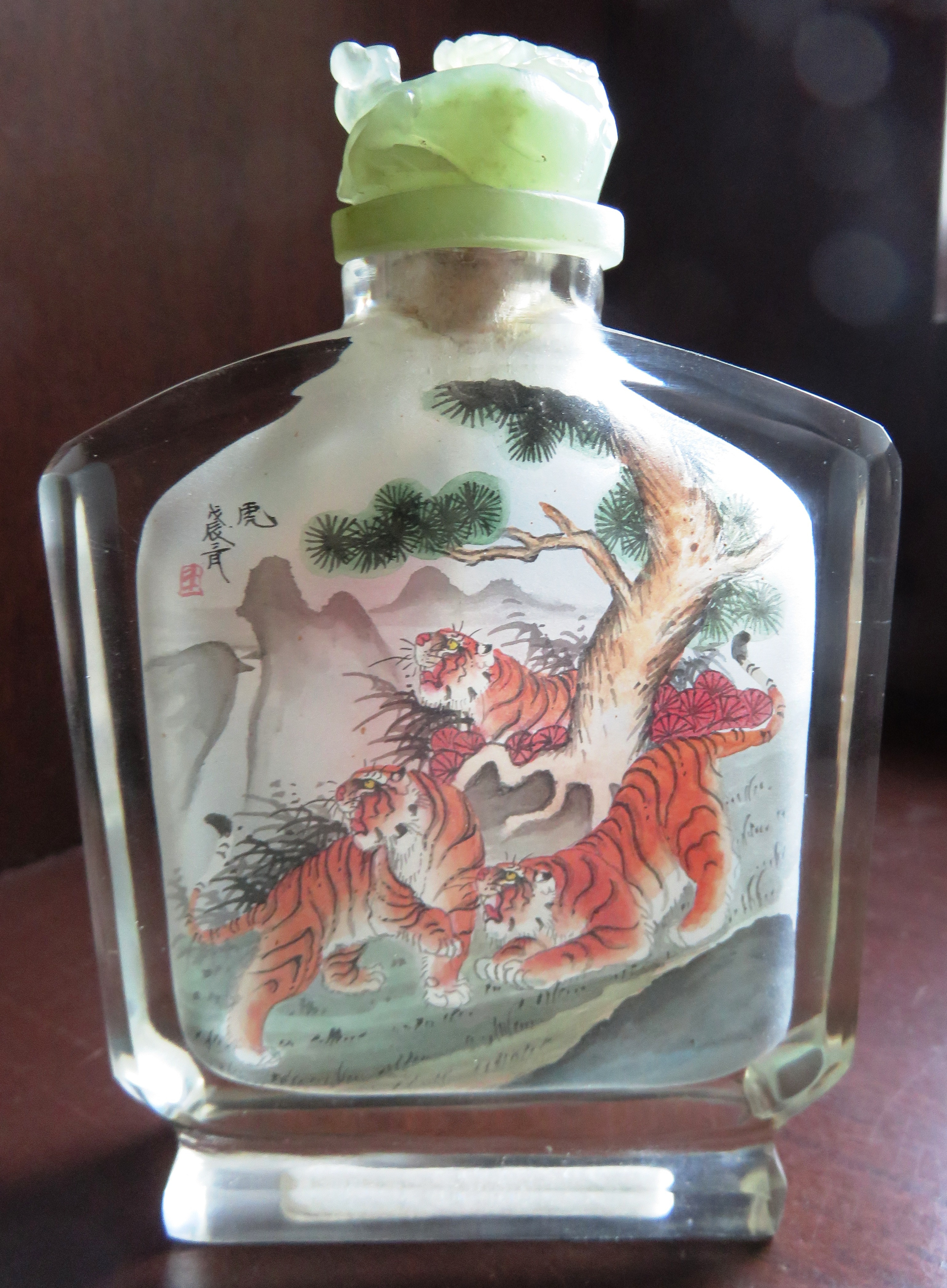
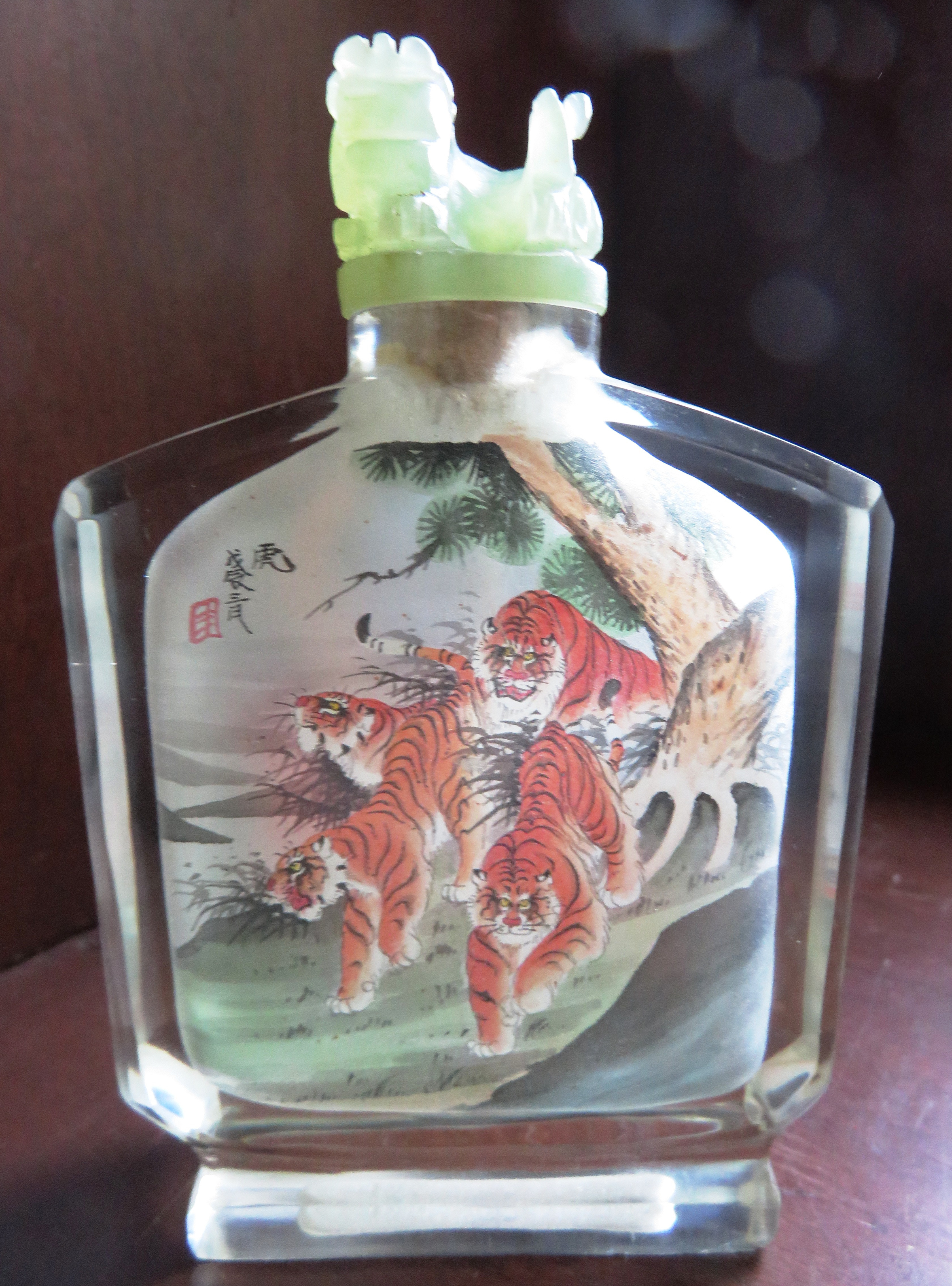
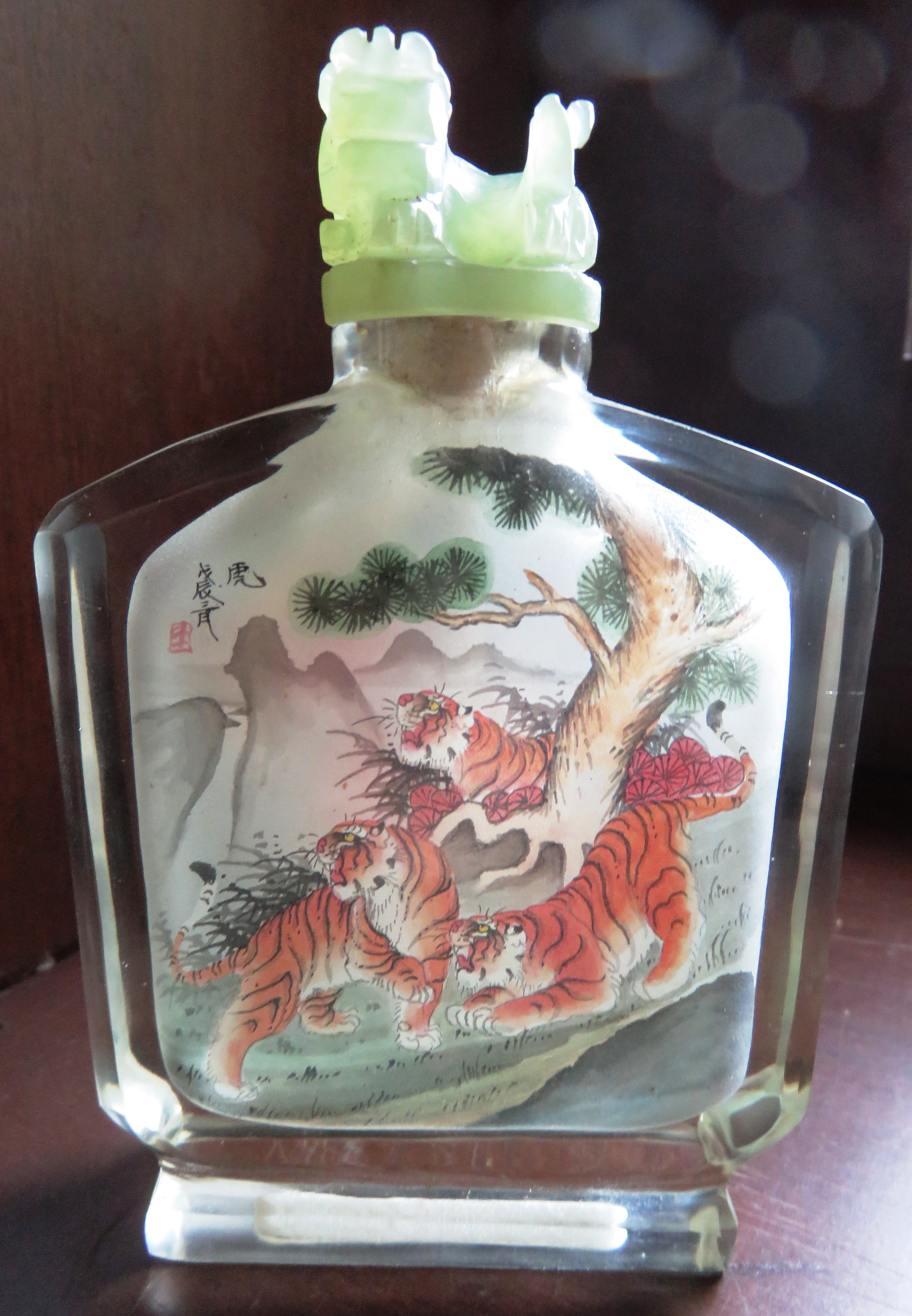
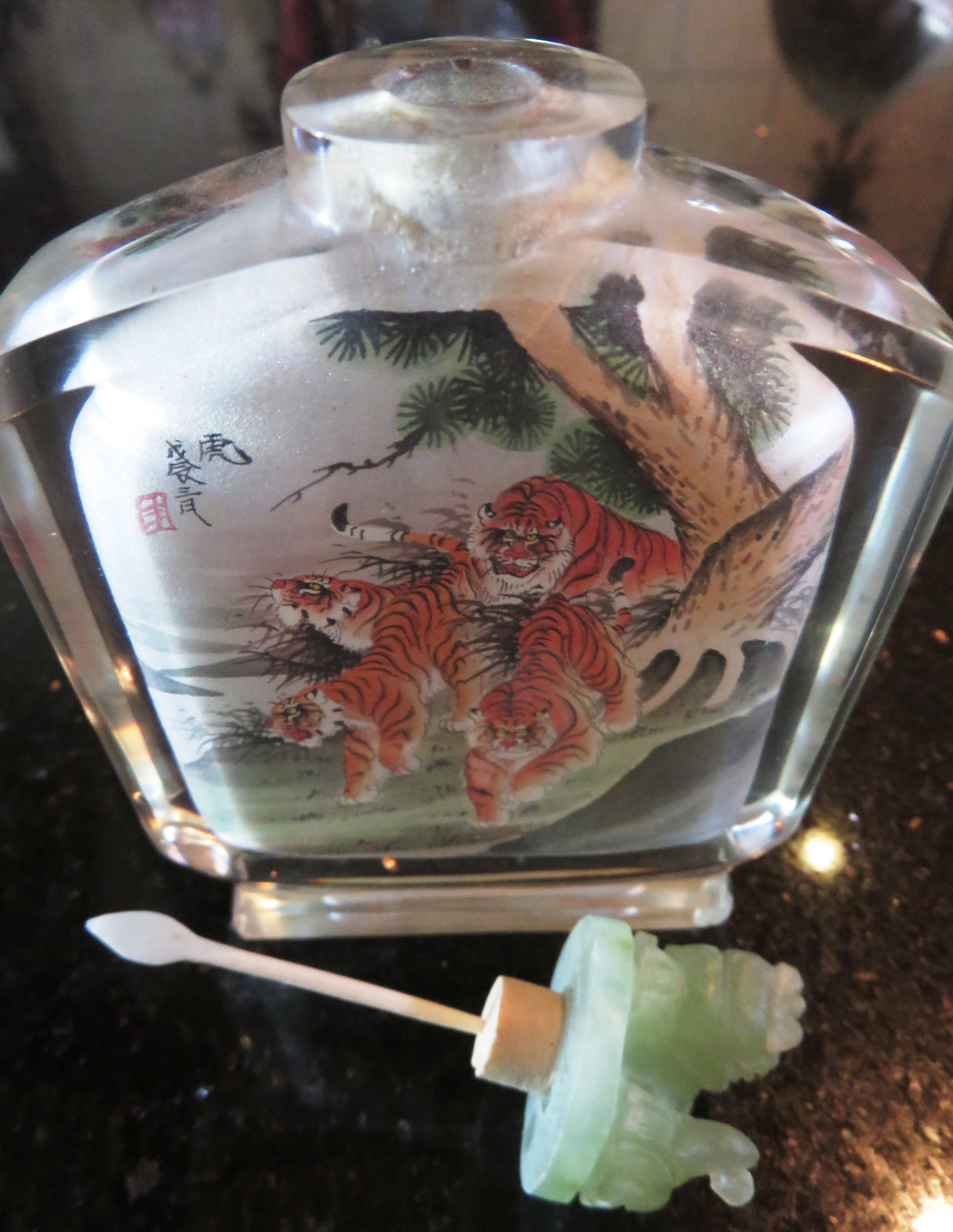
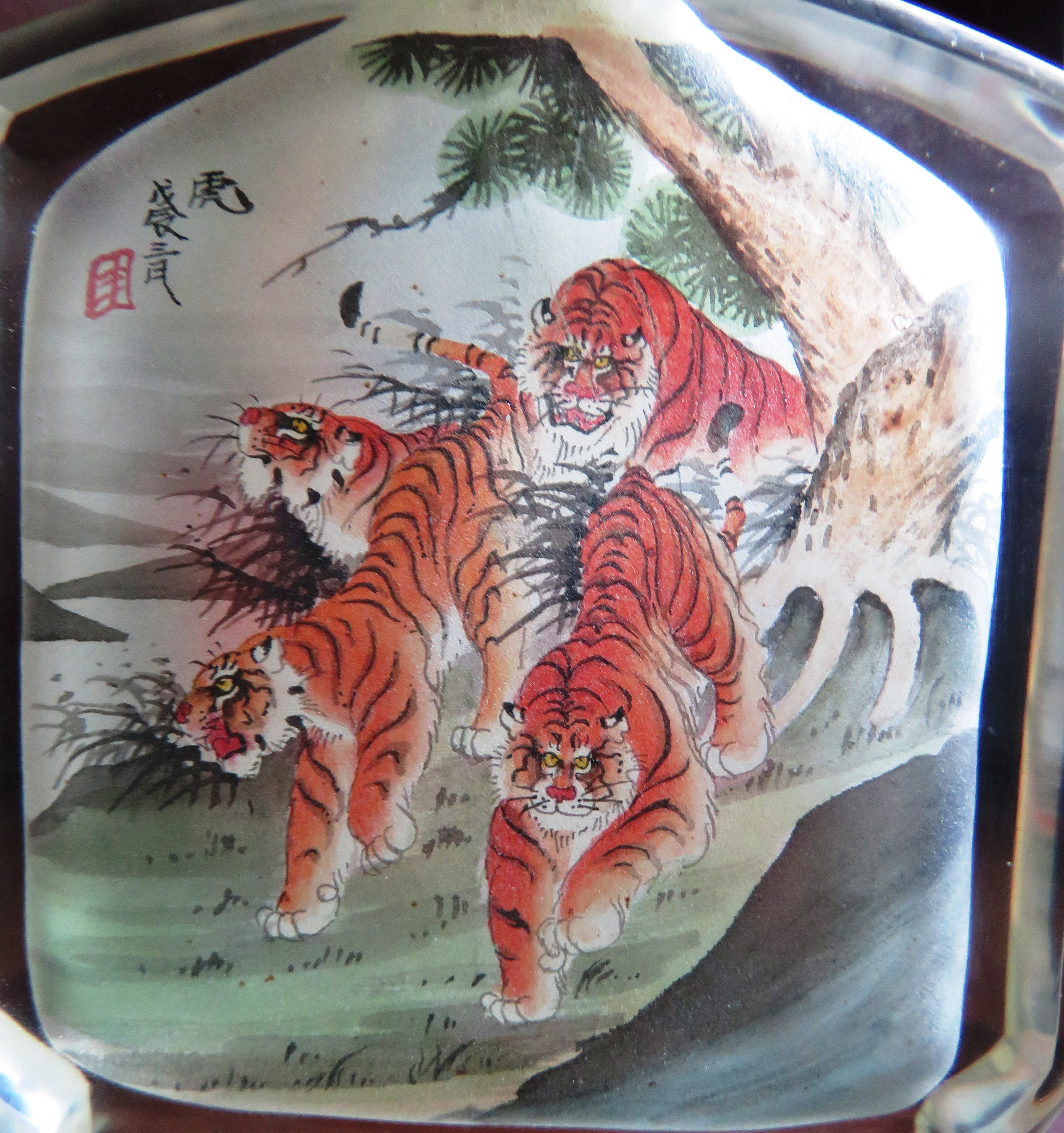
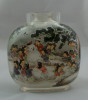
Vint Signed Chinese Crystal SNUFF BOTTLE INSIDE PAINTED TIGERS Carved Jade Top w Bone Spoon, Unused Mint condition
Category
Asian Art
Medium
Heavy Crystal, Jade, Bone
Distinguishing marks
Signed front & back
Condition
Mint
Size and dimensions of this item
5"H x 3.5"W
History
This signed interior reverse painted heavy crystal snuff bottle and jade stopper was a gift given to me by someone who purchased it in Hong Kong in the 1980's but I would like to know if it may be older than that and what is its actual value... Thank you
eBay Auction Link
https://www.ebay.com/itm/196989841036
⚠️ You have 1 free appraisal left today
Upgrade for 15-30/day →
Want more from your appraisals?
View Plans →
Upgrade for PDF reports, more daily appraisals, and ad-free experience.
This signed interior reverse…
This signed interior reverse painted heavy crystal snuff bottle and jade stopper was a gift given to me by someone who purchased it in Hong Kong in the 1980's but I would like to know if it may be older than that and what is its actual value... Thank you
Inside-Painted Chinese Crystal Snuff Bottle with Jade Top
Item Description:
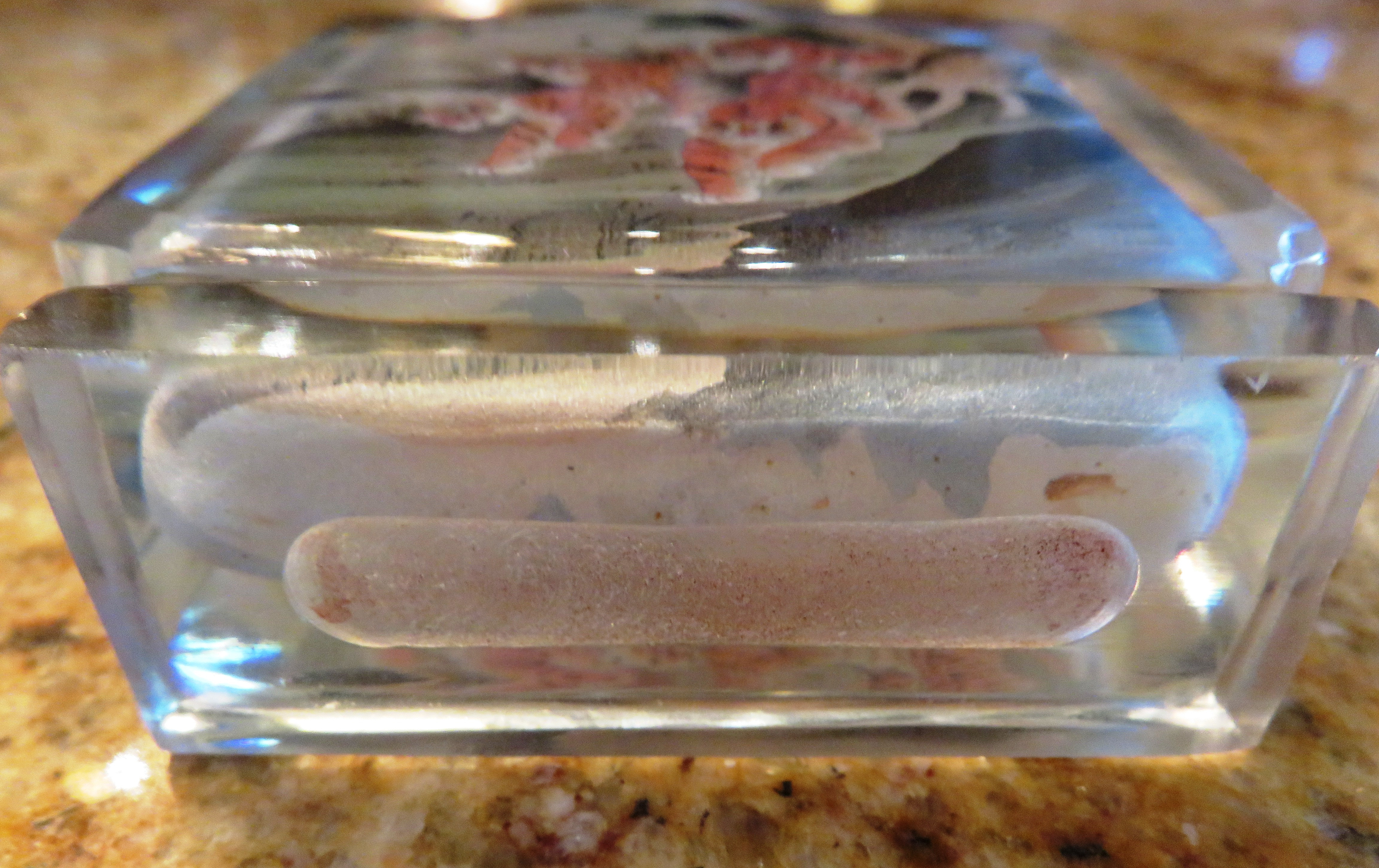
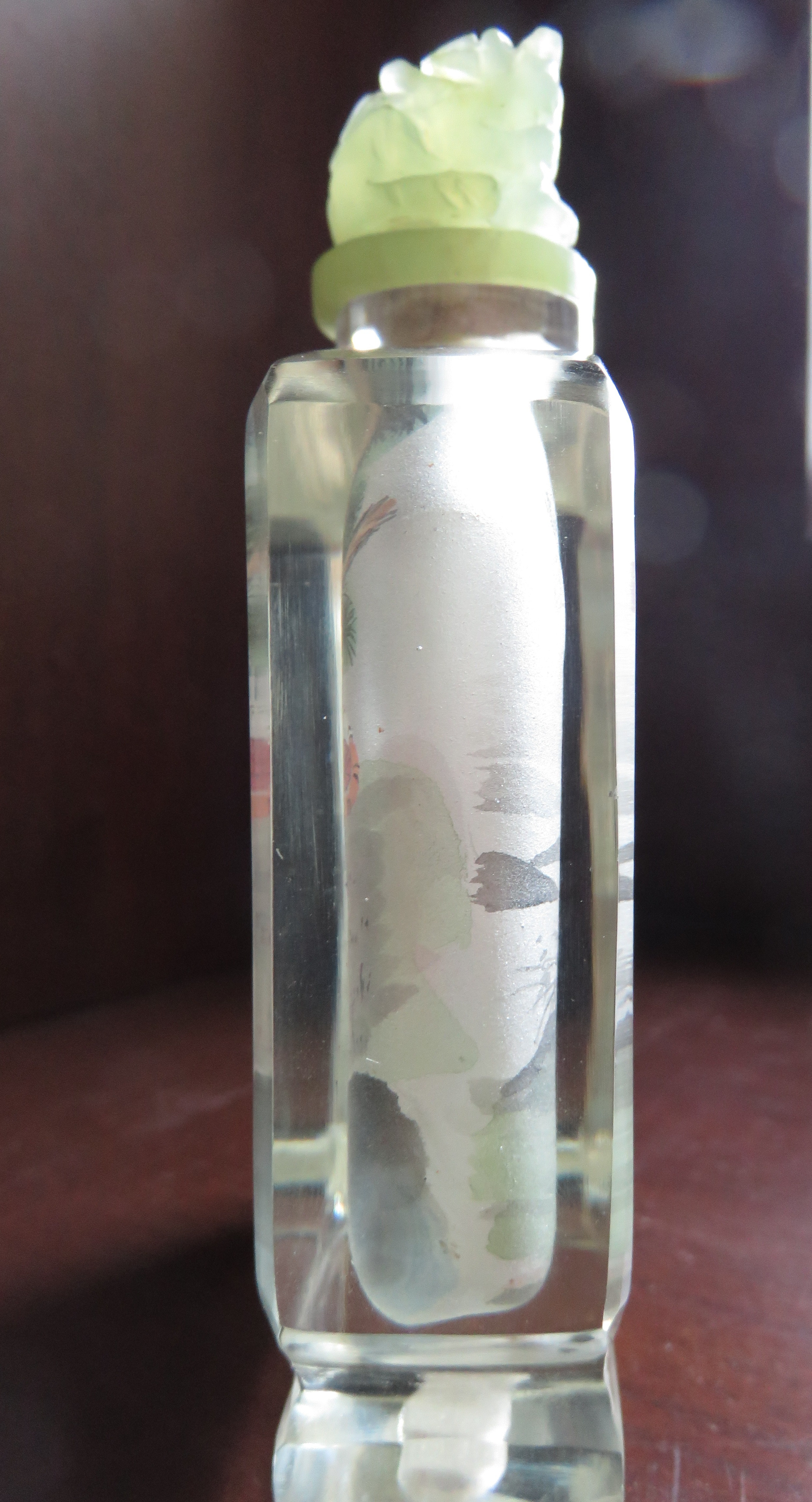
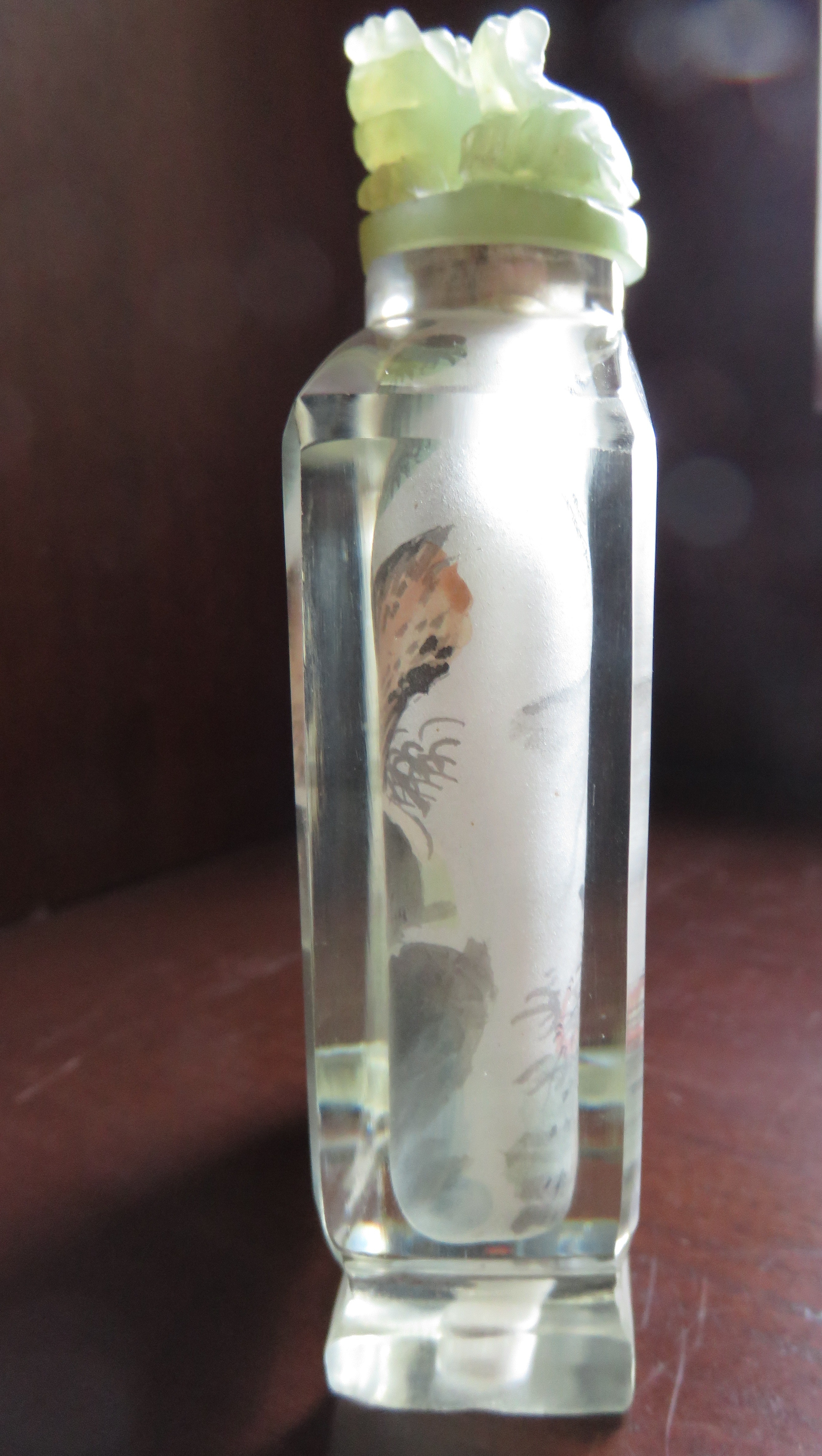
This is a vintage Chinese inside-painted crystal snuff bottle, featuring a meticulously hand-painted scene of five tigersamidst a natural landscape. The artwork is executed on both the front and back interior surfaces, a technique requiring exceptional dexterity and mirror-reversed brushwork. The bottle is sealed with a carved light green jadeite stoppershaped like a Foo Dog (guardian lion), and includes a bone or faux bone spoon attached to the cork.
Features & Details:
Art Historical Context:
This is a fine example of a 20th-century Chinese inside-painted snuff bottle—a traditional art form that began in the Qing Dynasty (circa 18th century) and continued into the Republic and modern periods. These bottles, once functional, have long since evolved into decorative and collectible miniatures
The level of detail and balance in the tiger painting (with dynamic poses, rich coloration, and expressive faces) suggests it was created by a skilled studio artist, likely from Beijing or Inner Mongolia, where such bottles are still crafted.
The use of multiple tigers symbolically conveys strength, power, and protection, making this a popular motif during Year of the Tiger or for collectors of Chinese zodiac iconography.
Date & Authenticity:
Value Estimate (2025 Market):
Type of Sale
Estimated Value (USD)
Retail/Gallery Price
$125 – $250
eBay/Folk Art Market (Sold listings)
$80 – $150
Collector Sale (Artist-Identified)
$250 – $400 (if artist recognized)
Comparable Listings:
Authentication & Recommendations:
Conclusion:
This inside-painted Chinese crystal snuff bottle is a high-quality decorative piece in excellent condition, with collectible appeal due to its detailed imagery, cultural symbolism, and craftsmanship. While it may not be an antique, its artistic value, condition, and potential jade stopper contribute to a strong mid-range collectible value.
Art Nouveau Ceramic Box (Attributed to Carl Sigmund Luber)
Item Overview:
Visual and Stylistic Analysis:
These characteristics are consistent with production from Austro-Hungarian or Bohemian workshops, where Carl Sigmund Luber often designed.
Condition:
Authentication Notes:
The impressed mold number 8591 is typical of early 20th-century mass mold cataloging systems used by these manufactories.
Estimated Market Value (as of 2025):
Venue / Market
Estimated Value (USD)
Retail or Gallery Price
$175 – $275
Auction (U.S. or Online)
$100 – $180
Private Collector / Art Nouveau
$200 – $300 (if confirmed Luber)
Comparable Items:
Professional Appraisal Recommendation:
✔ A professional ceramic or European decorative arts appraiser could further authenticate the attribution to Luber or identify the exact maker using mold number databases.
Summary:
This is a well-preserved and charming Art Nouveau era ceramic box, very likely Central European and possibly by or inspired by Carl Sigmund Luber. Its folk-art scene, naturalistic motifs, and period-specific glaze make it highly desirable to collectors of Jugendstil and turn-of-the-century European ceramics.