
Photos Submitted for Appraisal
🔍 Click to enlarge and inspect marks, signatures, and condition detailsTap to zoom and inspect details
AI Appraisal
Description
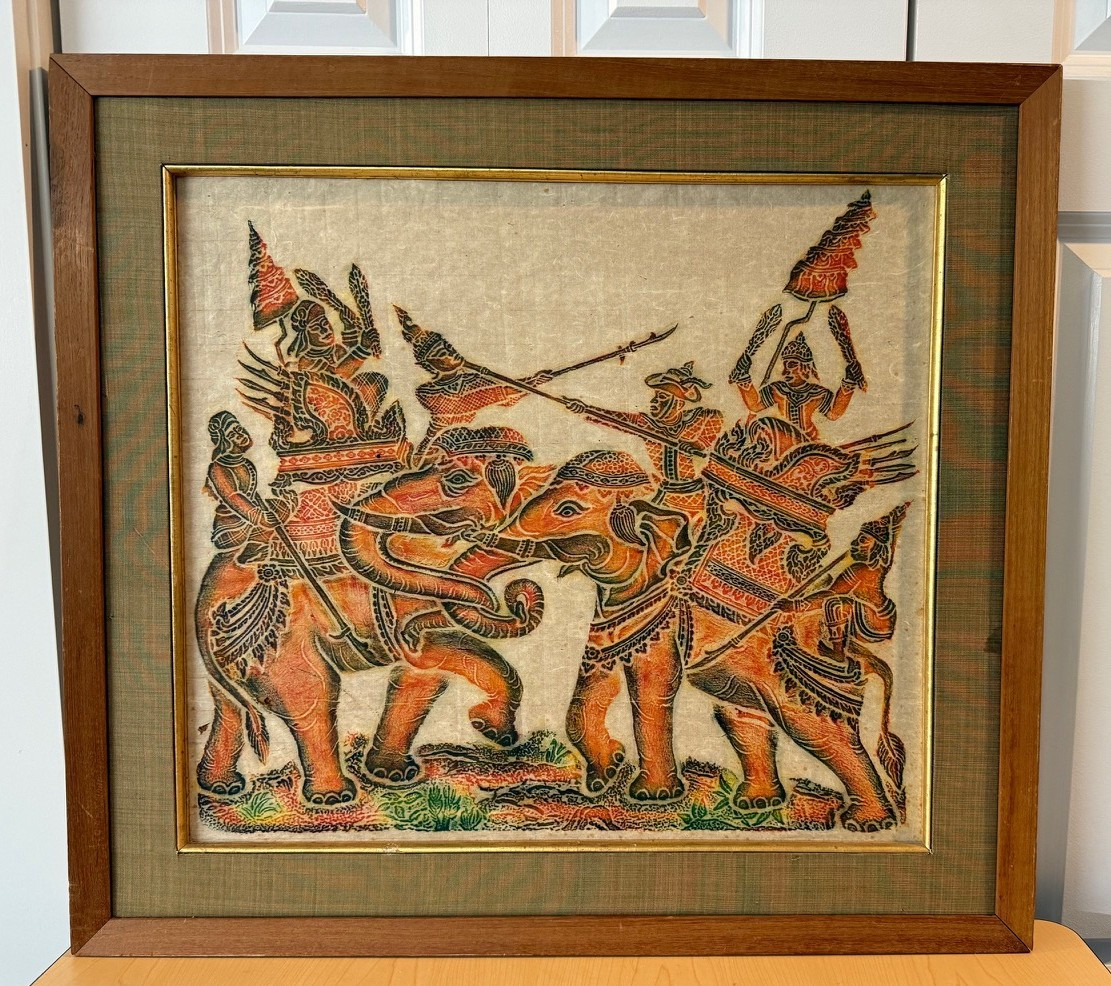
Thai rubbing on rice paper. Elephant scene. Noticeable damage to the paper. Unknown if it can be restored.
Category
Other
Medium
rice paper
Distinguishing marks
See pictures for details
Condition
Fair
Size and dimensions of this item
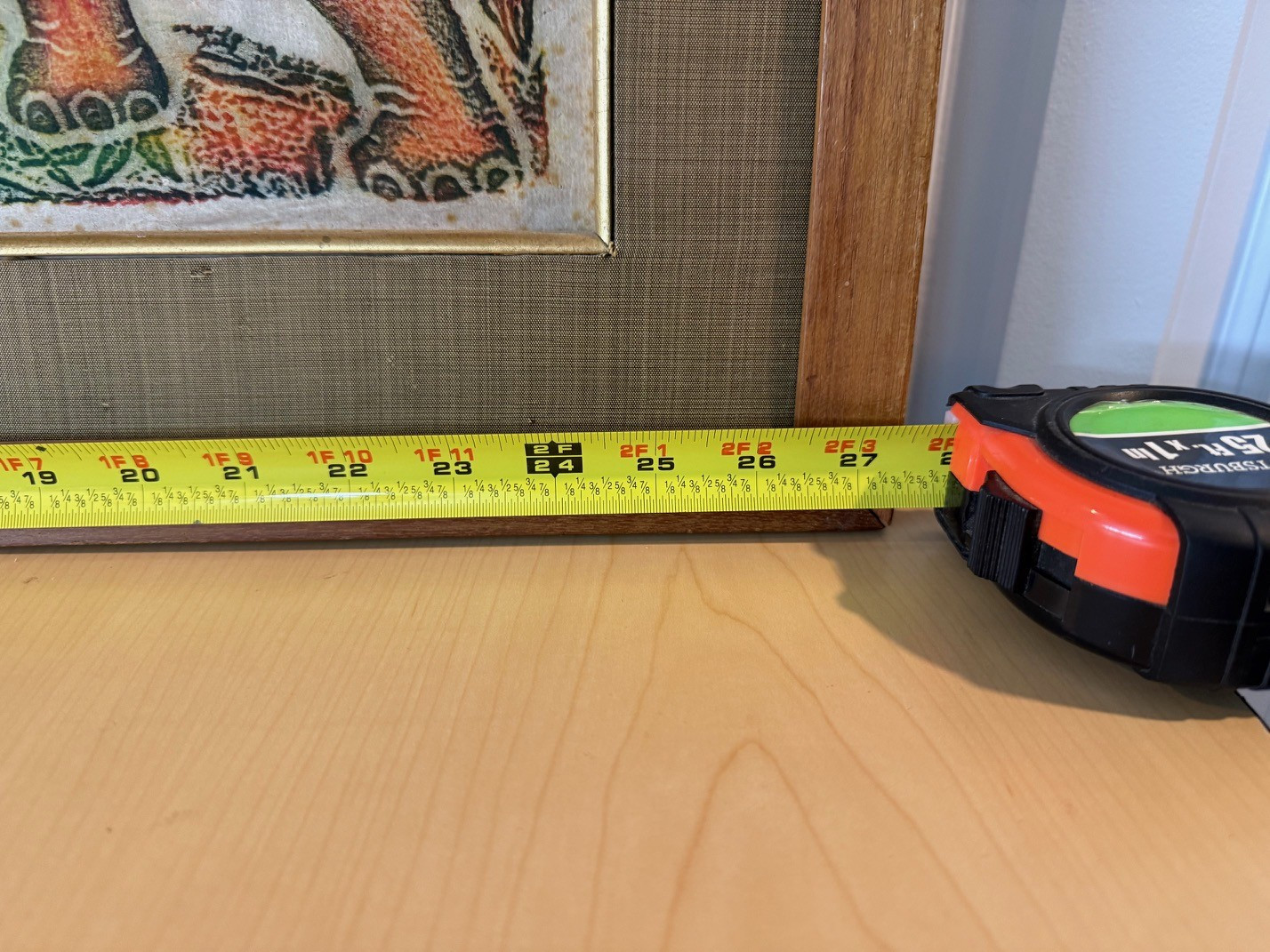
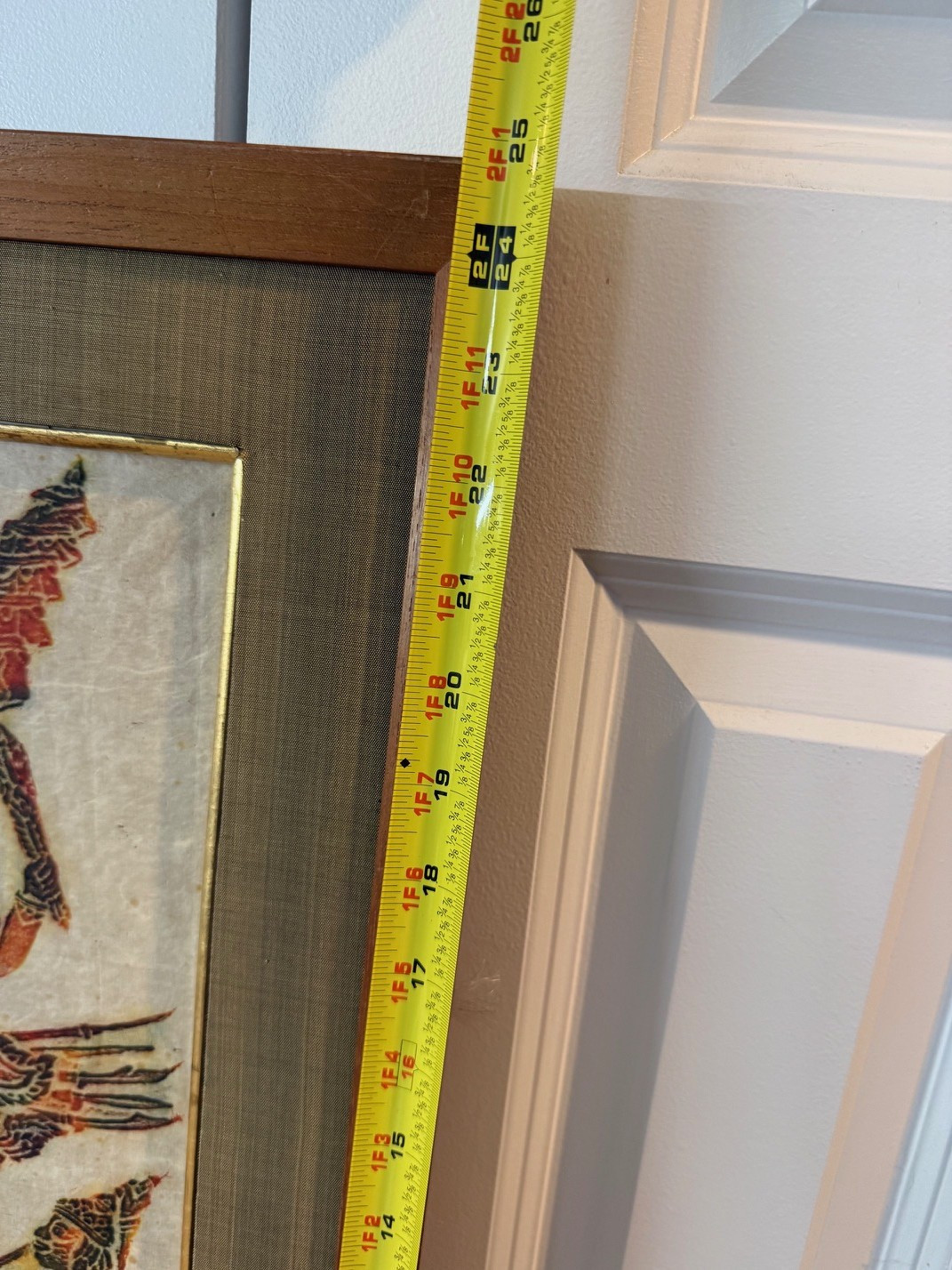
24.5"x27.5"
Date Period
1960's?
Weight
5lbs
Collectors with this item
Want to appraise yours? Upload photos for a free appraisal →
⚠️ You have 1 free appraisal left today
Upgrade for 15-30/day →
Want more from your appraisals?
View Plans →
Upgrade for PDF reports, more daily appraisals, and ad-free experience.
Collector Discussion
Do you recognize this piece? Collectors often identify maker marks, share comparable sales, or suggest additional research steps.
Thai Elephant Battle Rubbing on Rice Paper
Item Overview
Description and Background
This artwork is a Thai-style rubbing, a traditional technique used to reproduce relief carvings or bas-reliefs onto paper or cloth. The rubbing is done by pressing the paper over an incised surface (typically stone or wood carvings at temples or historical monuments) and applying ink or pigment with a cloth or brush.
The subject depicts an iconic Thai historical or mythological war scene featuring elaborately armored war elephants, riders, and royal figures wielding spears and banners. The visual style and ornate costume detail suggest inspiration from ancient Thai epic literature or temple bas-reliefs, particularly scenes drawn from the Ayutthaya or Sukhothai periods. These types of artworks were commonly produced for the tourist and expatriate markets in the mid-20th century.
Material and Construction
Condition Analysis
Authentication
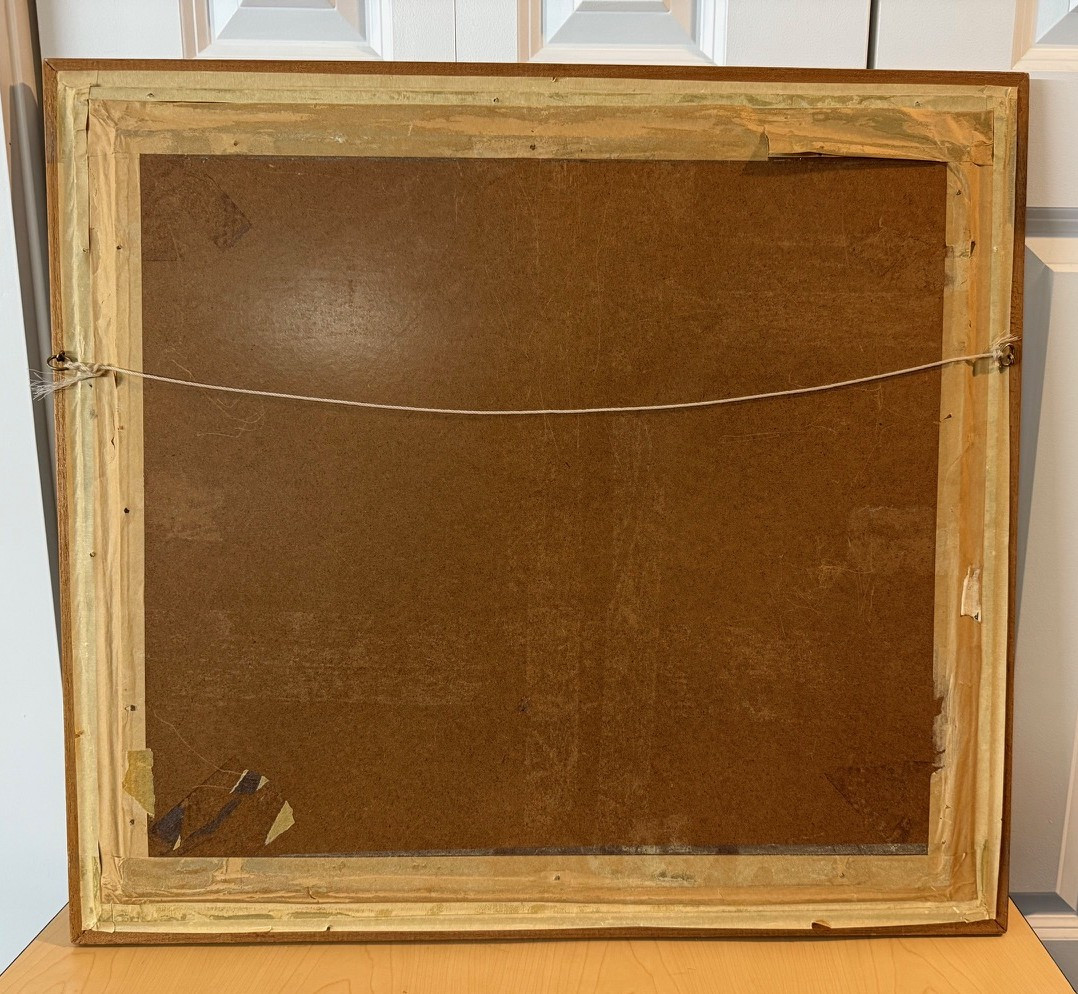
There are no artist signatures, stamps, or inscriptions evident on the front or back, which is typical for tourist-market rubbings produced from master molds or temple carvings during the 1950s–1970s in Thailand. Based on subject matter, style, materials, and frame age, this item appears authentic as a mid-20th century Thai rubbing artwork—but not a one-of-a-kind original.
Market and Value
Thai rubbings from the 1960s–1970s have modest but stable market interest, especially those in good condition with culturally significant subjects like elephant battles. However, because they were widely produced and not individually signed, their value lies in their aesthetic and decorative appeal, not rarity.
Current Market Value (Fair Condition):
Recommendations