
Photos Submitted for Appraisal
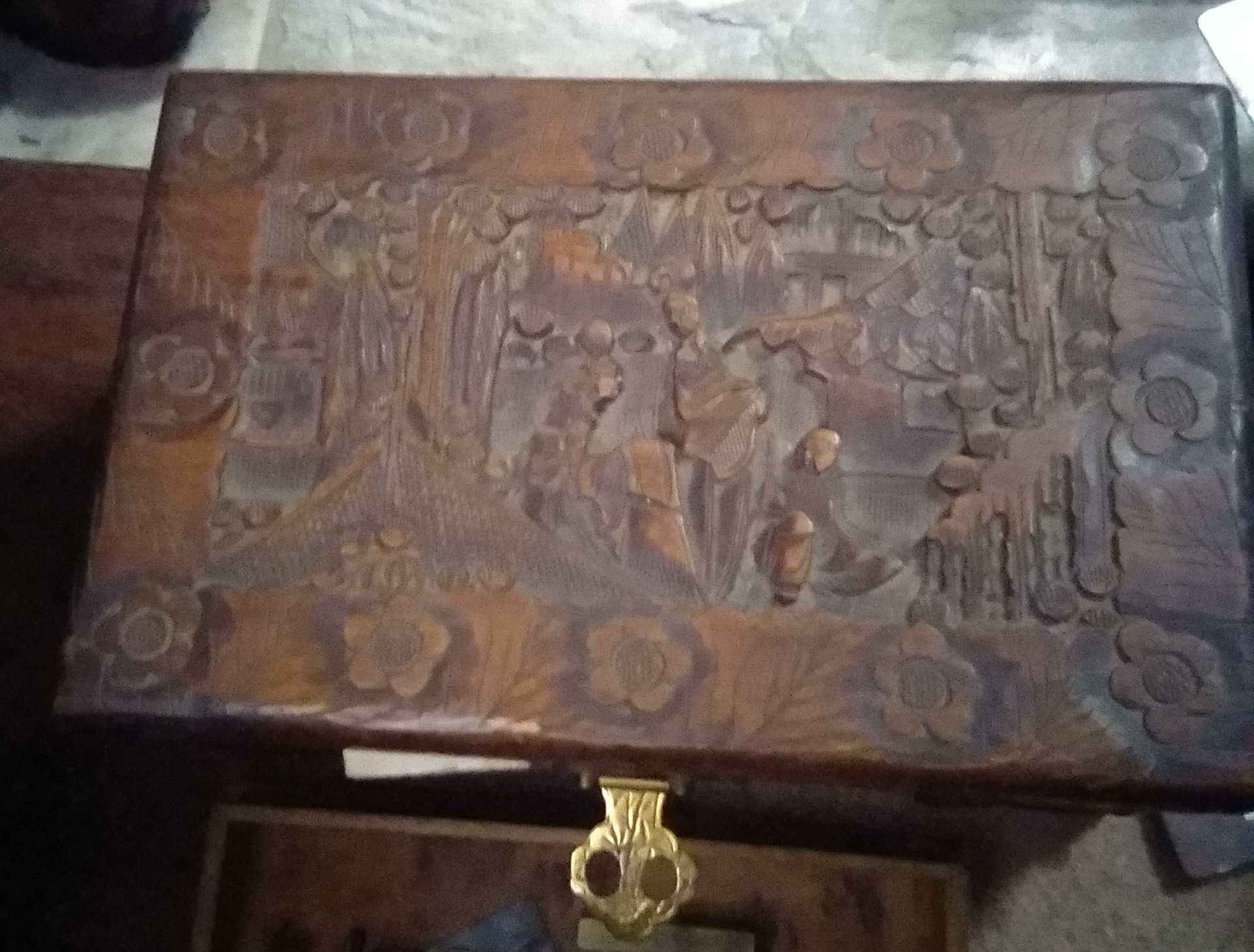
🔍 Click to enlarge and inspect marks, signatures, and condition detailsTap to zoom and inspect details
AI Appraisal
Description
Chinese hand carved box 8x14 inches chinese village scene photos
Category
American Furniture
Medium
Wood
Distinguishing marks
China #47
Condition
Good
Size and dimensions of this item
8x14
Weight
3lbs.
Collectors with this item
Want to appraise yours? Upload photos for a free appraisal →
⚠️ You have 1 free appraisal left today
Upgrade for 15-30/day →
Want more from your appraisals?
View Plans →
Upgrade for PDF reports, more daily appraisals, and ad-free experience.
Collector Discussion
Do you recognize this piece? Collectors often identify maker marks, share comparable sales, or suggest additional research steps.
Re: Chinese hand carved box
It looks like rosewood. Better pics would help. Also the pictures that are inside it, did you get it that way? Maybe knowing what those photos are of (if the box has been storing them for some time) could help us know more, or at least would be interesting to see. So if you can, better and more pics.
Re: Chinese hand carved box
If it has a scent to it it, it's camphorwood, which was often used for storage boxes because like cedar, the oil in the wood kept bugs and boring insects away. Most tend to date between World Wars One and Two (1918-39)