
Photos Submitted for Appraisal
🔍 Click to enlarge and inspect marks, signatures, and condition detailsTap to zoom and inspect details

AI Appraisal
Description
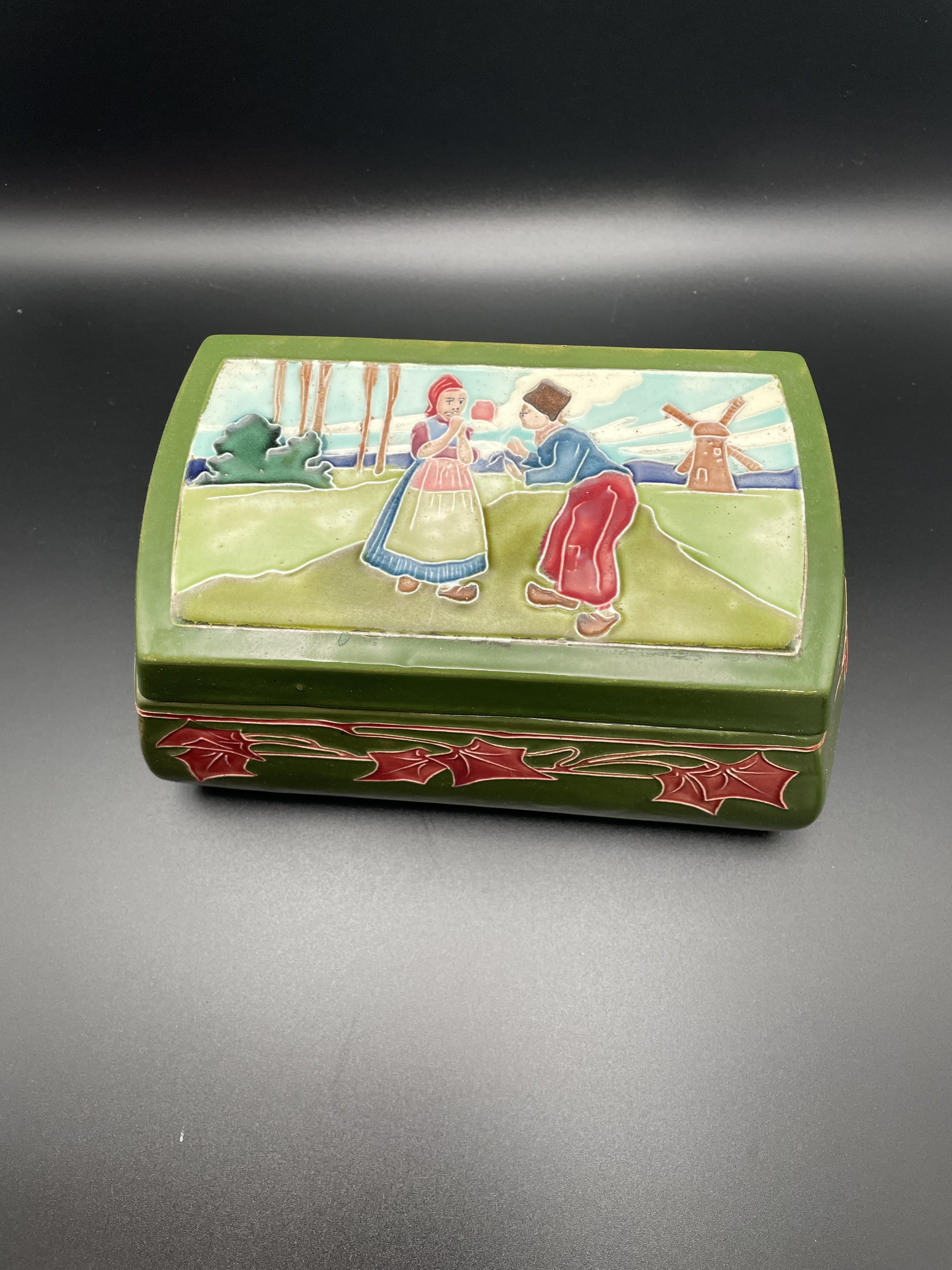
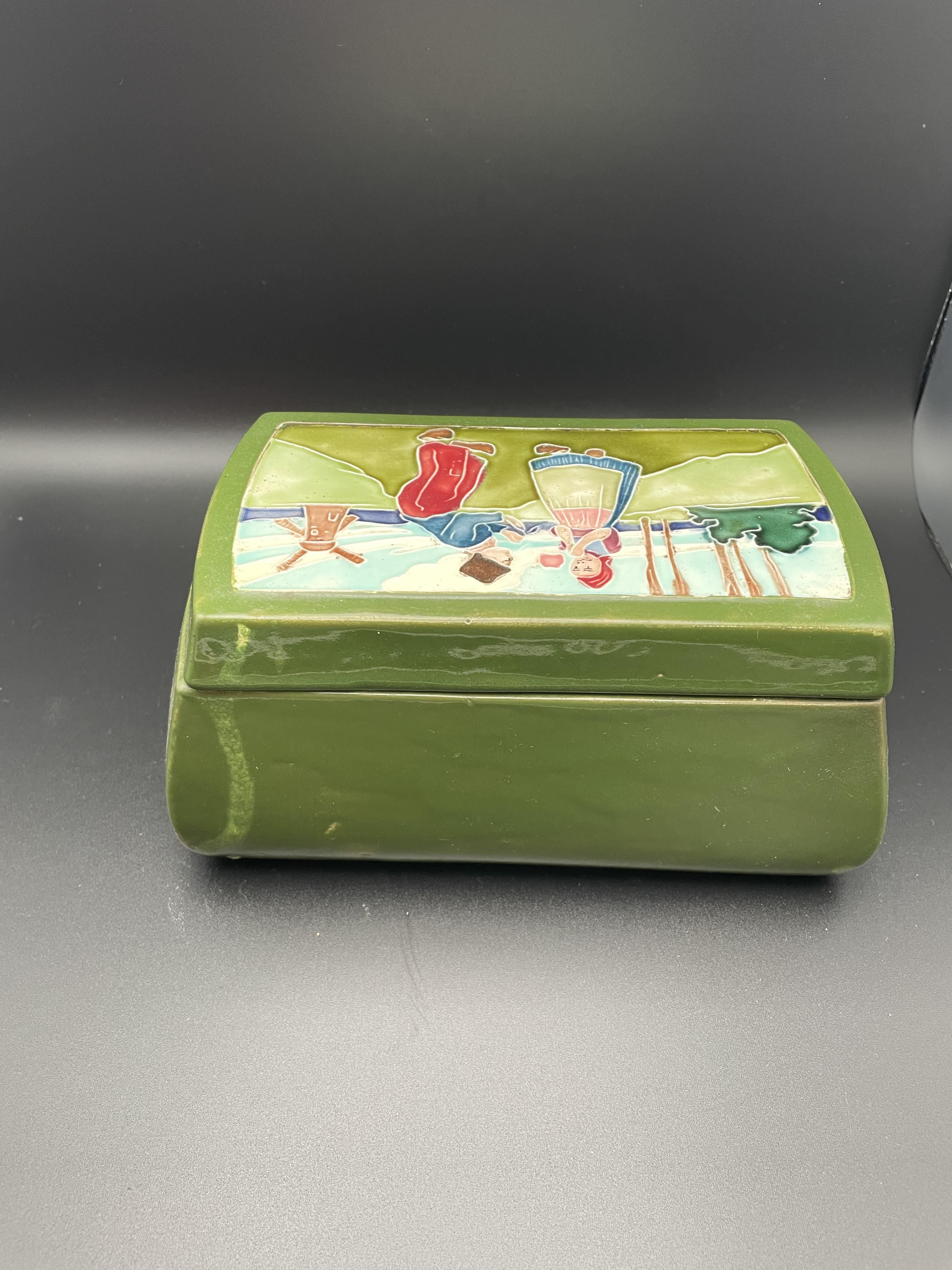
This antique ceramic box is numbered and appears to be a Carl Sigmund Luger design, Dutch farm boy and girl.
Category
Art Deco and Art Nouveau
Medium
Ceramic
Distinguishing marks
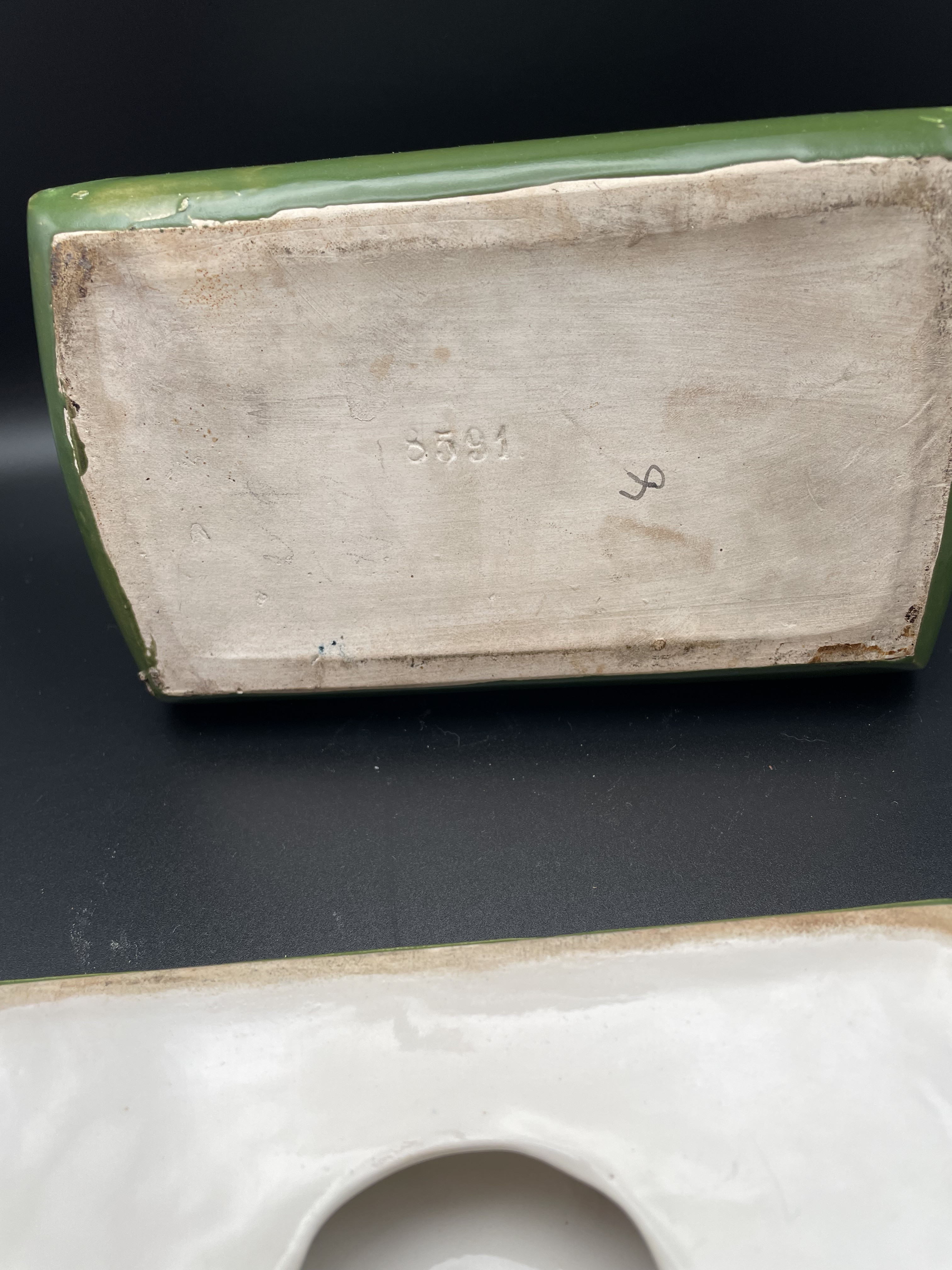
Numbered 8591 on back
Appears to have a whitish paint drip on back under the green glaze.
Appears to have a whitish paint drip on back under the green glaze.
Condition
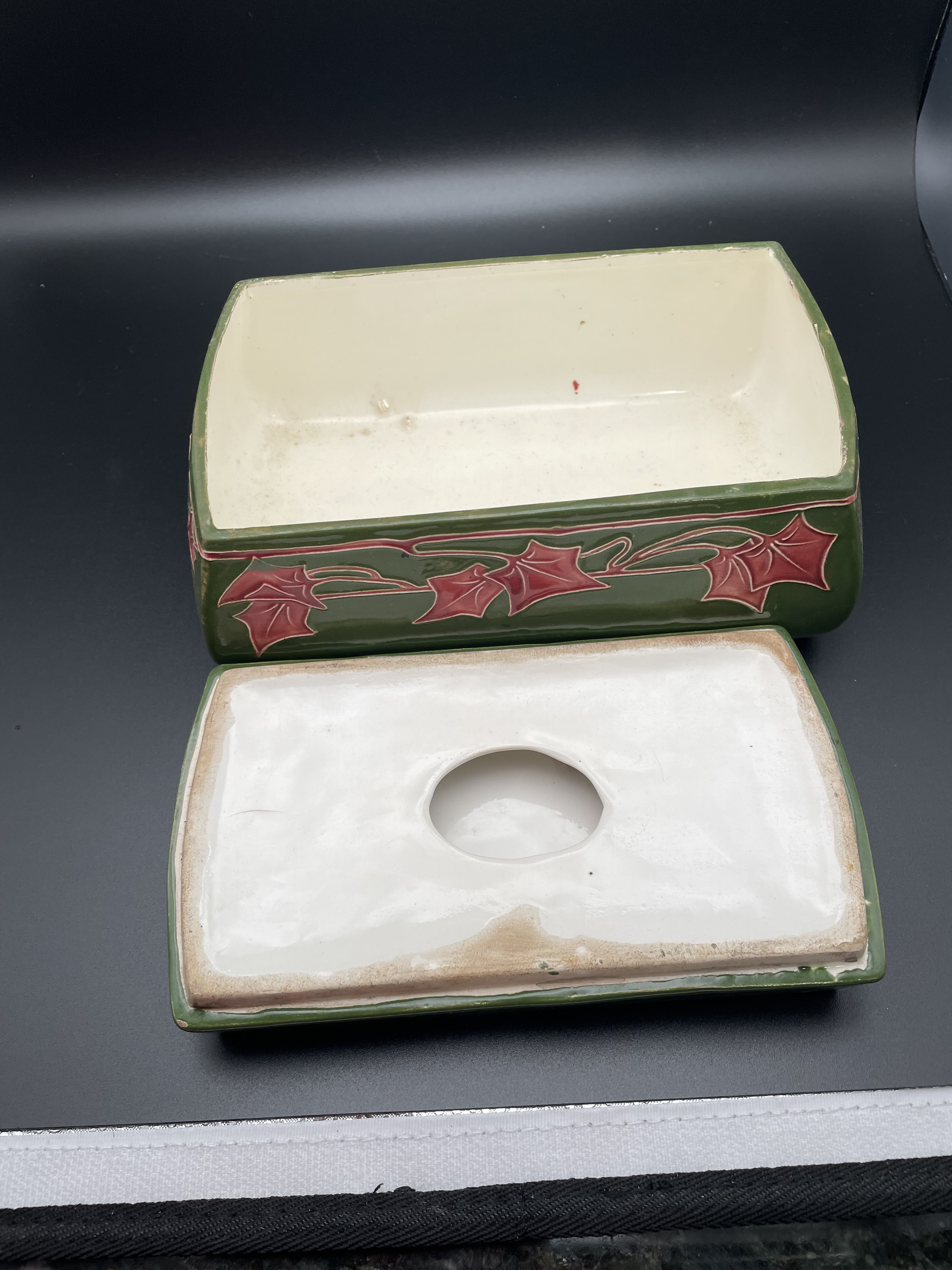
Excellent
Size and dimensions of this item
Top 6-3/4”x 4”x 1-1/16”. Bottom 8”x 4-1/2”x 2-1/2”
Date Period
1900-1909
History
This piece was inherited from a family member and has been stored well for many years. It is in excellent condition.
Collectors with this item
Want to appraise yours? Upload photos for a free appraisal →
⚠️ You have 1 free appraisal left today
Upgrade for 15-30/day →
Want more from your appraisals?
View Plans →
Upgrade for PDF reports, more daily appraisals, and ad-free experience.
Collector Discussion
Do you recognize this piece? Collectors often identify maker marks, share comparable sales, or suggest additional research steps.
Antique Art Nouveau Ceramic Box (Attributed to Carl Sigmund Lube
Overview
This is a beautifully preserved antique ceramic trinket or vanity box, believed to be designed by Carl Sigmund Luber (not "Luger"), a notable German ceramic artist affiliated with the Art Nouveau movement in the early 20th century. Luber worked extensively with companies such as Villeroy & Boch and Schwarzburger Werkstätten and was known for his stylized, folk-themed, and nature-inspired ceramic pieces.
Description
Attribution and Authentication
A professional appraisal could further confirm attribution by comparing mold numbers and glaze techniques with Luber’s cataloged works.
Historical Context
This piece reflects the European Art Nouveau movement’s embrace of pastoral and folkloric themes, especially popular in German and Dutch-influenced ceramics around the turn of the century. The windmill and regional attire reinforce a Northern European cultural setting.
Estimated Value (2025)
The value is influenced by the condition, artist attribution, rarity, and demand for Jugendstil ceramics. Values could increase if a definitive connection to Carl Sigmund Luber or a known ceramic house (like Villeroy & Boch or Schramberg) is verified.
Recommendations