Napcoware trinket

D
9 months ago
AI Appraisal
Description

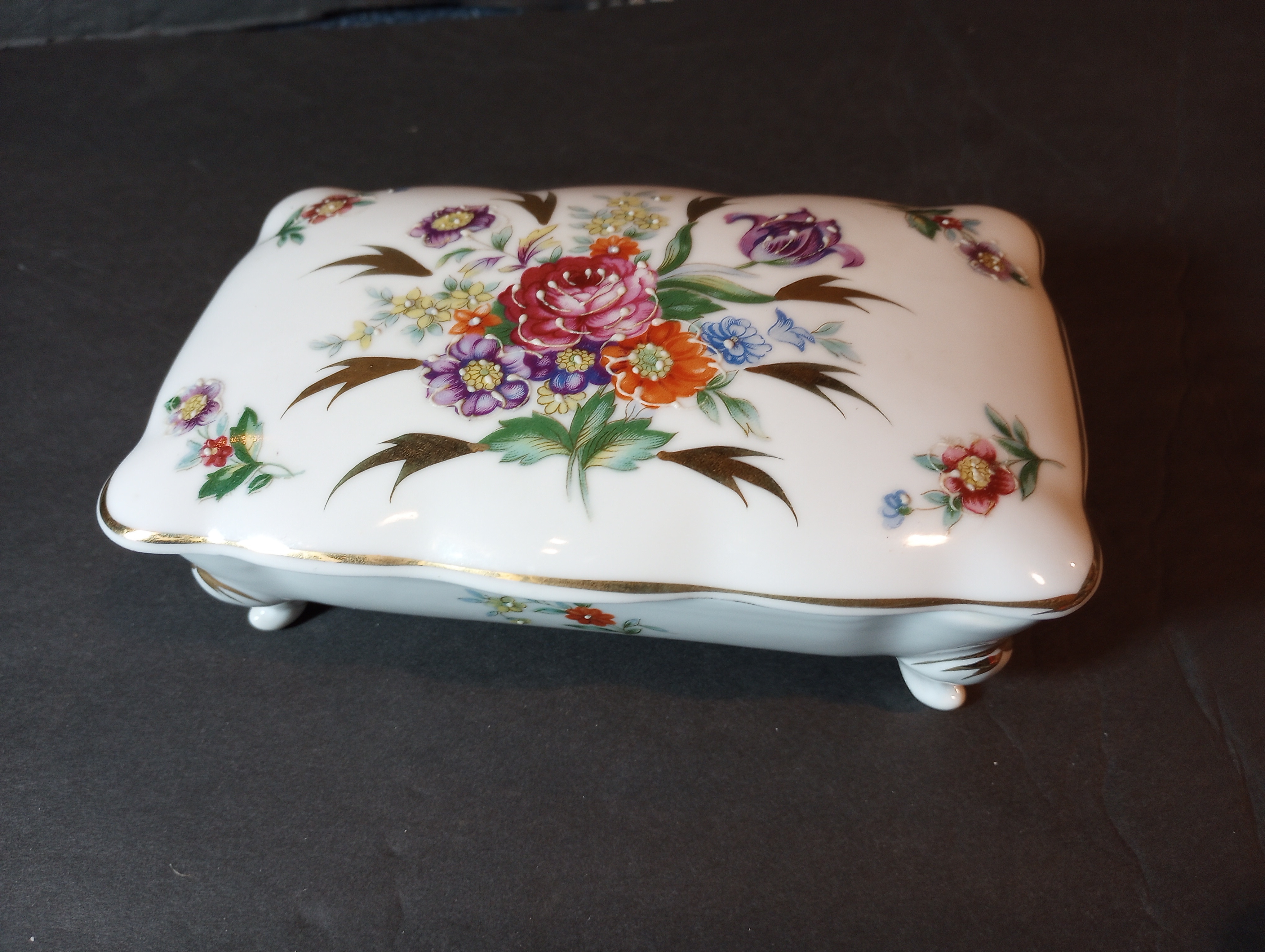
I'm wondering if the numbered 22/129 would add much value to this piece of Porcelain Napcoware. It is in great condition with NO chips or cracks.

Category Ceramics and Porcelains
Medium Porcelain
Distinguishing marks 22/129
Condition Excellent
Size and dimensions of this item 5.5" long 3.5" wide 1.5" tall
Date Period 1950
⚠️ You have 1 free appraisal left today Upgrade for 15-30/day →
Want more from your appraisals?

Upgrade for PDF reports, more daily appraisals, and ad-free experience.

View Plans →

Submitted by Charley

Item Description

  • Type: Lidded porcelain trinket or dresser box
  • Maker: Napcoware (National Potteries Corporation)
  • Design:
    • Raised on 4 feet with a domed lid
    • Beautifully hand-painted multi-color floral bouquet with gold accents
    • Smooth glaze finish with no chips, cracks, or visible crazing
  • Dimensions: Approx. 5.5" long x 3.5" wide x 1.5" tall
  • Markings: Hand-numbered “22/129” on base, with blue painted markings (partially faded)

Historical Context

Napcoware, founded in Cleveland, Ohio in 1938, became widely known during the 1950s–70s for importing and distributing finely crafted Japanese porcelain and ceramics. The floral trinket box is consistent with mid-century Japanese export porcelain, often made in limited runs or with hand-numbered batches for gift and collectible markets.

This style of dresser box would typically be sold in department stores or gift shops, and is known for its:

  • Highly detailed floral transfers or hand-painting
  • Delicate shapes and feet
  • Often found as part of bedroom vanity or decorative accessories

Analysis of “22/129” Marking

This appears to be a limited edition or production run number, suggesting this box was part of a small batch (129 total). However, in the vintage Napcoware market, this type of numbering is not always directly tied to collectability or premium value, unless:

  • It's associated with a named artist or designer
  • The series is particularly rare or part of a holiday/special edition line

So while the marking adds authenticity and minor interest, it does not significantly elevate the value unless tied to other factors (e.g., an original box, catalog listing, or series documentation).

Current Market Value Estimate (2024)

Condition

Value Estimate (USD)

Excellent (as shown)

$25 – $45

If part of a documented collector’s series or paired with original packaging, the value may approach $60–70

Value Factors

Excellent condition (no damage)
Hand-painted floral design with vibrant color
Desirable Napcoware mid-century aesthetic
No hallmarking of artist or specific collection
Limited impact of numbered edition alone

Recommendation for Professional Appraisal

You do not need a formal appraisal unless:

  • You’re insuring a large Napcoware collection
  • You're selling a collection at auction or through a specialist in mid-century Japanese imports

However, a local appraiser in vintage ceramics or Japanese export porcelain may be helpful if you're grouping this with similar items for sale or valuation.

Submitted by DjIndy

Thank you for the excellent info. Today I found two "tea bag holders" with the matching 22/129 numbering. Makes me wonder if this is a "trinket box" or a tea box?

Great question — based on the photos and details you provided, the item is best categorized as a trinket box, not a tea box. Here’s why:

Trinket Box Characteristics (Which This Matches):

  • Size: At 5.5" x 3.5" x 1.5", it’s quite small for storing tea, but perfect for jewelry, keepsakes, or small vanity items.
  • Decorative Footed Design: Common in vanity or dresser-top trinket boxes.
  • Floral Porcelain Decoration: Napcoware was known for highly decorative collectible ceramics — trinket boxes were a popular format.
  • Numbering (22/129): This suggests a limited-edition decorative collectible, more typical of trinket boxes.

Tea Box Characteristics (Which This Lacks):

  • Typically larger, with compartments or deeper sections to hold multiple tea bags or loose tea.
  • Less often footed or elaborately painted like this one.

So while people might use it however they like, it was originally intended and designed as a decorative trinket or vanity box. Hope that helps!

📸 Quick Scan
Garage-Sale Mode Fast appraisals on the go