
Photos Submitted for Appraisal
🔍 Click to enlarge and inspect marks, signatures, and condition detailsTap to zoom and inspect details
AI Appraisal
Description
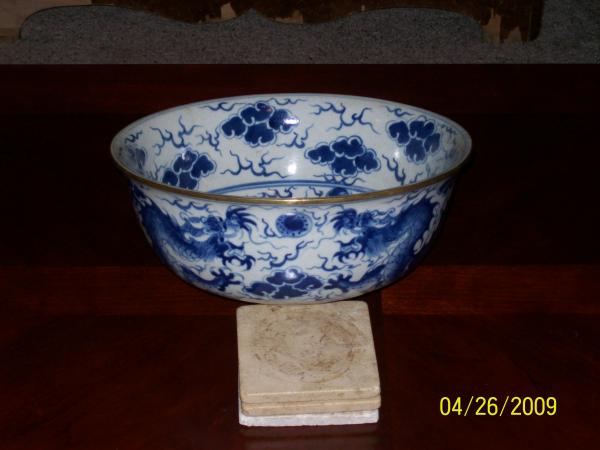
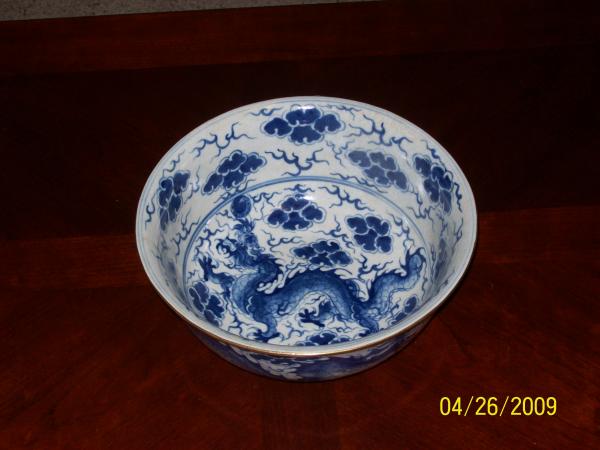
White porcelain or china bowl with blue dragons and clouds. Gold trim around the lip of the bowl. Asian characters on the bottom.
Category
Asian Art
Distinguishing marks
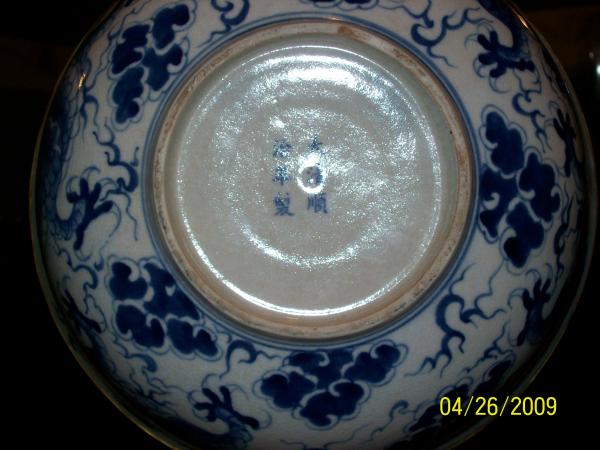
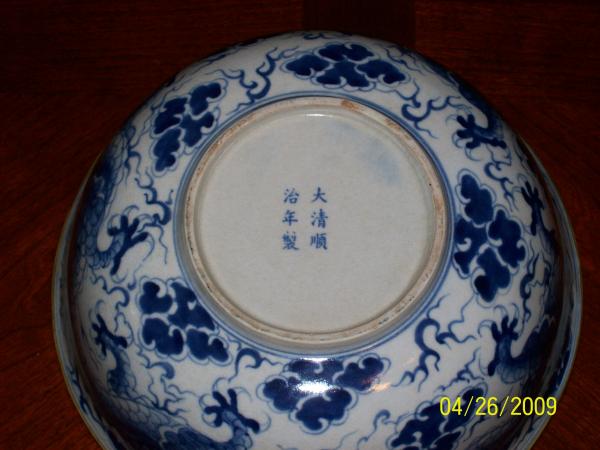
Asian writing on bottom
Condition
Excellent
Size and dimensions of this item
11 inches in diameter
Date Period
17th century
Weight
Approximately 4.25 lbs.
History
Item was left in a home. No other known history. Item was looked at by the Antiques Roadshow and said to be from the Qing Dynasty 17th Century.
eBay Auction Link
Price Paid (If known)
unknown
Collectors with this item
Want to appraise yours? Upload photos for a free appraisal →
⚠️ You have 1 free appraisal left today
Upgrade for 15-30/day →
Want more from your appraisals?
View Plans →
Upgrade for PDF reports, more daily appraisals, and ad-free experience.
Collector Discussion
Do you recognize this piece? Collectors often identify maker marks, share comparable sales, or suggest additional research steps.
Re: Qing Bowl 17th Century
The photos don't show enough detail and there's some glare, but here goes: The reign mark is for Shunzhi the first emperor (1644-61) of the Qing Dynasty. Authentic items bearing the imperial seal of Shunzhi are so exceedingly rare that some experts say they are nonexistent. The chaos caused by the fall of the Ming Dynasty (1368-1644) led to the destruction of the main kiln sites at Jingdezhen, and porcelain production didn't really pick up again until mid-way through the reign of Kangxi (1662-1722). Therefore, genuine mark-and-period Shunzhi imperial wares may not even exist, according to some experts. It is believed that the earliest appearance of the Shunzhi mark is on pieces dating from the Yongzheng-era (1722-35), a "tribute" practice, which continued under Qianlong (1736-95). If that is the case here, what you have is still a fine 18th century Chinese Qing Dynasty blue and white porcelain bowl, complete with dragons. There is the small chance that it could be of 19th manufacture, but I don't think so. By the way, who looked at it on Antiques Roadshow? Was it Lark Mason? He's the main expert for Chinese furniture and porcelain.