
Photos Submitted for Appraisal

Click any image to enlarge

AI Appraisal
Collectors with this item
Want to appraise yours? Upload photos for a free appraisal →
Description
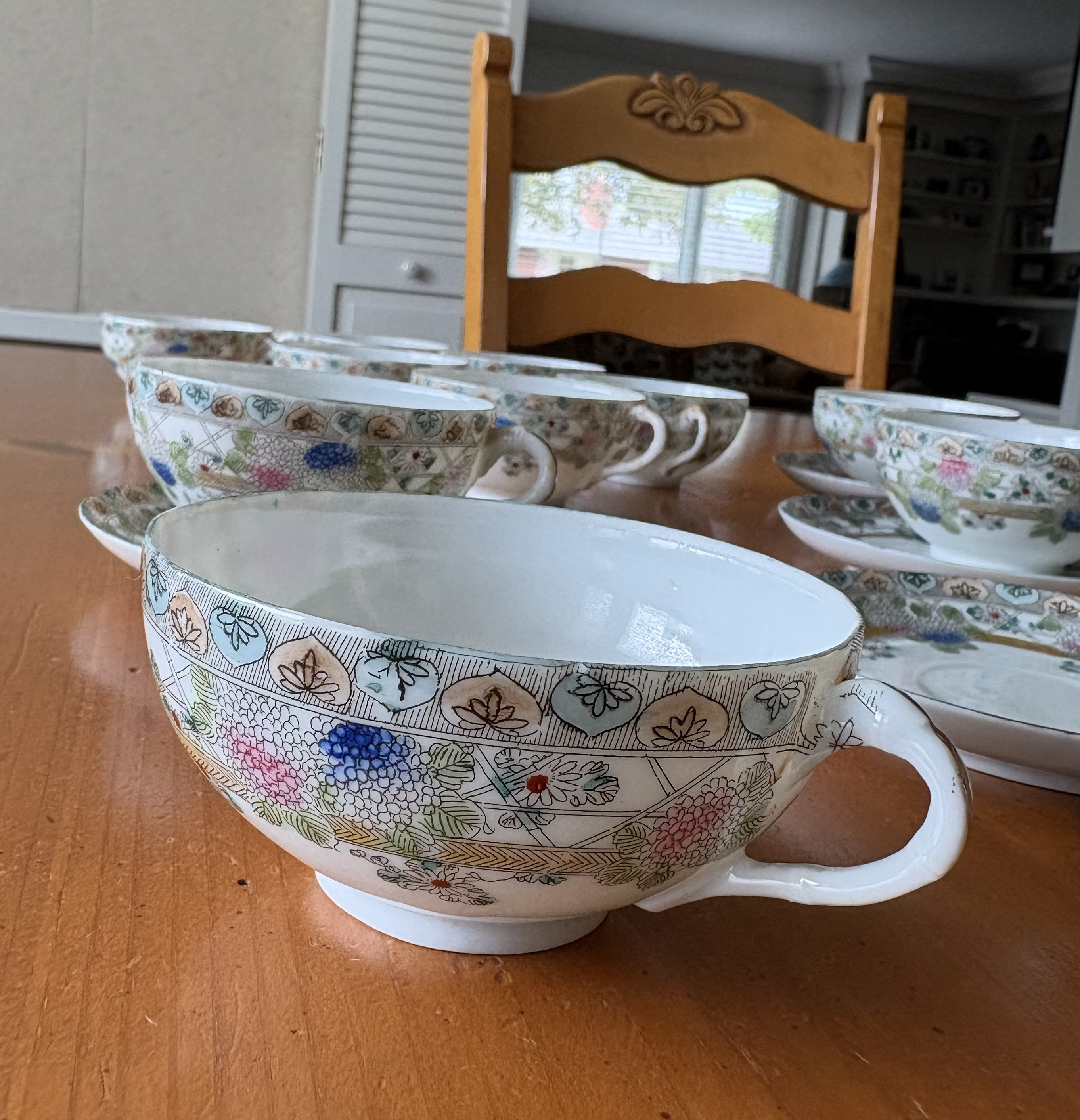
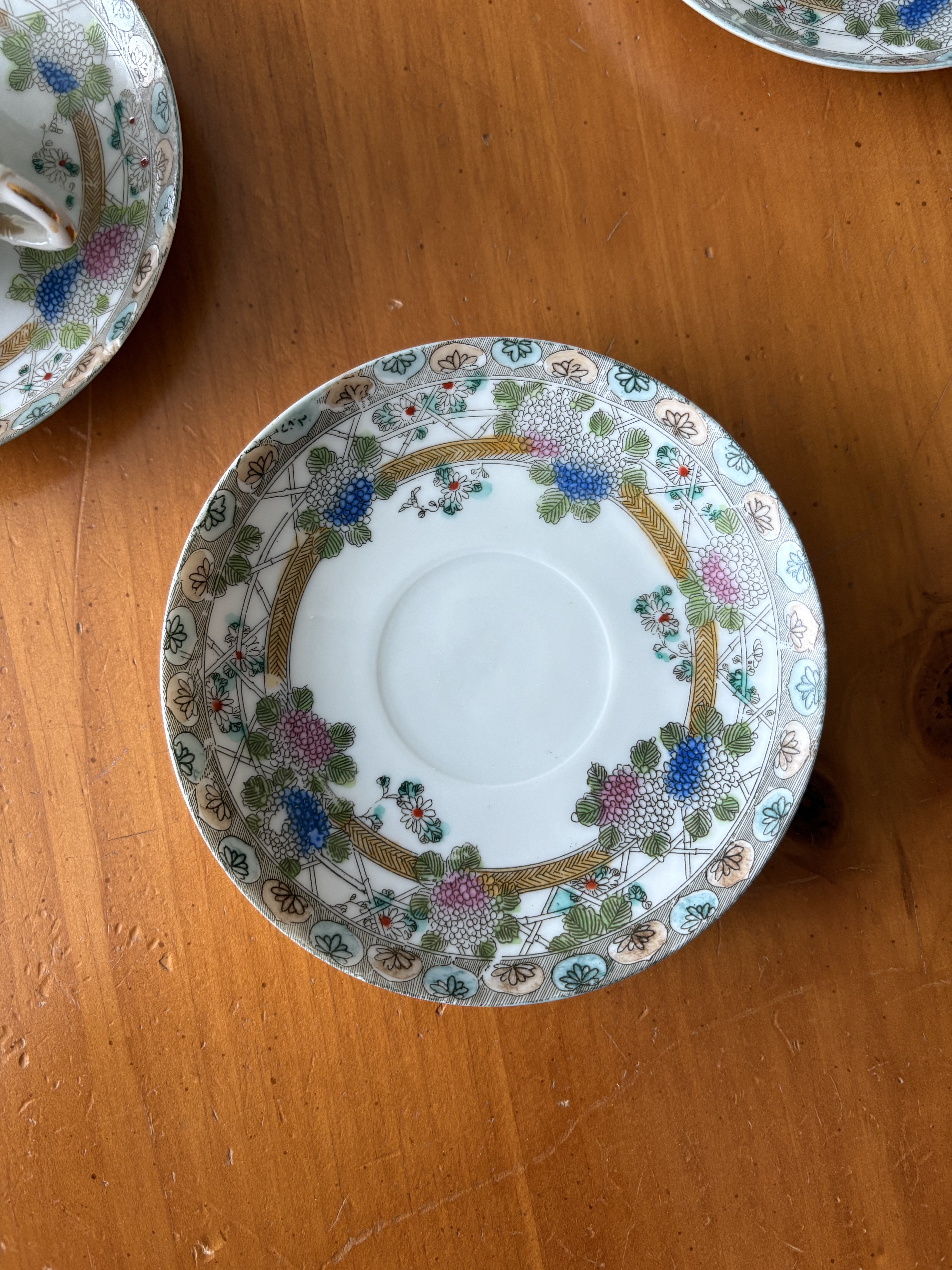
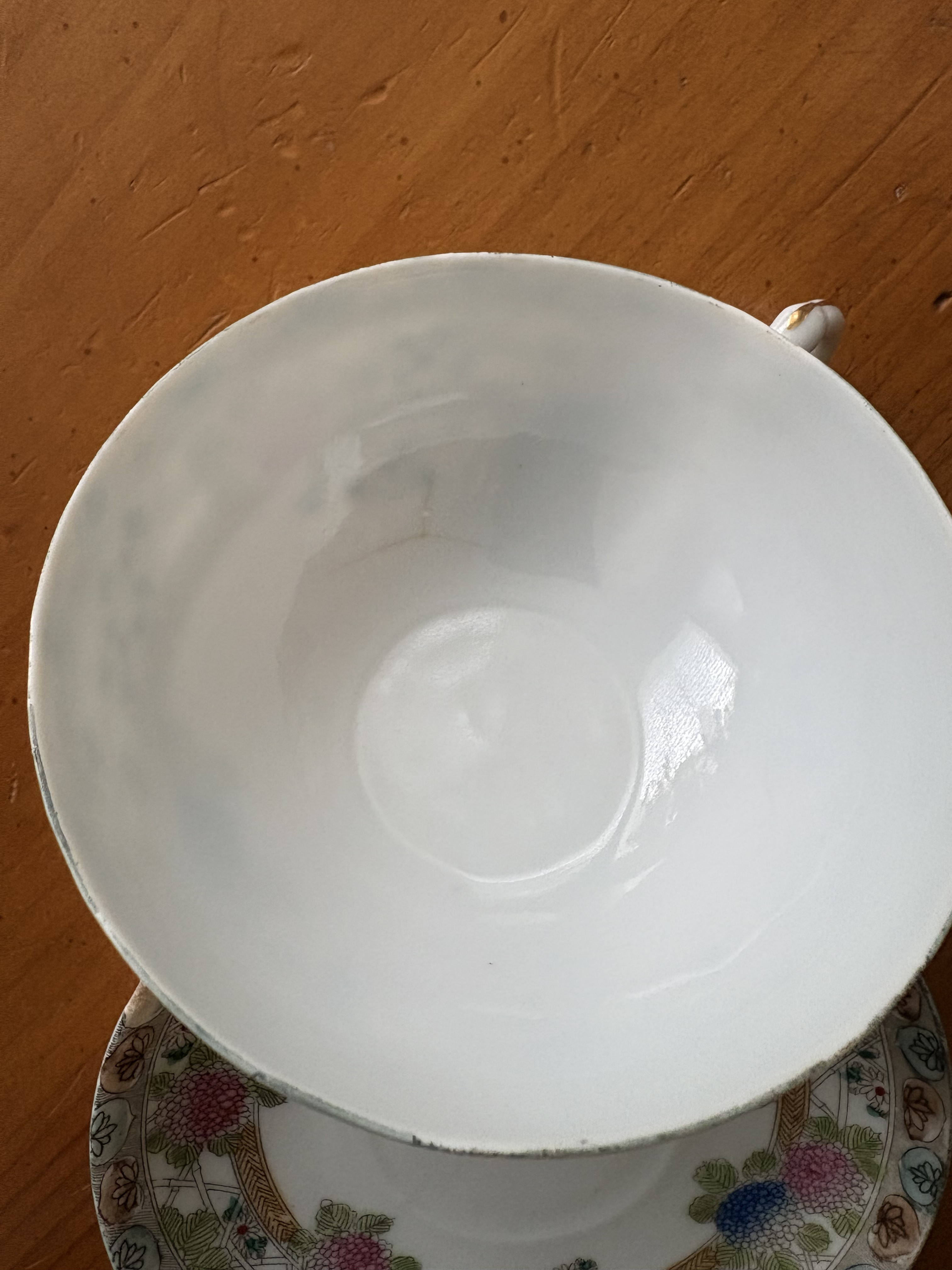
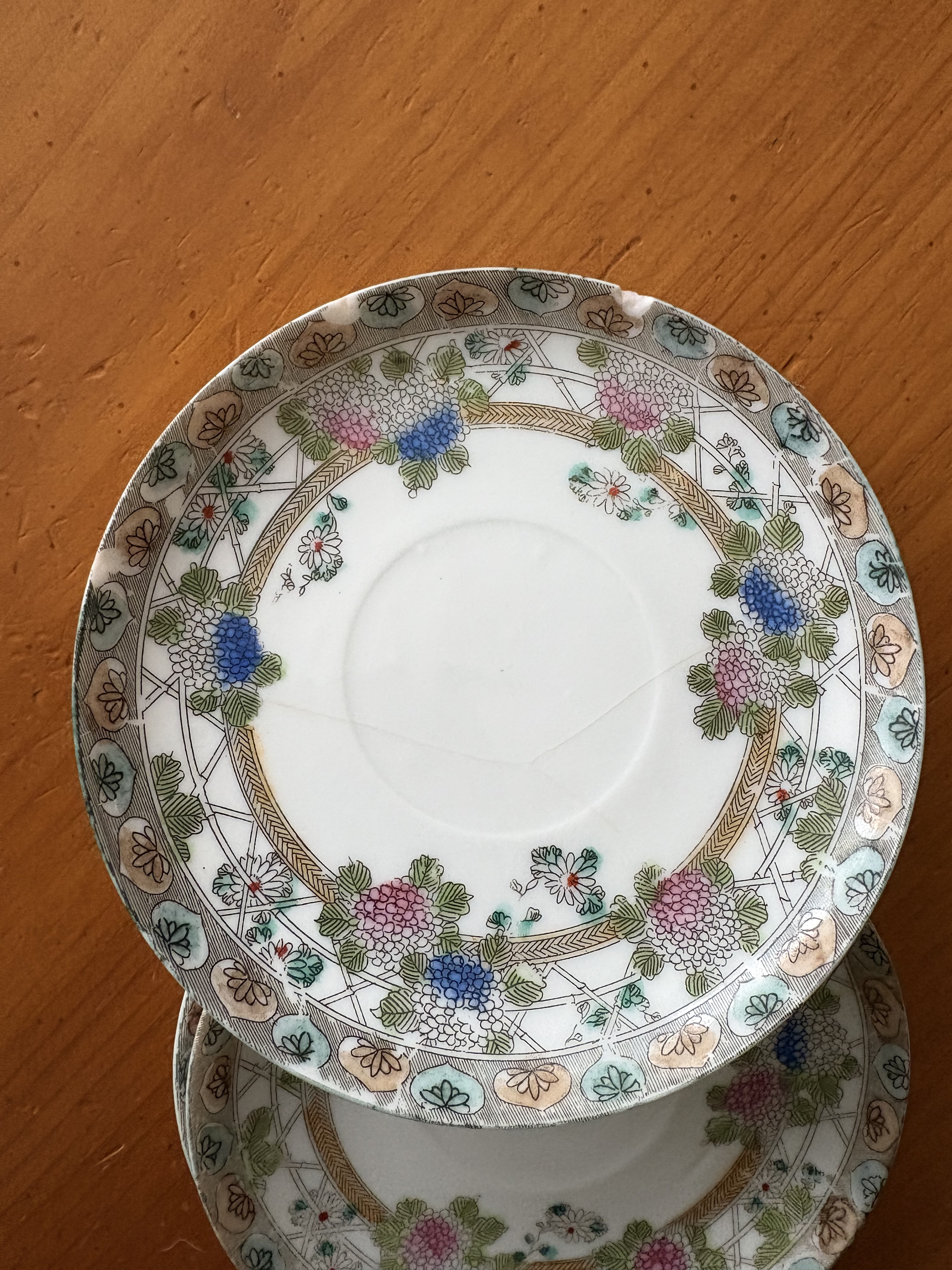
Inherited Japanese (Kutani?) cups and saucers. Guessing that they are hand painted. Beautiful floral designs on cups and on the borders of the saucers. Translucent (eggshell?) porcelain. Painted gold stripe on handles. Pastel colors.
Five of ten teacups have small chips or hairline cracks. Four of twelve saucers have chips or hairline cracks. (Photos 5 & 6)
Category
Ceramics and Porcelains
Medium
Porcelain
Distinguishing marks
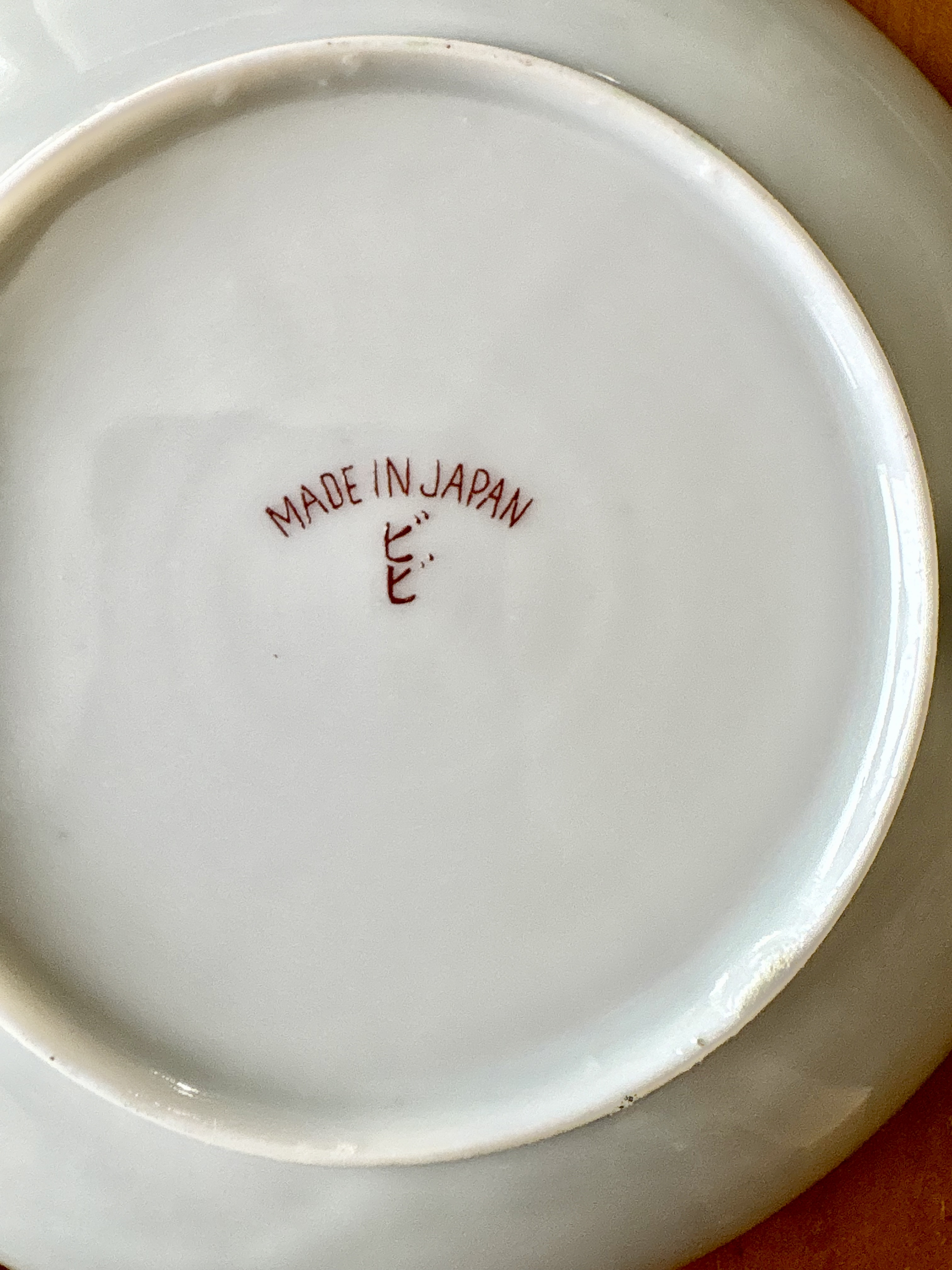
No two are alike. The mark under “Japan” might mean the name ‘Pipi’.
Condition
Good
Size and dimensions of this item
Cups are 4” diameter. Saucers are 5.5” diameter
Date Period
N/A
Weight
6.6 oz. per cup and saucer set
History
Previous owner was in WWII.
Price Paid (If known)
?
⚠️ You have 1 free appraisal left today
Upgrade for 15-30/day →
Want more from your appraisals?
View Plans →
Upgrade for PDF reports, more daily appraisals, and ad-free experience.
Collector Discussion
Do you recognize this piece? Collectors often identify maker marks, share comparable sales, or suggest additional research steps.
Japanese Hand-Painted Porcelain Teacups and Saucers
🍵 Japanese Hand-Painted Porcelain Teacups and Saucers (Possibly Kutani or Eggshell Porcelain)
📝 Item Description
This is a set of vintage Japanese porcelain teacups and saucers, likely made in the mid-20th century, possibly late 1940s–1960s. The pieces are:
The decoration is reminiscent of Kutani-style patterns, but the more geometric border motifs also suggest post-war export ware, potentially from Seto or Arita kilns, which were prolific during that era.
🕰️ Historical Context
🧾 Condition Overview
💰 Current Market Value (As of 2025)
Condition
Estimated Value
Full set in excellent condition
$120–$160 USD
Your set (good w/ damage)
$50–$80 USD
Individual cup/saucer (mint)
$10–$15 USD
The reduced value reflects the number of damaged pieces. Still, collectors of vintage Japanese porcelain and decorators often appreciate these sets for their unique craftsmanship and aesthetic charm.
🧑🎨 Who Would Be Interested
✅ Recommendations